What Attracts Spiders to Your Home? Prevention Guide
Discover what attracts spiders into Adelaide homes and learn practical prevention tips. Reduce spider activity with simple changes. Professional spider control available.
If you’re wondering why spiders keep appearing in your Adelaide home, understanding what attracts them is the first step to keeping them away.
Spiders don’t randomly invade homes—they’re drawn by specific conditions. By addressing those conditions, you can significantly reduce spider activity. This guide explains what attracts spiders and gives you practical, Adelaide-specific prevention strategies.
The Main Things That Attract Spiders
1. Other Insects (Food Source) — The #1 Attractant
This is the number one reason spiders come indoors. Spiders are predators—they follow their prey.
What attracts insects (and therefore spiders):
- Lights — Exterior lights attract moths, flies, beetles, and other insects at night. Spiders follow.
- Open windows without screens — Allows insects (and spiders) to enter
- Food residues — Crumbs, spilled food, unwashed dishes attract ants, flies, and other insects
- Waste and rubbish — Poorly sealed bins attract flies and other insects
- Pet food — Left-out pet food attracts insects
- Moisture — Leaky taps, standing water, condensation attract insects
The chain reaction: Lights or food attract insects → insects enter your home → spiders follow the insects → you have spider problems.
Breaking the chain: Reduce insect attraction, and you reduce spider attraction.
2. Shelter and Harbourage
Spiders need places to hide, build webs, and lay eggs. Your home offers many of these:
- Clutter and storage — Cardboard boxes, piles of clothing, storage items against walls
- Corners and crevices — Wall corners, behind furniture, under beds, in wardrobes
- Undisturbed areas — Storage rooms, sheds, garages, subfloors, roof voids
- Web-building sites — Corners, ceilings, around windows, under eaves
What you can do: Reduce clutter, organise storage, move items away from walls, and regularly clean undisturbed areas.
3. Entry Points
Spiders enter homes through various routes:
- Gaps around windows and doors — Worn weather-stripping, gaps in frames
- Vents and openings — Unscreened vents, gaps around pipe entries
- Cracks and crevices — In walls, foundations, around utility entries
- Open doors — Particularly when moving items in and out
- On items brought inside — Pots, firewood, stored items from outside
What you can do: Seal gaps, maintain weather-stripping, screen vents, be mindful when bringing items inside.
4. Seasonal Factors
Spider activity follows seasonal patterns in Adelaide:
- Spring (September-November): Spider activity increases with warming weather. Mating season means more movement.
- Summer (December-February): Peak spider activity. Warm temperatures and abundant insect prey.
- Autumn (March-May): Some species remain active.
- Winter (June-August): Reduced outdoor activity, but indoor spiders may still be present.
Best time for preventive spider treatment: Late winter/early spring (August-September) before activity peaks.
5. Garden and Exterior Conditions
Your garden and home’s exterior affect spider activity:
- Garden beds against walls — Mulch, soil, and vegetation touching walls creates ideal spider habitat
- Plants touching the house — Vines, shrubs, and trees provide spider highway into your home
- Wood piles and debris — Firewood, timber, and debris near the house harbour spiders
- Pergolas, decks, and eaves — Common spider web locations
- Outdoor lighting — Lights attract insects which attract spiders
Adelaide-Specific Spider Attraction Factors
Climate Considerations
Adelaide’s Mediterranean climate influences spider behaviour:
- Summer heat drives some spiders to seek cooler indoor environments
- Periods of rain followed by warmth trigger increased spider activity
- Dry periods may drive spiders (and their insect prey) to seek moisture indoors
Local Spider Species Behaviour
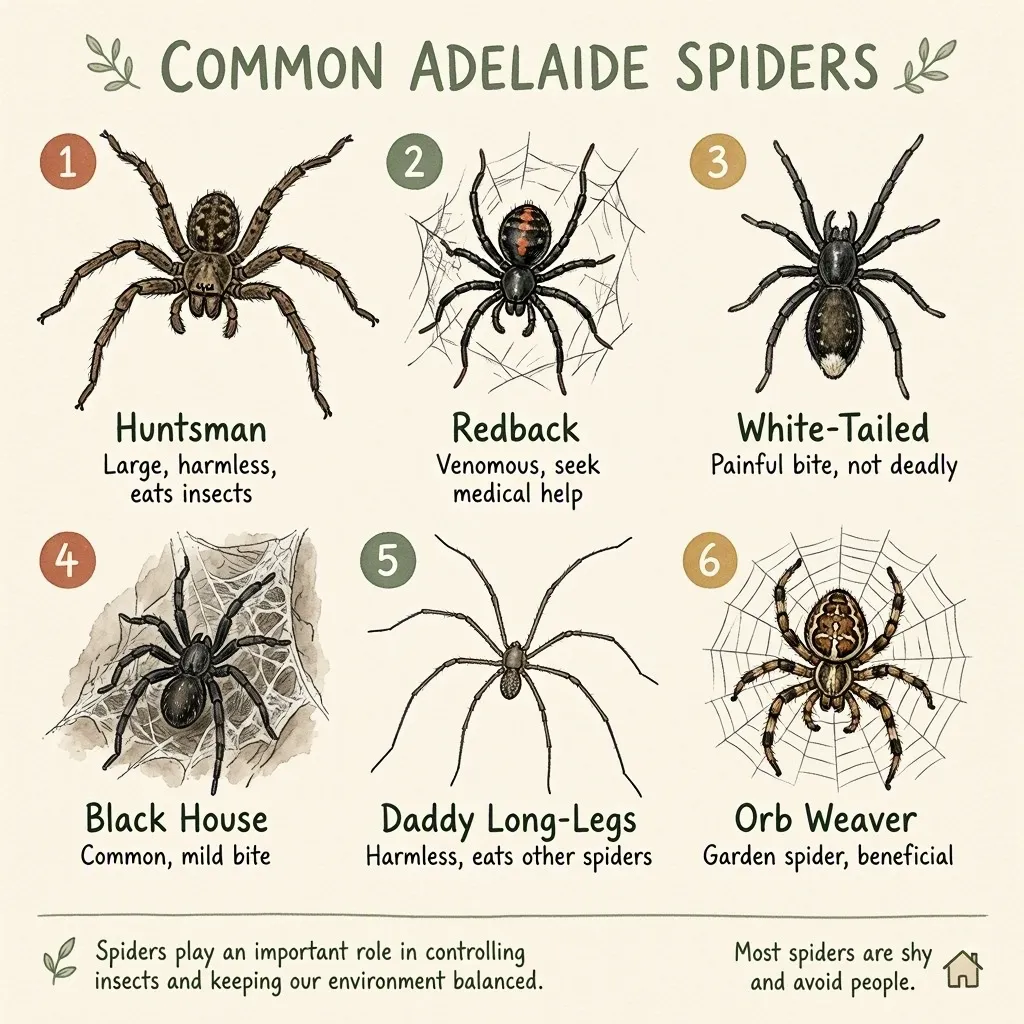
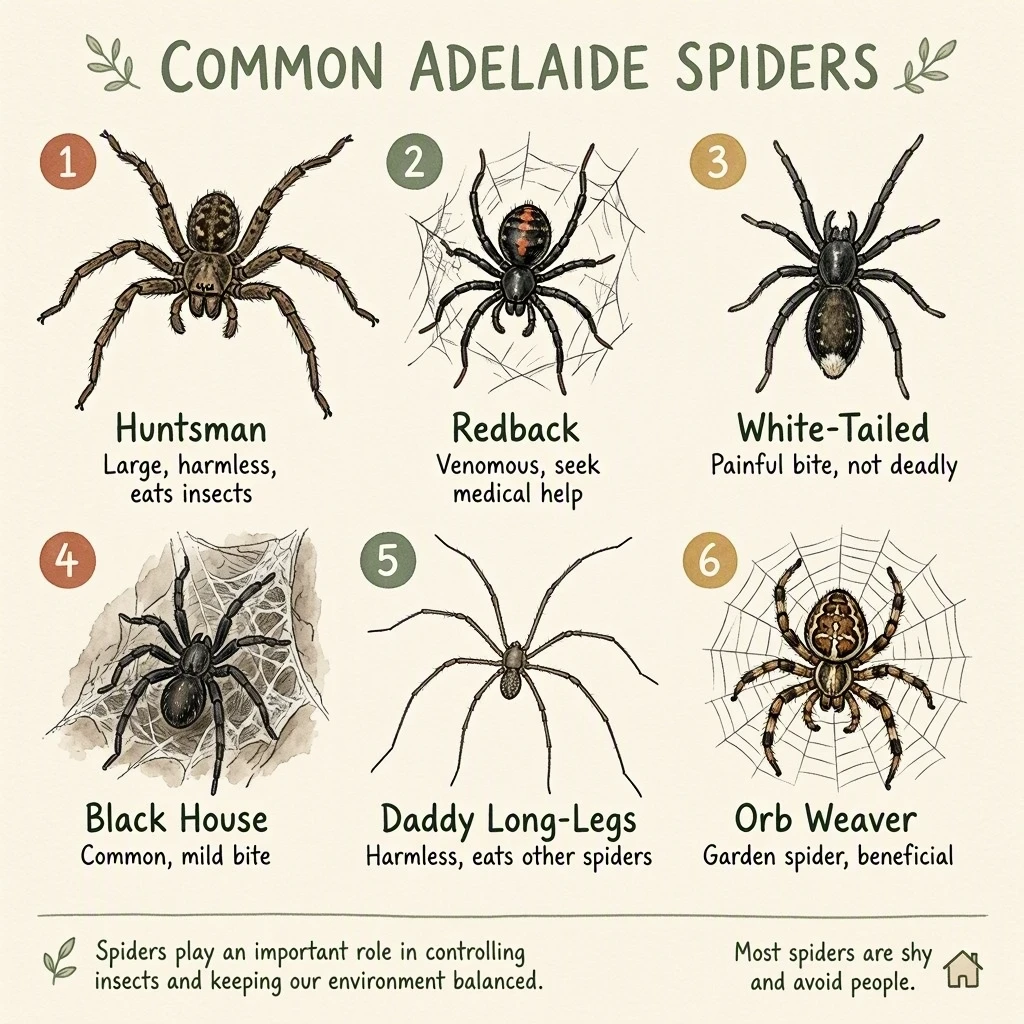
| Common Adelaide Spider | Attraction Factors |
|---|---|
| Huntsman | Prey availability, shelter. Often enter homes accidentally or following prey. |
| Redback | Sheltered, undisturbed areas. Sheds, garages, around stored items, under furniture. Attracted to areas with other insects. |
| White-tail | Indoors, particularly in bedrooms and living areas. Hunts other spiders at night. |
| Orb-weavers | Outside walls, eaves, gardens. Attracted to areas with flying insect prey. |
| Daddy long-legs | Indoors, corners, ceilings. Attracted to areas with small insect prey. |
Practical Spider Prevention Checklist for Adelaide Homes
Reduce Insect Attraction
- [ ] Adjust exterior lighting — Use motion sensors instead of constant lights. Consider yellow or warm-spectrum bulbs. Turn off unnecessary lights.
- [ ] Screen windows — Ensure windows have intact screens. Repair any holes or gaps.
- [ ] Manage waste — Use bins with tight-fitting lids. Remove rubbish regularly. Keep bins away from the house.
- [ ] Clean food residues — Wipe counters, sweep floors, clean up spills promptly.
- [ ] Manage pet food — Don’t leave pet food out. Clean bowls after feeding.
- [ ] Fix leaks — Repair leaking taps, pipes, and air conditioner drainage.
Reduce Shelter and Harbourage
- [ ] Declutter — Reduce cardboard boxes, piles of items, and disorganised storage
- [ ] Organise storage — Use sealed plastic containers instead of cardboard
- [ ] Move items away from walls — Create access gaps around stored items
- [ ] Clean regularly — Vacuum corners, behind furniture, under beds, in wardrobes
- [ ] Reduce storage in high-risk areas — Be particularly mindful of clutter in sheds and garages
Seal Entry Points
- [ ] Check and maintain weather-stripping — Around doors and windows
- [ ] Seal gaps — Around pipes, vents, utility entries, foundation cracks
- [ ] Screen vents — Ensure all vents have intact insect screening
- [ ] Check door bottoms — Install door sweeps if gaps exist
Manage the Exterior
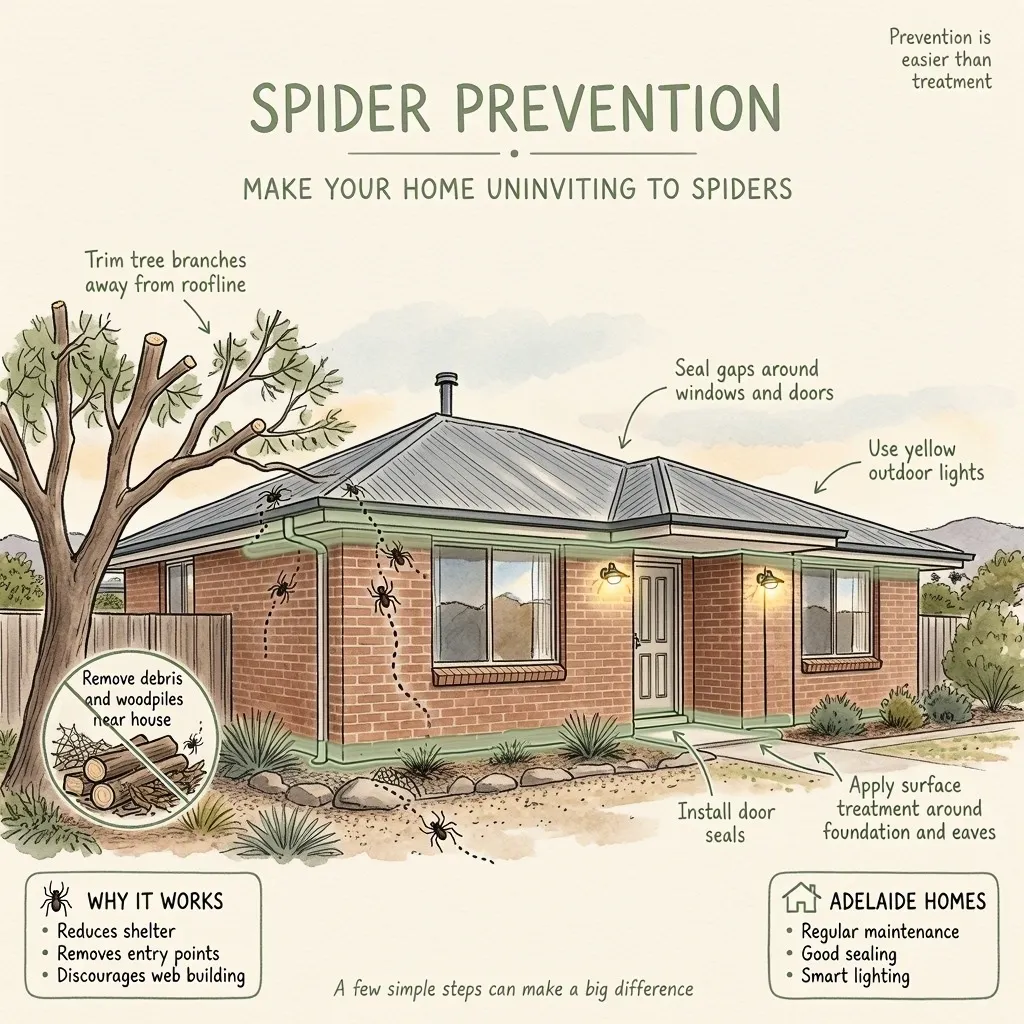
- [ ] Create gap between garden beds and walls — Maintain at least a small gap
- [ ] Trim vegetation — Keep plants, vines, and shrubs from touching the house
- [ ] Move wood piles — Store firewood and timber away from the house
- [ ] Manage debris — Remove dead vegetation, rubbish, and debris
- [ ] Treat exterior spider areas — Professional exterior treatment can help
Timing Your Prevention
- Late winter/early spring (August-September): Ideal time for preventive spider treatment
- After heavy rain or warm periods: Monitor for increased activity
- Before special events: Schedule treatment in advance
When Prevention Isn’t Enough: When to Get Professional Spider Control
Prevention significantly reduces spider problems, but some situations call for professional treatment:
- You’ve implemented prevention but spiders persist
- You’ve spotted venomous species (redbacks, white-tails)
- Spider activity is high despite your best efforts
- You have a spider phobia affecting your enjoyment of your home
- You want guaranteed spider reduction for a period
Professional spider treatment (see our spider control guide) provides lasting reduction that prevention alone may not achieve.
Combining Prevention with Professional Treatment
The most effective approach combines both:
- Professional treatment — Reduces existing spider population
- Prevention measures — Reduces factors attracting spiders
- Regular maintenance — Periodic treatment (every 6-12 months) with ongoing prevention
Common Spider Prevention Myths
Myth: “Peppermint oil keeps spiders away” Reality: Limited scientific evidence. May provide minor deterrence but won’t solve established problems.
Myth: “If I remove all spiders, they’ll never come back” Reality: Spiders are part of the ecosystem. Complete permanent elimination isn’t realistic. The goal is management—keeping activity at low, acceptable levels.
Myth: “One treatment will solve spider problems forever” Reality: No single treatment provides permanent elimination. Regular treatment and prevention provide ongoing management.
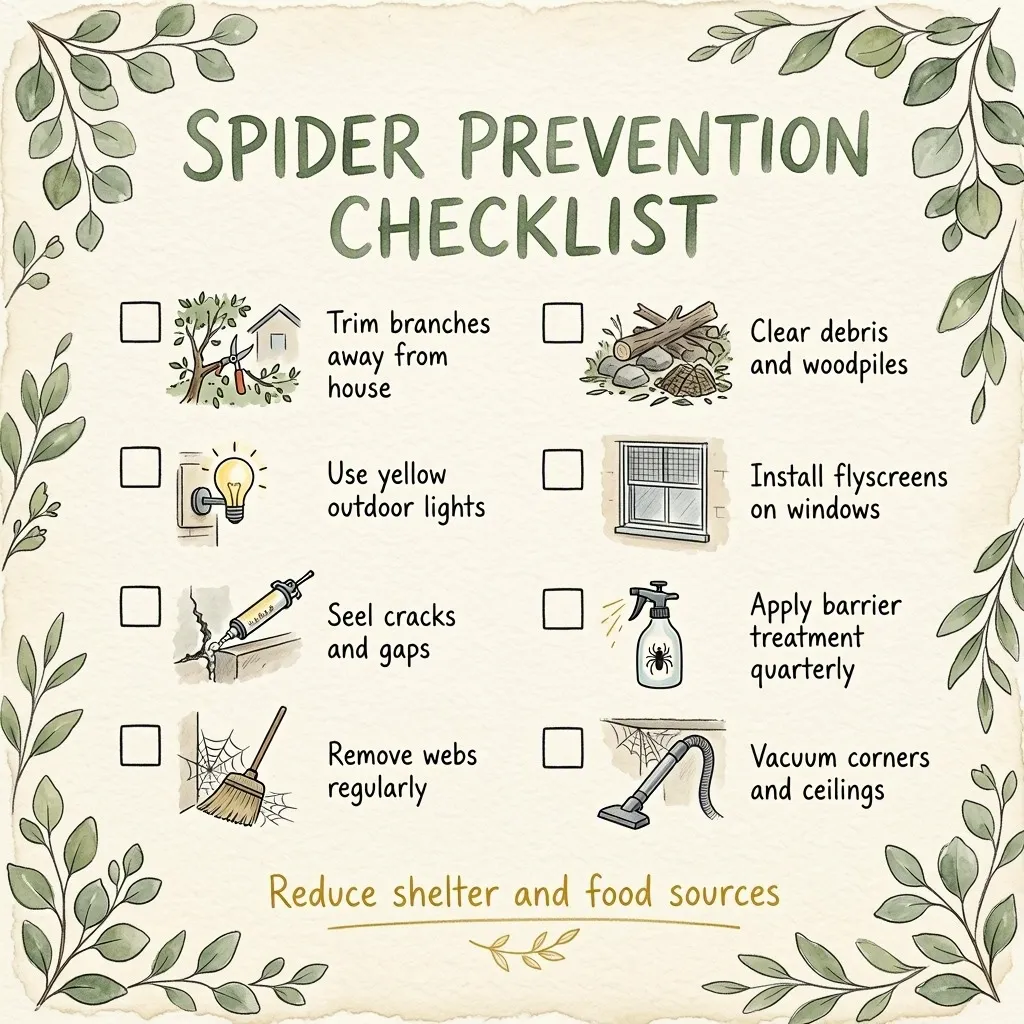
Spider Prevention Checklist
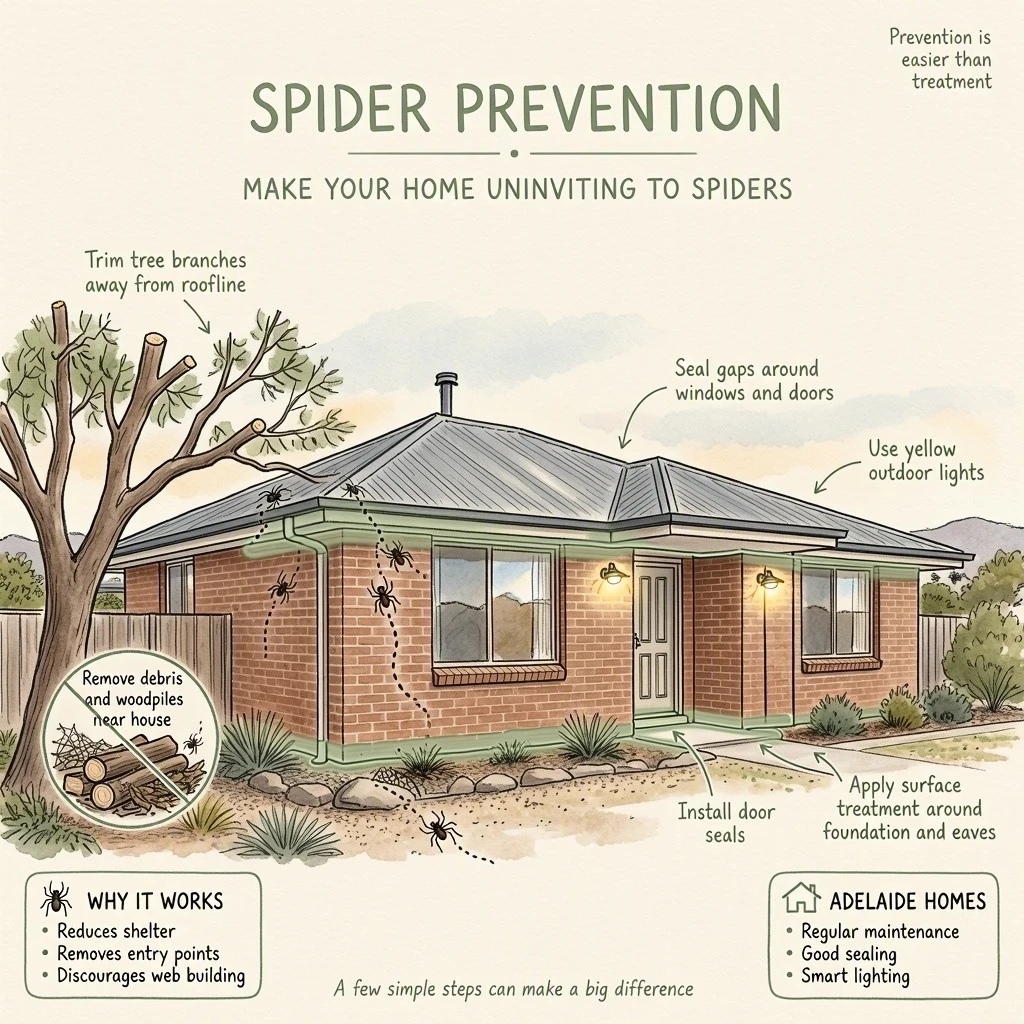
- Trim branches away from the house
- Clear debris and woodpiles
- Use yellow outdoor lights
- Install flyscreens on windows
Frequently Asked Questions
Why are there so many spiders in my house? Spiders come indoors primarily for food (other insects) and shelter. If you have many spiders, you likely have conditions that attract them: insects (attracted by lights, food, waste), shelter (clutter, undisturbed areas), and entry points (gaps, open doors).
How do I stop spiders coming into my house? Reduce what attracts them: manage insect populations, seal entry points, reduce shelter, manage exterior conditions. Professional treatment can help significantly.
Do lights attract spiders? Lights attract insects, which attract spiders. This is the main connection. Reducing insect-attracting lighting can reduce spider attraction indirectly.
How do I keep spiders out of my bedroom? Reduce insect prey in the bedroom (good sanitation, no food), seal entry points (check windows, doors), reduce clutter (especially under beds), and consider professional treatment if the problem persists.
Can I prevent spiders without chemicals? To some extent, yes. Prevention measures can significantly reduce spider activity. However, for existing problems, prevention alone is often insufficient. Professional treatment combined with prevention is most effective.
How often should I treat my home for spiders? Most Adelaide homeowners benefit from spider treatment every 6-12 months. Annual treatment in late winter/early spring provides protection through peak spider season.
---
Need Professional Pest Control?
Our licensed technicians serve Seaford and surrounding southern suburbs with transparent pricing and eco-friendly treatments. Get your free quote in 30 seconds.