Flea Control Adelaide
Professional flea control in Adelaide. Eliminate fleas from your home AND pets. Complete treatment guide with costs. Serving southern suburbs.
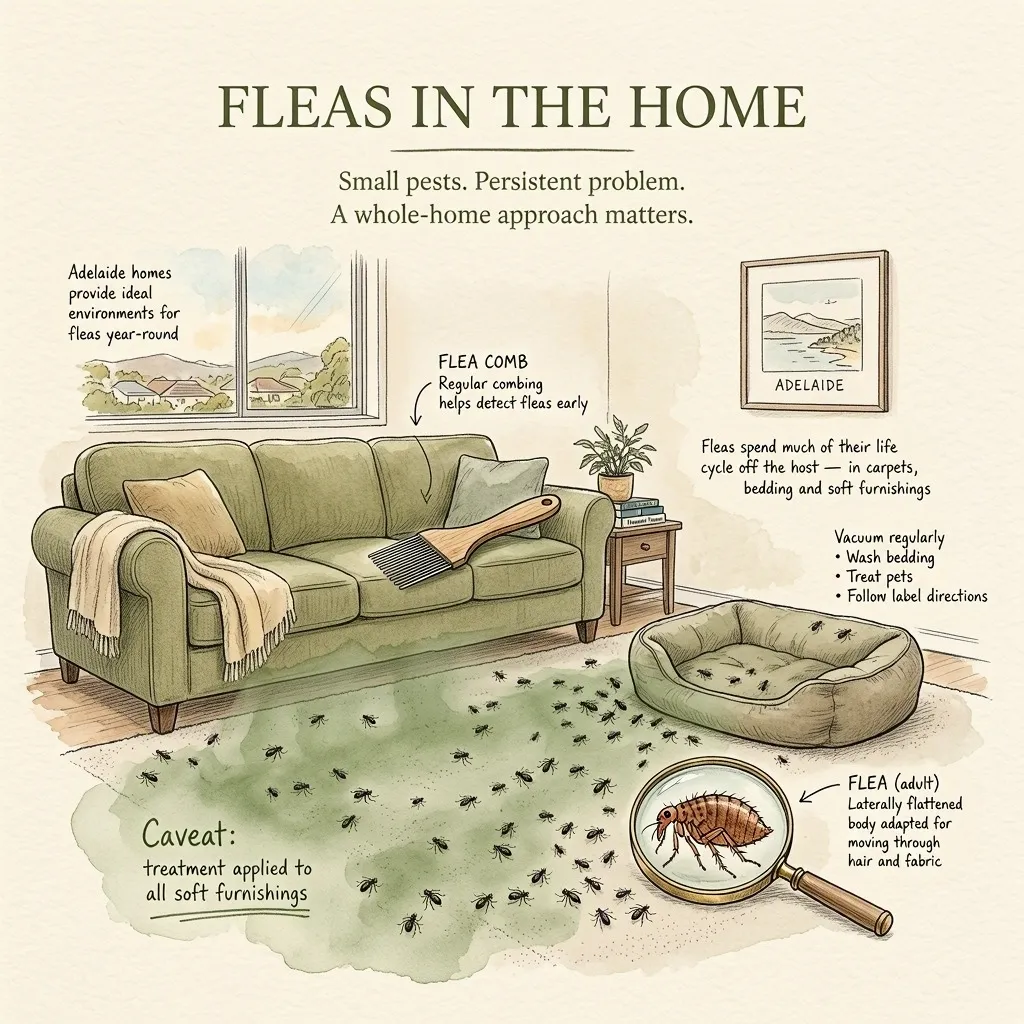
Fleas are notoriously difficult to eliminate. If you’ve discovered fleas in your Adelaide home, you’re probably frustrated—and you’re not alone. Flea problems are common, and getting rid of them requires a coordinated approach.
At MR Solutions, we provide flea control services across Adelaide’s southern suburbs. This guide explains why fleas are so hard to eliminate, what effective treatment involves, and why treating both your home AND your pets is essential.
Why Fleas Are So Hard to Eliminate
Fleas have characteristics that make them persistent pests:
1. Complex Life Cycle
Fleas go through four stages: egg, larva, pupa, and adult. Each stage has different characteristics and vulnerabilities.
- Adult fleas — The ones you see on pets. They feed on blood and mate.
- Eggs — Laid by adult females, fall off pets into the environment (carpets, bedding, floor cracks).
- Larvae — Hatch from eggs, live in carpets and floor cracks, feed on organic debris.
- Pupae — Larvae spin cocoons and pupate. Pupae are highly resistant to insecticides. They can remain dormant for months, hatching when they detect vibrations, heat, or carbon dioxide.
The challenge: Even if you kill all adult fleas, pupae in the environment can hatch and re-infest your home weeks or even months later.
2. Hidden Populations
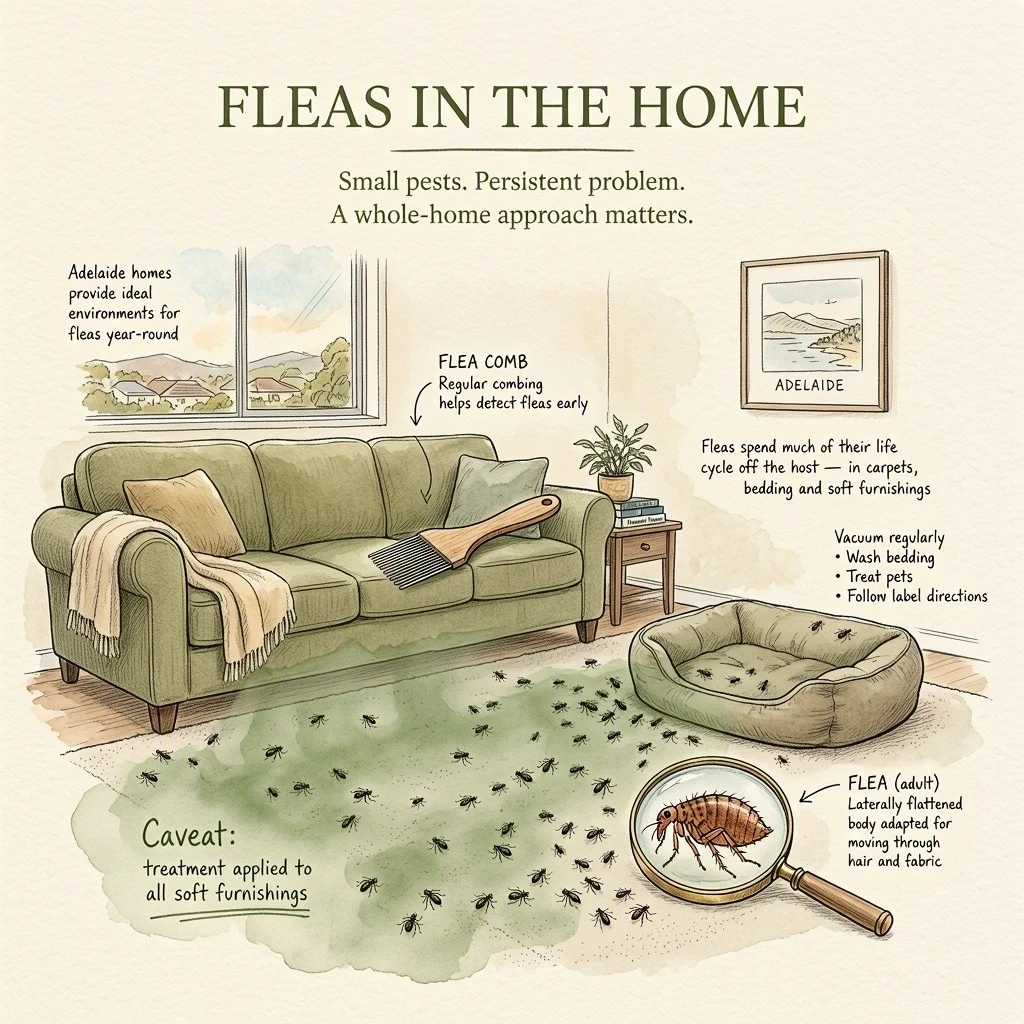
Most of the flea population isn’t on your pet—it’s in your environment:
- Only about 5% of the flea population is adult fleas on your pet
- 95% is eggs, larvae, and pupae in carpets, rugs, floor cracks, bedding, and furniture
Treating only your pet leaves 95% of the problem untouched.
3. Rapid Breeding
A single female flea can lay 40-50 eggs per day. Under favourable conditions, populations can explode quickly.
4. Pupae Survival
Flea pupae can survive for months in the environment, waiting for the right conditions to hatch. This means flea problems can seem to “come back” even after apparent elimination.
Signs You Have Fleas
On Your Pets
- Scratching, biting, or grooming excessively — Particularly around the neck, tail base, and belly
- Visible fleas — Small, dark, fast-moving insects on your pet’s fur
- Flea dirt — Small black specks in your pet’s fur (flea droppings). Test: place on wet paper—if they spread red/brown (digested blood), it’s flea dirt.
- Red bites or skin irritation — Particularly around the neck and tail base
In Your Home
- Bites on humans — Small, itchy red bites, often around ankles and lower legs
- Fleas on furniture — Seeing fleas on sofas, chairs, or bedding
- Fleas on floors — Seeing fleas moving on carpets or floors, particularly after walking
- Flea dirt in carpets — Black specks in carpet that test positive
How Flea Control Works: The Two-Part Approach
Effective flea control requires treating BOTH:
- Your pets — To kill adult fleas on the animal
- Your home environment — To kill eggs, larvae, and pupae in carpets, floors, and bedding
Treating only one part rarely works.
Part 1: Pet Treatment
Your pet needs flea treatment—this is typically done through:
- Veterinary flea products — Spot-on treatments, oral medications, flea collars
- Pet store products — Over-the-counter flea treatments (effectiveness varies)
Key points:
- All pets in the household must be treated, not just the ones showing symptoms
- Treatment must be ongoing — One application isn’t enough
- Coordinate timing — Pet treatment should happen around the same time as home treatment
Important: MR Solutions treats your home environment—we don’t treat pets directly. You’ll need to arrange pet treatment separately through your vet or pet store products.
Part 2: Home Environment Treatment
Professional flea treatment of your home targets the hidden flea population:
- Interior spray — Application of flea insecticide to carpets, rugs, floor cracks, baseboards, and other harbourages
- Focus on pet areas — Wherever your pet rests, sleeps, or spends time
- Bedding treatment — Washing or treating pet bedding, blankets, and removable fabrics
Flea Treatment Cost in Adelaide
| Situation | Typical Cost |
|---|---|
| Minor flea problem | $200-$300 |
| Moderate infestation | $300-$400 |
| Severe infestation | $400-$500+ (may require follow-up) |
| Follow-up treatment (if needed) | $200-$300 |
Important: Complete flea elimination often requires patience. Even with professional treatment, you may see fleas for several weeks after treatment as pupae hatch and contact treated surfaces. This doesn’t mean treatment failed—it’s the normal flea life cycle.
Preparation for Flea Treatment
Before Treatment
- Vacuum thoroughly — Especially carpets, rugs, and areas where pets rest. Vacuuming removes flea eggs, larvae, and adults, and stimulates pupae to hatch. Dispose of vacuum bag/canister immediately.
- Wash pet bedding — Wash all pet bedding, blankets, and removable fabrics in hot water.
- Clear access — Move furniture to allow treatment of floor areas.
- Remove pets from the area during treatment and until treated surfaces are dry.
- Treat pets — Arrange pet flea treatment around the same time as home treatment.
After Treatment
- Don’t vacuum for at least a week after treatment (the residual insecticide needs to remain on carpets).
- Continue pet flea treatment — Follow product instructions for ongoing treatment.
- Expect to see some fleas for a period after treatment—this is normal as pupae hatch.
- Be patient — Flea pupae can hatch for weeks after treatment. Continue monitoring and maintain pet treatment.
How Long Does It Take to Get Rid of Fleas?
- Within days of treatment: Adult fleas on treated surfaces begin dying
- 1-2 weeks: Significant reduction in flea activity
- 2-4 weeks: Most adult fleas eliminated
- 4-8 weeks (or longer): Pupae may continue hatching during this period. Continue pet treatment and vacuuming. Eventually, as all pupae hatch and are killed, the cycle is broken.
The key: Persistence. Continue pet treatment and monitoring for at least 2-3 months after home treatment.
Why Flea Problems Keep Coming Back
Common reasons flea problems recur:
- Only pets were treated, not the home — The environmental population (95% of fleas) remains
- Only the home was treated, not pets — Pets continue bringing fleas into the treated environment
- Treatment wasn’t thorough — Some areas missed
- Pupae survived — Pupae are resistant to most treatments
- Ongoing pet exposure — Pets continuing to pick up fleas from outside
- Insufficient follow-up — Flea control requires persistence
Preventing Future Flea Problems
After successful flea elimination:
- Ongoing pet flea prevention — Use regular flea prevention products, as recommended by your vet. This is the single most important preventive measure.
- Regular vacuuming — Especially in areas where pets rest.
- Wash pet bedding regularly — In hot water.
- Manage wildlife — Wildlife (possums, bandicoots, rabbits) can carry fleas. Discourage wildlife from nesting near your home.
- Be cautious with new pets — Treat new pets for fleas before introducing them to your home.
- Monitor — Be alert to signs of flea activity.
When to Call a Professional for Flea Control
Consider professional flea treatment if:
- You’ve tried DIY methods without success
- You have a significant flea problem
- Your pets have severe flea reactions
- You’re dealing with a persistent flea problem
- You want efficient, effective elimination
MR Solutions Flea Control Service
Our service includes:
- Inspection of flea activity areas
- Comprehensive interior treatment targeting all flea harbourages
- Professional-grade flea insecticides
- Preparation and after-treatment guidance
- Advice on coordinating with pet treatment
- Follow-up recommendations
Note: We treat your home environment. You’ll need to arrange pet flea treatment separately through your vet or pet supply products.
Serving Adelaide’s southern suburbs: Seaford, Seaford Rise, Hallett Cove, Hallett Cove South, Woodcroft, Myponga Beach, Aldinga Beach, Aldinga Scrub, Trott Park, Trott Park East, Happy Valley, Happy Valley Ridge, Brighton, Brighton East, Old Noarlunga, Noarlunga Centre, Sheidow Park, Crouch End, and all surrounding areas.
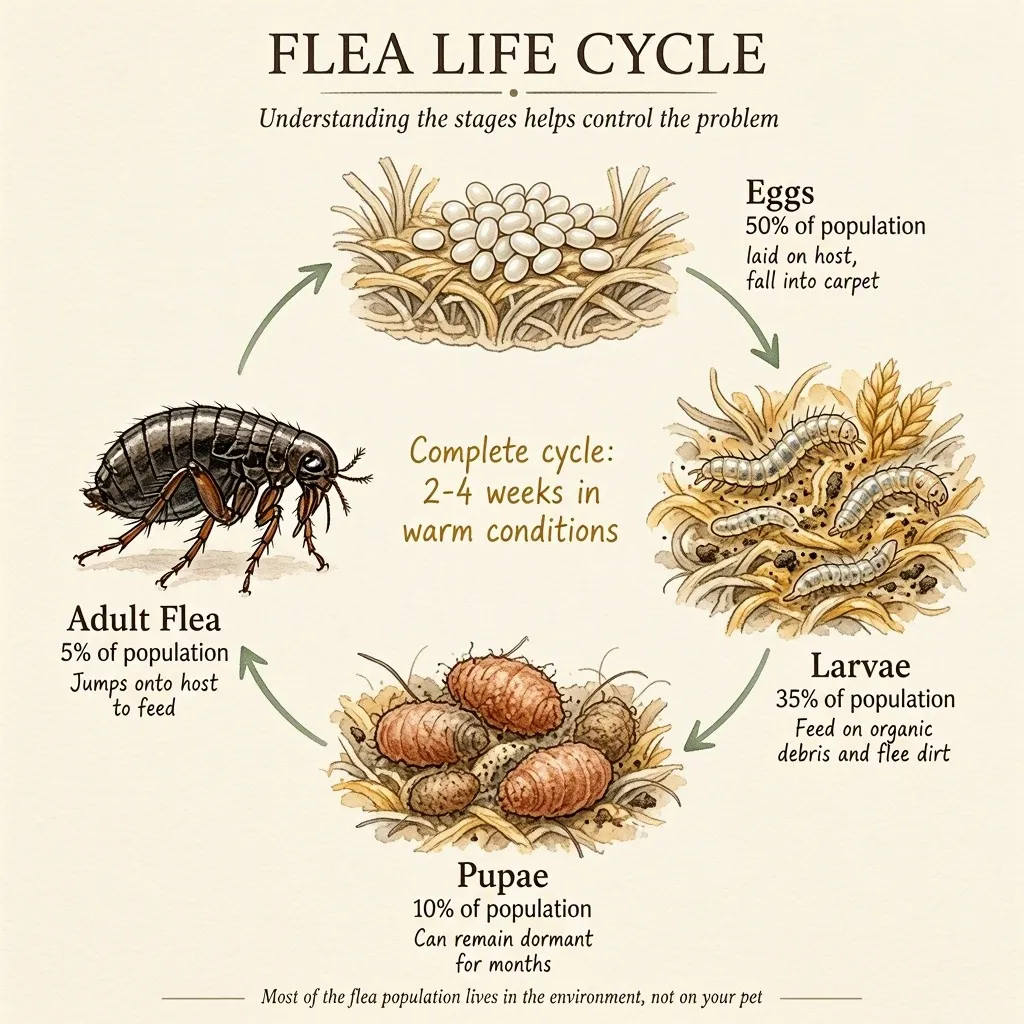
Understanding the Flea Life Cycle
- Eggs — about 50% of the population; they fall into carpet
- Larvae — about 35% of the population
- Adult fleas — about 5% of the population, living on the host
- The complete cycle takes about 2-4 weeks in warm conditions
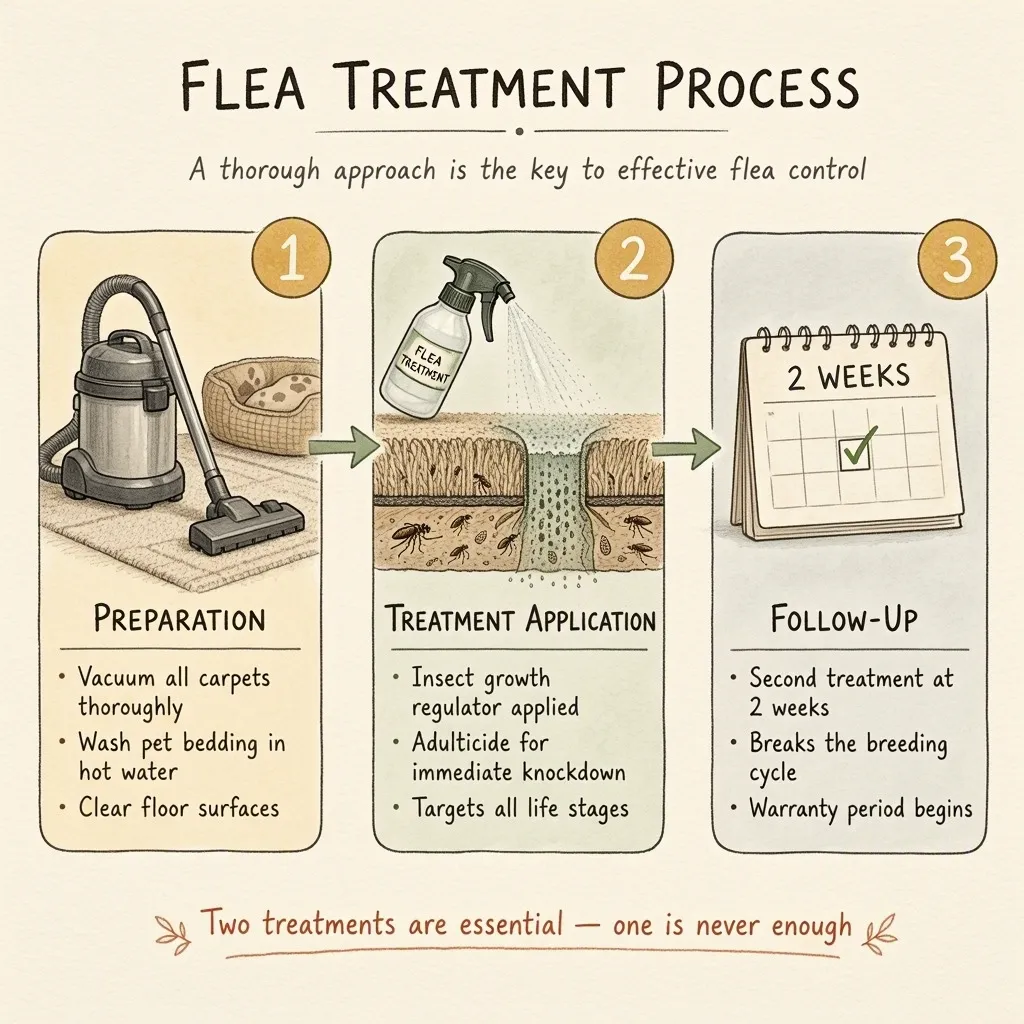
The Flea Treatment Process
- Preparation: vacuum all carpets thoroughly, wash pet bedding in hot water and clear floor surfaces
- Treatment: insect growth regulator plus adulticide for immediate knockdown — targets all life stages
- Follow-up: a second treatment at 2 weeks breaks the breeding cycle, with a warranty period
Frequently Asked Questions
How do I get rid of fleas in my home? Effective flea control requires treating both your home AND your pets. For your home, professional flea treatment is the most effective approach—it targets the 95% of fleas in the environment. For your pets, use veterinary flea products. Coordinate both treatments.
Why won’t fleas go away? Fleas have a complex life cycle. Even if you kill adult fleas, pupae in your carpets can survive for months and hatch later. Additionally, if you only treat your pet or only your home (but not both), the untreated part continues the flea cycle.
How long does flea treatment take to work? You should see reduction in flea activity within 1-2 weeks of professional treatment. However, complete elimination may take 4-8 weeks or longer due to pupae hatching over time.
Do I need to treat my pets for fleas? Yes—absolutely. Treating your home without treating your pets means your pets continue to harbour adult fleas that lay eggs, re-infesting your home. All pets in the household must be treated.
How much does flea treatment cost in Adelaide? Professional flea treatment for your home typically costs $200-$400 in Adelaide, depending on property size and extent of infestation. Follow-up treatments (if needed) cost $200-$300. Pet flea treatment is separate—arrange through your vet.
Can I get rid of fleas without chemicals? Completely non-chemical flea elimination is very difficult, especially for established infestations. Thorough and frequent vacuuming, washing all fabrics in hot water, and steam cleaning carpets can help but are unlikely to fully eliminate a significant flea problem.
How do I prepare for flea treatment? Vacuum thoroughly (especially carpets and pet areas), wash pet bedding in hot water, clear access to floor areas, arrange for pets to be out of the house during treatment, and treat your pets for fleas.
Can fleas come back after treatment? Yes, if pet treatment isn’t maintained, if new pets are introduced without flea treatment, or if wildlife brings fleas into the area. Ongoing pet flea prevention is the best long-term strategy.
Should I vacuum after flea treatment? Wait at least a week after treatment before vacuuming, to allow the residual insecticide to work. After that initial period, resume regular vacuuming—it helps remove any remaining flea stages and stimulates pupae to hatch.
---
Need Professional Pest Control?
Our licensed technicians serve Seaford and surrounding southern suburbs with transparent pricing and eco-friendly treatments. Get your free quote in 30 seconds.