Bed Bug Guide: Identification, Treatment & Prevention
Found bed bugs? Our guide covers identification, professional treatment options, costs, and prevention. Don't let bed bugs take over—expert help available in Adelaide.
Bed bugs are one of the most distressing pests you can encounter in your home. They feed on human blood, hide in tiny spaces, are notoriously difficult to eliminate, and can cause significant psychological distress.
If you suspect bed bugs in your Adelaide home, quick action is essential. Bed bugs reproduce rapidly and spread easily. This guide covers everything you need to know: how to identify bed bugs, what treatment involves, costs, and how to prevent them.
What Are Bed Bugs?
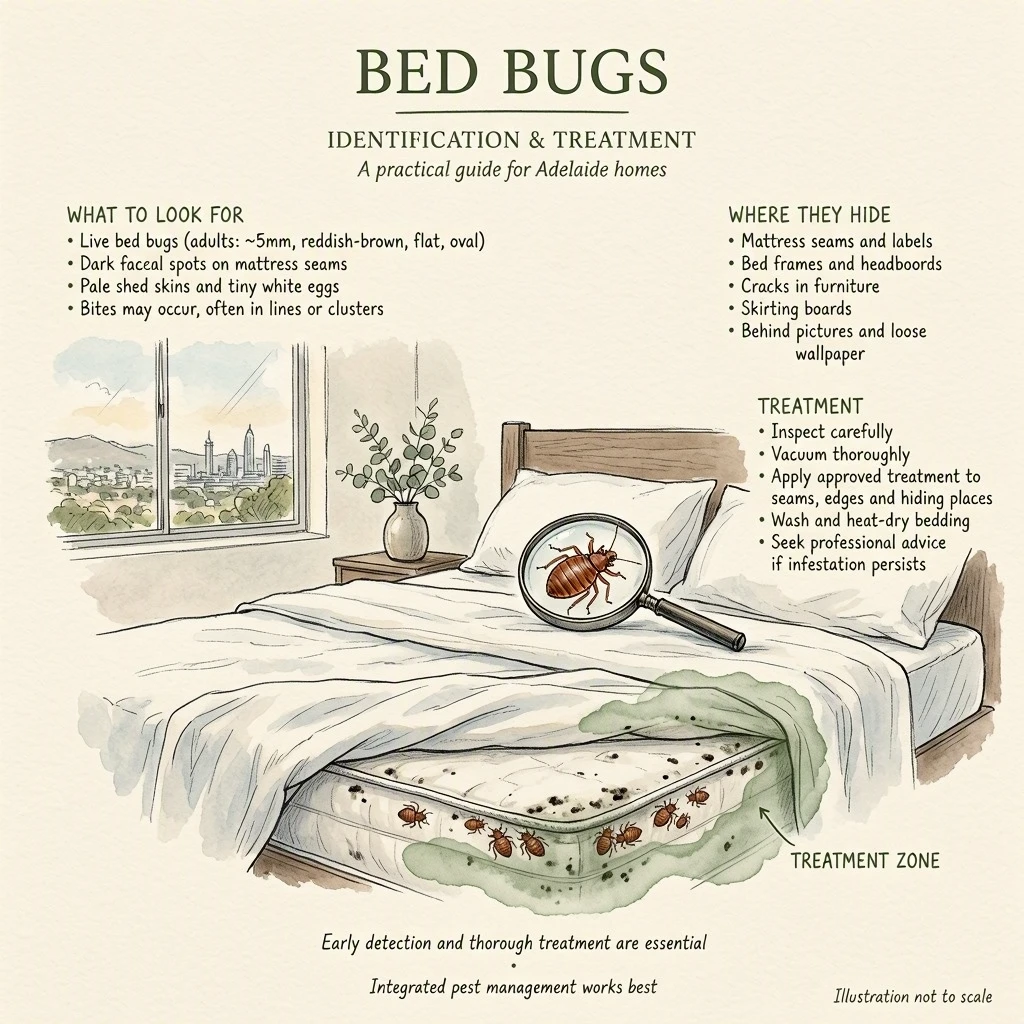
Bed bugs (Cimex lectularius) are small, flat, oval-shaped insects that feed on human blood. They’re nocturnal, hiding during the day in tiny cracks and crevices, and emerging at night to feed on sleeping humans.
Key characteristics:
- Size: Adults are about 5-7mm long (about the size of an apple seed)
- Shape: Flat, oval, reddish-brown
- After feeding: Become darker and more elongated as they engorge with blood
- Smell: In heavy infestations, a distinctive sweet, musty odour may be present
- Movement: Cannot fly or jump. They crawl, often moving quickly
Bed Bug Life Cycle
Bed bugs go through: egg → nymph (several stages) → adult.
- Eggs: Tiny (about 1mm), pearly-white, laid in hidden crevices. A female can lay 200-500 eggs in her lifetime.
- Nymphs: Smaller, lighter coloured versions of adults. Need to feed to molt and progress through stages.
- Adults: Can live months without feeding, making them hard to starve out.
Signs You Have Bed Bugs
1. Bites on Your Body
Bed bug bites are often the first sign people notice:
- Appearance: Small, red, itchy bumps, often in lines or clusters
- Location: Exposed skin areas during sleep—arms, shoulders, neck, face
- Reaction: Some people don’t react to bites; others have significant itching
- Timing: Bites often appear in the morning, though reactions can be delayed
Important: Bed bug bites can resemble other insect bites or skin conditions. Bites alone aren’t definitive proof. Look for other signs.
2. Live Bed Bugs
Seeing live bed bugs confirms the problem. Check:
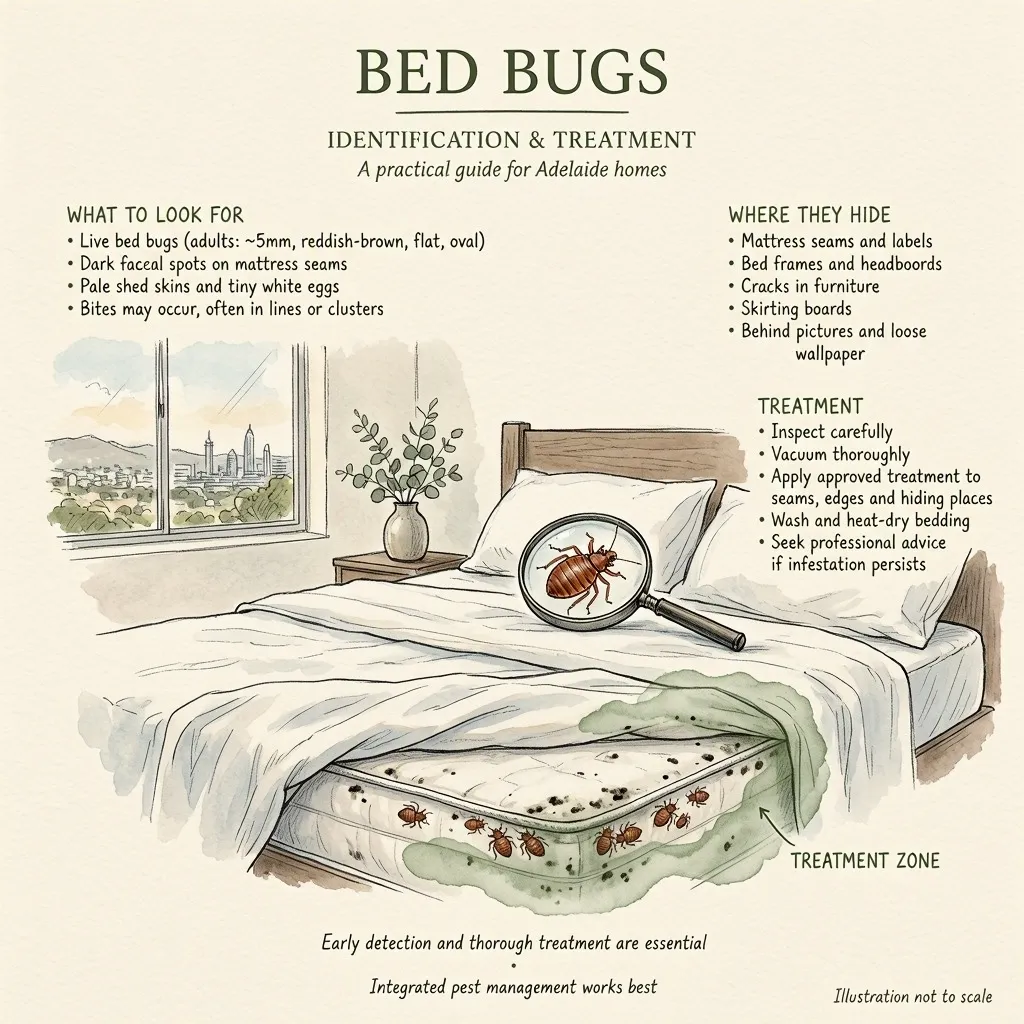
- Mattress seams — Particularly along edges and tufts
- Bed frames — Joints, screw holes, slats, headboards
- Bedding — Folds in sheets, under pillows
- Furniture — Sofas, chairs, especially seams and cushions
- Baseboards and cracks — Along floors, walls, and furniture
- Behind pictures and wall hangings
- Electrical outlets and switch plates
- Closet and drawer joints
Bed bugs are flat and can hide in remarkably tiny spaces—any crack that can fit a credit card can harbour bed bugs.
3. Blood Stains on Bedding
Small blood stains on sheets or pillowcases can indicate bed bugs:
- Small rust-coloured or red spots — From crushed bed bugs or blood from bites
- Found on sheets, pillowcases, mattress edges
4. Dark Spots (Fecal Matter)
Bed bugs leave dark droppings:
- Small black or dark brown spots — Like pepper grains or marker dots
- Found in harbourage areas — Mattress seams, bed frames, furniture joints
- Test: If you wet a suspected dropping on white paper, it may spread brown/red (digested blood)
5. Shed Skins (Exoskeletons)
As nymphs grow, they shed their exoskeletons:
- Pale, translucent skins resembling bed bugs but empty
- Found near harbourage areas
6. Eggs
- Tiny, pearly-white eggs (about 1mm)
- Found in hidden crevices near harbourage areas
- Hard to see without careful inspection
7. Odour
In significant infestations, a sweet, musty, coriander-like odour may be detectable. This is caused by bed bug scent glands.
How Do Bed Bugs Get Into Your Home?
Bed bugs are expert hitchhikers. Common introduction routes:
- Travel — Hotel rooms, motels, hostels, holiday accommodations. Bed bugs can crawl into luggage, clothing, and bags.
- Second-hand furniture — Used mattresses, beds, sofas, and other furniture can harbour bed bugs.
- Visitors — Guests may inadvertently bring bed bugs in their belongings.
- Multi-unit buildings — Bed bugs can move between units through walls, electrical outlets, pipes, and shared spaces.
- Laundry facilities — Shared laundry in apartments or complexes can be a transfer point.
- Public transport and venues — Less common, but bed bugs can be picked up in seats and upholstery.
Important: Bed bugs are not a sign of poor hygiene or dirtiness. They’re equal-opportunity pests that can infest any home, regardless of cleanliness.
Why Bed Bugs Are So Difficult to Eliminate
1. Hiding Ability
Bed bugs hide in tiny spaces during the day. They can fit into cracks as thin as a piece of paper. Finding and treating all hiding places is challenging.
2. Rapid Reproduction
A single pregnant female can establish a significant infestation. Females lay hundreds of eggs. Populations can grow quickly.
3. Resistance
Some bed bug populations have developed resistance to common insecticides, making chemical treatment more challenging.
4. Reintroduction Risk
Even if you eliminate bed bugs from your home, reintroduction is possible if the source (e.g., travel, visitors) isn’t addressed.
5. DIY Ineffectiveness
Most DIY bed bug treatments are inadequate:
- Products not reaching all hiding places
- Wrong product selection
- Inability to treat all affected areas thoroughly
- No follow-up to catch hatched nymphs
- Failure to address the source
Professional Bed Bug Treatment
Why Professional Treatment Is Essential
Bed bugs are widely considered the most difficult common household pest to eliminate. Professional treatment is strongly recommended—and often essential—for effective control.
Professional treatment advantages:
- Thorough inspection — Identifying all harbourage areas throughout your property.
- Correct product selection — Using products effective against the specific bed bug population, considering potential resistance.
- Comprehensive treatment — Treating all harbourage areas methodically, including hard-to-access spaces.
- Multiple treatment methods — Combining chemical treatment, heat treatment (where available), and other methods.
- Follow-up treatments — Bed bug treatment typically requires multiple visits to catch newly hatched nymphs and ensure complete elimination.
- Expertise — Knowledge of bed bug behaviour, hiding places, and effective treatment strategies.
- Safety — Proper application of products with safety precautions explained.
Treatment Process
Step 1: Inspection A thorough inspection to:
- Confirm bed bug presence
- Assess extent of infestation
- Identify all harborage areas
- Plan treatment approach
Step 2: Preparation Bed bug treatment requires extensive preparation by the homeowner:
- Laundry — Wash all bedding, clothing, curtains, and washable fabrics in hot water and dry on hot setting
- Declutter — Remove clutter from affected areas to allow thorough treatment
- Vacuum — Thoroughly vacuum mattresses, bed frames, furniture, floors, and cracks. Dispose of vacuum bag/canister contents immediately.
- Move furniture — Move furniture away from walls. Remove items from under beds.
- Encasements — Mattress and bed frame encasements may be recommended
Step 3: Treatment Professional bed bug treatment may include:
- Chemical treatment — Application of bed bug insecticides to all harborage areas, cracks, crevices, and surfaces
- Steam treatment — Where available, steam can kill bed bugs and eggs on contact in fabrics and cracks
- Heat treatment — Whole-room heat treatment (raising temperature to lethal levels for bed bugs) — available through some professional providers
- Follow-up treatments — Typically 2-3 visits over several weeks to catch newly hatched nymphs
Step 4: Follow-up and Monitoring
- Follow-up visits to re-treat and monitor
- Ongoing monitoring for signs of continued activity
- Adjustments to treatment if activity persists
Treatment Cost
Bed bug treatment is more expensive than most other pest treatments due to the complexity and required follow-up.
| Situation | Typical Cost Range |
|---|---|
| Minor/early infestation | $500-$800 |
| Moderate infestation | $800-$1,500 |
| Severe infestation | $1,500-$3,000+ |
| Each follow-up visit | $200-$400 |
Factors affecting cost:
- Extent of infestation
- Property size and number of areas affected
- Number of treatment visits required
- Treatment methods used
- Preparation requirements
Important: Get a detailed quote that includes the anticipated number of visits. Bed bug treatment is rarely a single-visit job.
What You Can Do Before and After Treatment
Before Treatment (Preparation)
Proper preparation is critical for bed bug treatment success:
- Follow your pest controller’s preparation instructions carefully
- Laundry all washable items on hot settings
- Reduce clutter significantly
- Vacuum thoroughly and dispose of contents immediately
- Don’t move items between rooms without checking for bed bugs—this can spread them
- Isolate affected items — Don’t bring potentially affected items into clean areas
After Treatment
- Follow post-treatment instructions
- Don’t disturb treated areas for the recommended period
- Continue monitoring for signs of bed bugs
- Attend follow-up appointments
- Be vigilant about reintroduction — Check luggage after travel, inspect second-hand items before bringing them home
Can I Get Rid of Bed Bugs Myself?
For very minor, early-detected problems, DIY might be attempted, but it’s risky. For any established infestation, professional treatment is strongly recommended.
DIY challenges:
- Hard to find all hiding places
- Consumer products often inadequate
- Egg resistance to many products
- Need for thorough, methodical treatment of all areas
- Need for follow-up over weeks
- High risk of incomplete elimination leading to continued or spreading problem
If you attempt DIY:
- Use products specifically labelled for bed bugs
- Follow label instructions exactly
- Treat all suspected harborage areas thoroughly
- Understand you may need multiple applications
- Monitor carefully and be prepared to call a professional if the problem persists
Realistic assessment: Most Adelaide homeowners with bed bug problems are better served by professional treatment from the start.
Preventing Bed Bugs
When Traveling
- Inspect hotel rooms before settling in—check mattress seams, bed frames, furniture
- Keep luggage elevated — Use luggage racks, not the floor or bed
- Keep luggage closed when not in use
- After travel, inspect luggage before bringing it into your home
- Laundry travel clothing on hot settings when you return
With Second-Hand Items
- Inspect thoroughly before bringing second-hand furniture, mattresses, or clothing into your home
- Treat or launder items before introduction if there’s any doubt
- Be particularly cautious with mattresses, upholstered furniture, and items from unknown sources
In Multi-Unit Buildings
- Be aware that bed bugs can move between units
- Report suspected bed bugs to building management promptly
- Inspect regularly if neighbours have had bed bug problems
- Reduce clutter to minimise hiding places
General Prevention
- Regular inspection of sleeping areas, particularly if you’ve traveled or had visitors
- Reduce clutter to minimise hiding places
- Be cautious when bringing used items into your home
- Early detection — The earlier bed bugs are detected, the easier and less expensive they are to treat
Bed Bug Myths and Facts
Myth: Bed bugs only infest dirty homes Fact: Bed bugs infest clean and dirty homes alike. They’re attracted to humans (their food source), not dirt. Clean homes can have bed bugs.
Myth: Bed bugs are too small to see Fact: Adult bed bugs are visible—about the size of an apple seed. They’re small but not microscopic. Nymphs and eggs are harder to see, but adults can be seen with careful inspection.
Myth: Bed bugs transmit disease Fact: Bed bugs are not known to transmit diseases to humans. However, their bites can cause itching, allergic reactions, sleep disturbance, and psychological distress.
Myth: One treatment eliminates bed bugs Fact: Bed bug elimination typically requires multiple treatments over several weeks. Eggs hatch after initial treatment, and follow-up visits are essential.
Myth: Bed bugs fly or jump Fact: Bed bugs cannot fly or jump. They crawl. This is why they spread slowly through a property but can hitchhike on items to new locations.
When to Call a Professional
Call a professional bed bug specialist immediately if:
- You’ve confirmed or strongly suspect bed bugs
- You’ve found live bed bugs, eggs, or significant signs
- You’ve tried DIY methods without success
- The problem is spreading
- You’re in a multi-unit building (coordinated treatment may be needed)
Don’t delay. Bed bugs are easier and less expensive to treat when caught early. Delaying allows the population to grow and spread.
MR Solutions Bed Bug Service
Our service includes:
- Thorough inspection to confirm bed bugs and assess extent
- Detailed preparation instructions
- Professional treatment using appropriate methods
- Follow-up visits to ensure elimination
- Transparent pricing with clear treatment schedule
- Advice on prevention and avoiding reintroduction
Serving Adelaide’s southern suburbs: Seaford, Seaford Rise, Hallett Cove, Hallett Cove South, Woodcroft, Myponga Beach, Aldinga Beach, Aldinga Scrub, Trott Park, Trott Park East, Happy Valley, Happy Valley Ridge, Brighton, Brighton East, Old Noarlunga, Noarlunga Centre, Sheidow Park, Crouch End, and all surrounding areas.
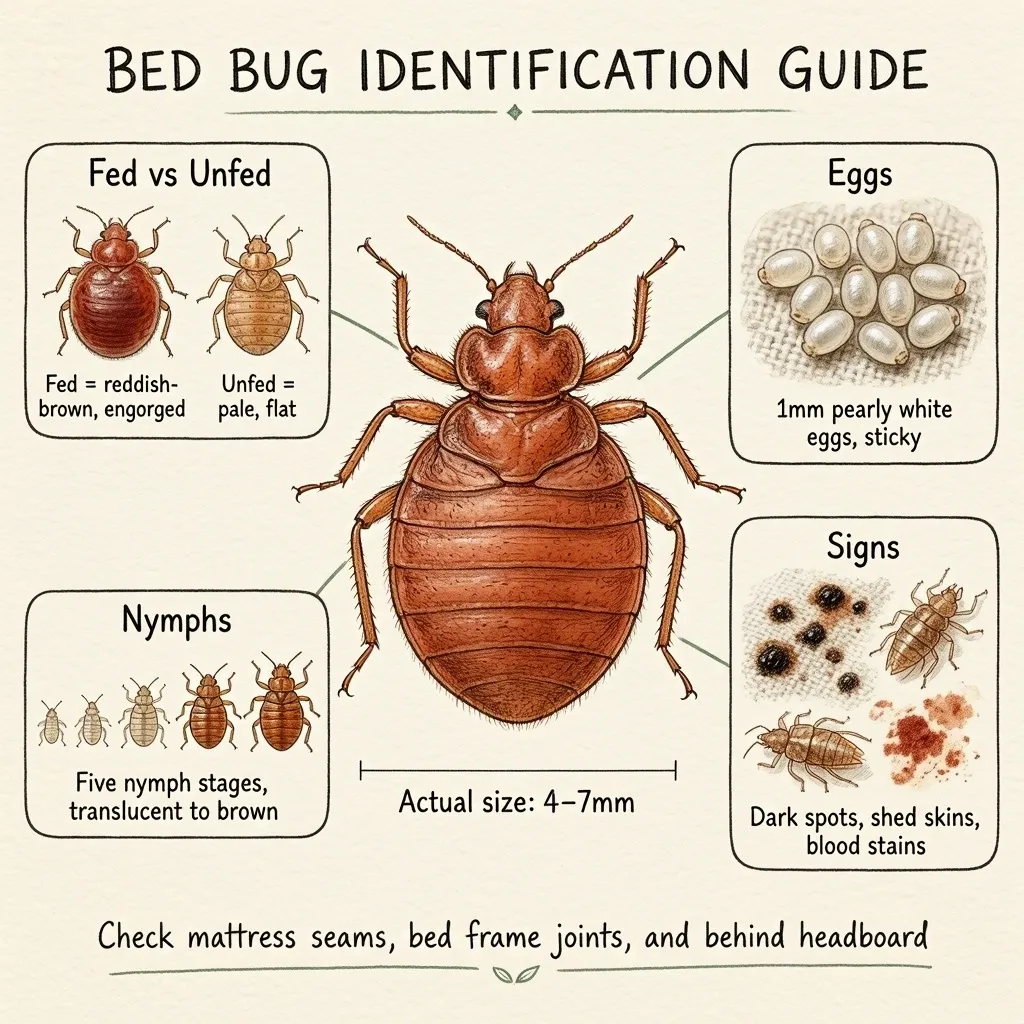
Bed Bug Identification Guide
- Fed: reddish-brown and engorged
- Unfed: pale and flat
- Eggs: about 1mm, pearly white and sticky
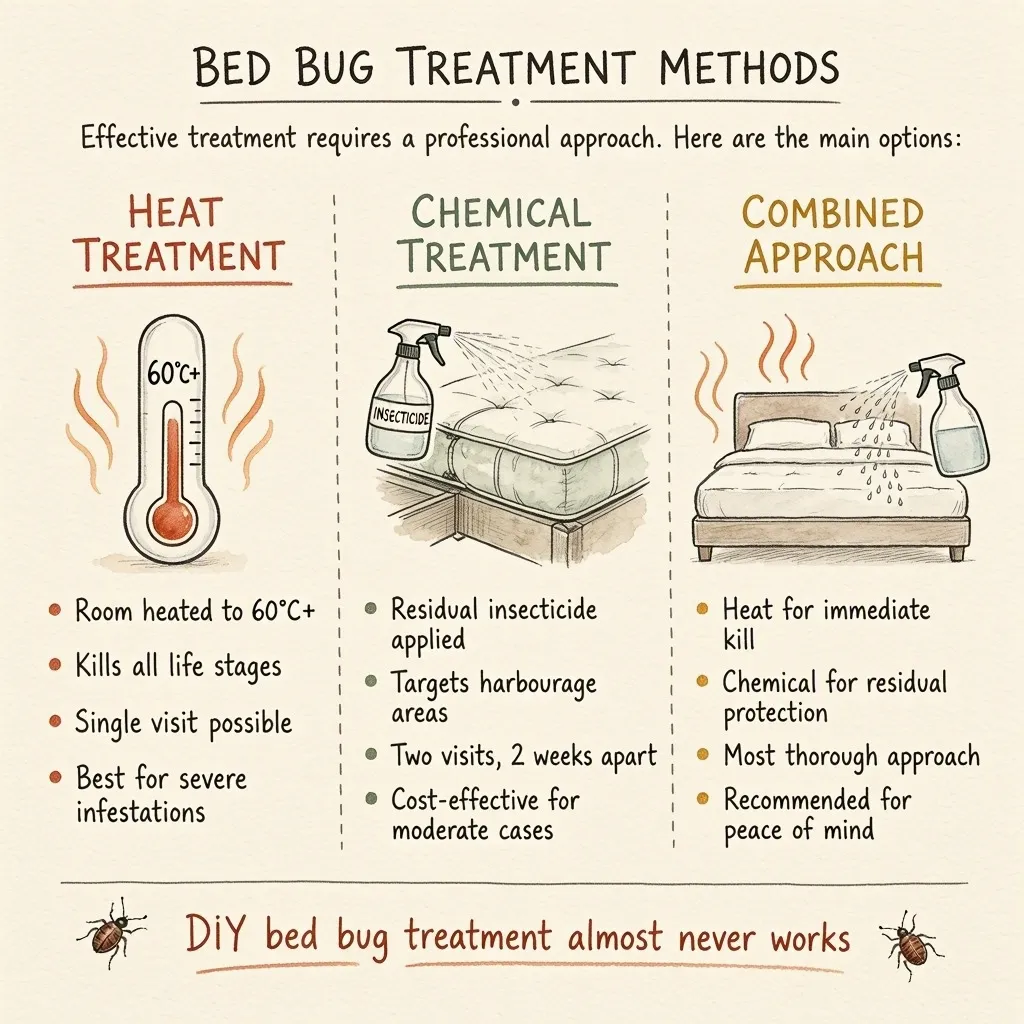
Bed Bug Treatment Methods
- Effective treatment requires a professional approach. Here are the main options:
- Heat treatment — room heated to 60°C+
- Chemical treatment — residual insecticide applied
- Combined approach — heat for an immediate kill
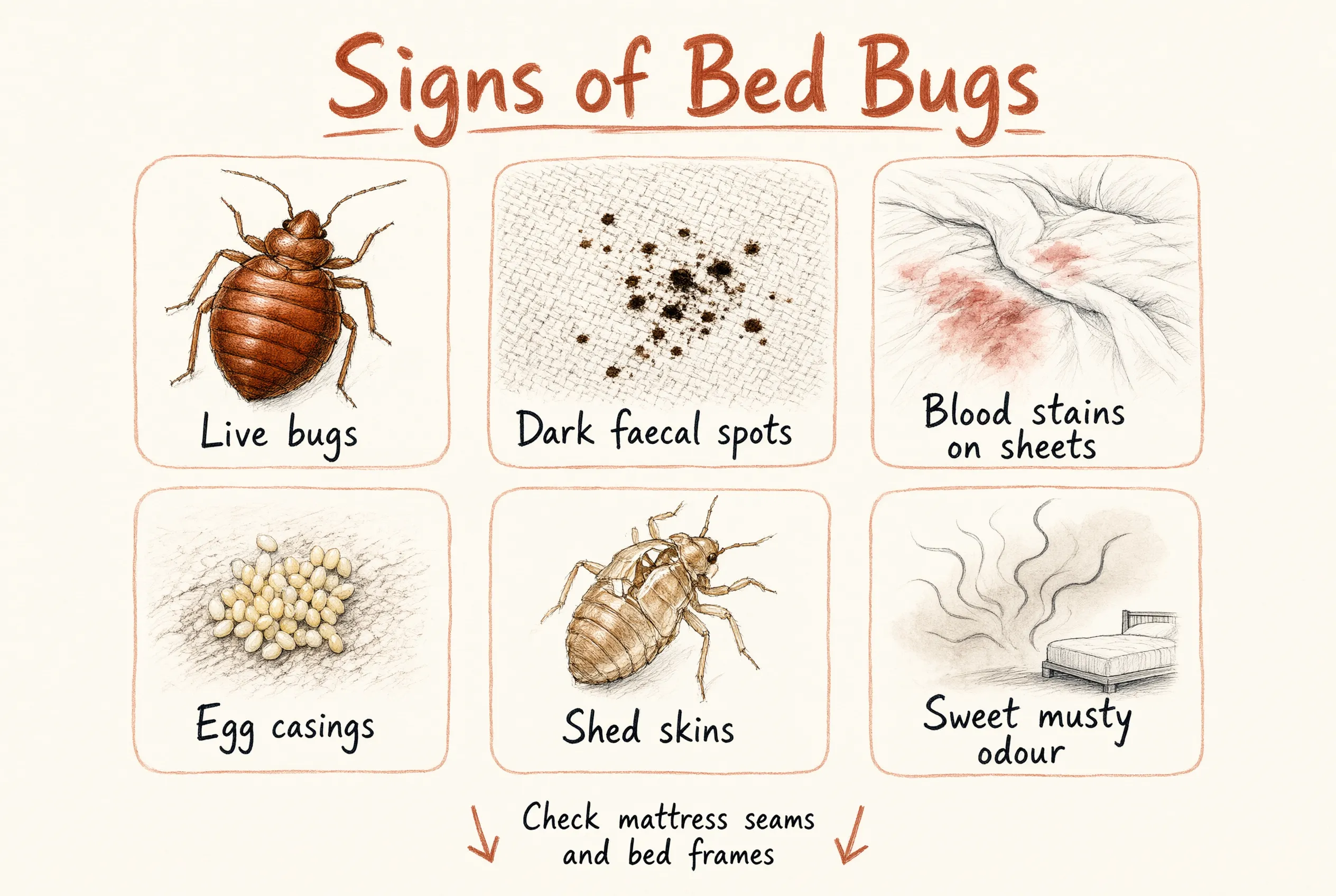
Signs of Bed Bugs
- Egg casings
- Shed skins
- Sweet musty odour
- Check mattress seams and bed frames
Frequently Asked Questions
How do I know if I have bed bugs? Key signs: bites on your body (particularly in lines or clusters on exposed skin), live bed bugs in mattress seams and furniture, blood stains on bedding, dark fecal spots on mattresses and furniture, shed skins, and a sweet musty odour in heavy infestations. A professional inspection can confirm.
How much does bed bug treatment cost in Adelaide? Bed bug treatment in Adelaide typically costs $500-$1,500 for most residential infestations, with severe cases costing $1,500-$3,000+. Multiple treatment visits are usually required. Contact MR Solutions for a quote.
Can I get rid of bed bugs myself? DIY bed bug elimination is very difficult and often unsuccessful, especially for established infestations. Consumer products rarely provide complete elimination. Professional treatment is strongly recommended.
How long does it take to get rid of bed bugs? Bed bug elimination typically takes 4-8 weeks and usually requires 2-4 treatment visits. This is because eggs hatch after initial treatment, and follow-up visits are needed to catch newly hatched nymphs.
Do bed bugs only bite at night? Yes, bed bugs are nocturnal. They typically feed at night while hosts are sleeping. However, in heavy infestations, they may feed at other times if hosts are available.
Can bed bugs live in my hair or on my body? No. Bed bugs don’t live on humans or in hair. They feed on humans and then return to their hiding places. They may crawl on you to feed, but they don’t live on your body like lice or fleas.
How do I prevent bed bugs when traveling? Inspect hotel rooms before settling in, keep luggage on racks away from beds and walls, keep luggage closed, inspect luggage before bringing it home after travel, and launder travel clothing on hot settings immediately upon return.
Can bed bugs come back after treatment? Yes, if reintroduction occurs (from travel, visitors, second-hand items, or in multi-unit buildings from adjacent units). Professional treatment eliminates the current infestation, but preventing reintroduction requires ongoing vigilance.
What should I do if I find bed bugs? Don’t panic, but act quickly. Don’t move items between rooms (this spreads them). Contact a professional pest controller immediately. Follow their preparation instructions carefully. The sooner you act, the easier and less expensive elimination will be.
Are bed bugs dangerous? Bed bugs are not known to transmit diseases. However, their bites can cause itching, allergic reactions, sleep disturbance, and significant psychological distress. Secondary infections from scratching bites are possible.
---
Need Professional Pest Control?
Our licensed technicians serve Seaford and surrounding southern suburbs with transparent pricing and eco-friendly treatments. Get your free quote in 30 seconds.