Spider Identification Adelaide: Common Species Guide
Not sure what spider you've found? Our guide helps you identify common Adelaide spiders—redbacks, huntsmen, white-tails, orb-weavers and more. Learn what's dangerous and what's harmless.
Finding a spider in your home and wondering what it is? You’re not alone. Adelaide is home to many spider species, and knowing which ones are dangerous and which are harmless is important for every homeowner.
At MR Solutions, we help Adelaide residents identify and manage spider problems every day. This guide helps you identify the most common spiders found in Adelaide homes—and understand what to do about each.
Adelaide’s Spider Population: What You Need to Know
South Australia is home to over 1,500 spider species. The vast majority are harmless to humans and play a beneficial role in controlling other insect populations. However, a few species warrant attention because they’re venomous or particularly troublesome.
Important safety note: If you’re bitten by a spider and experience concerning symptoms (severe pain, swelling, nausea, difficulty breathing), seek medical attention immediately. For redback spider bites, antitoxin is available at hospitals.
Common House Spiders in Adelaide: The Harmless Majority
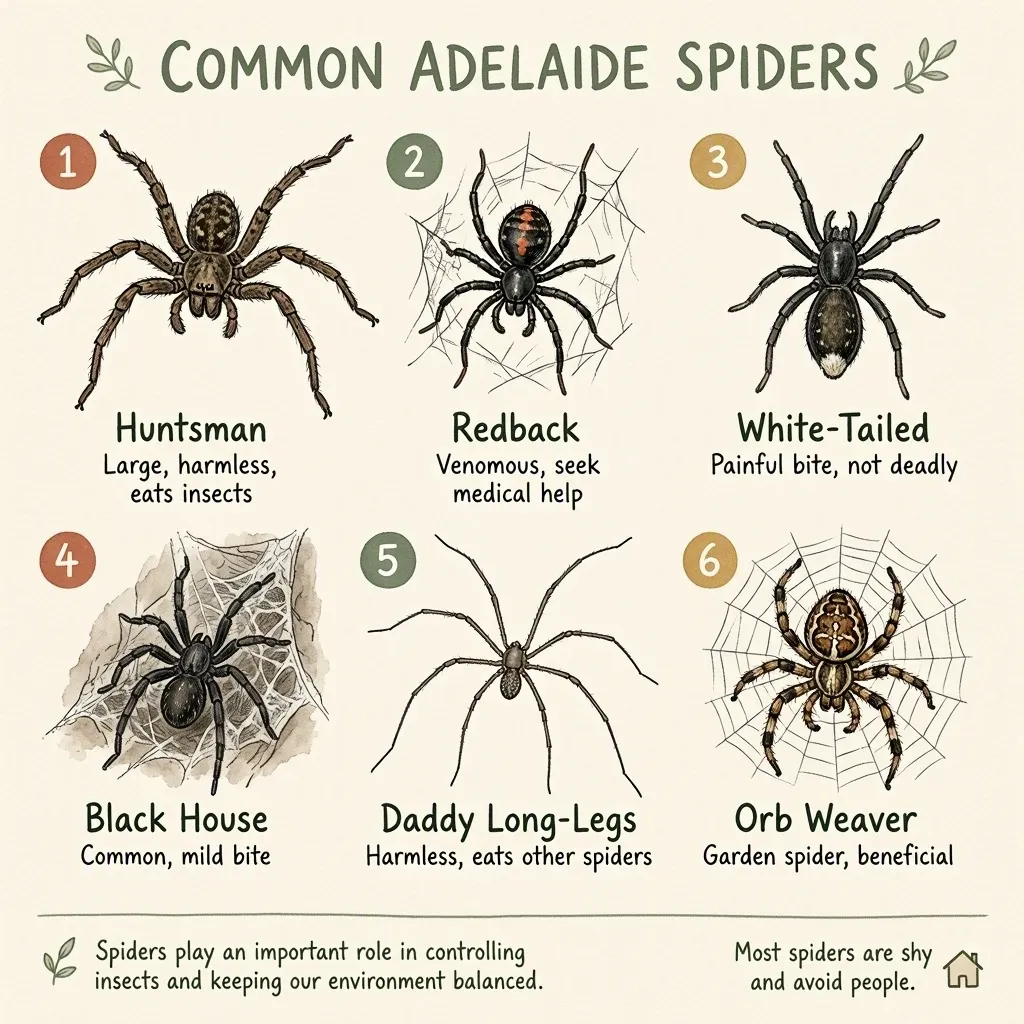
Most spiders you find in Adelaide homes are harmless. Here are the most common:
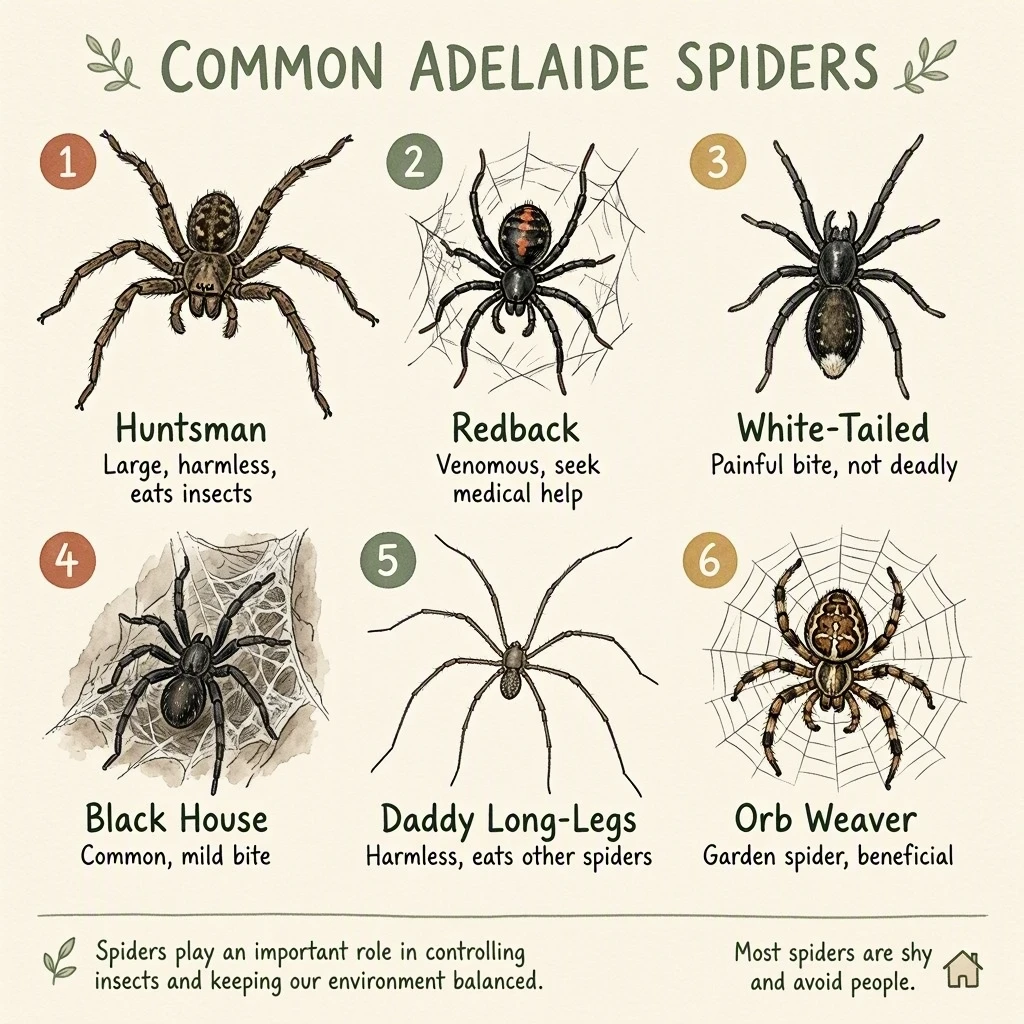
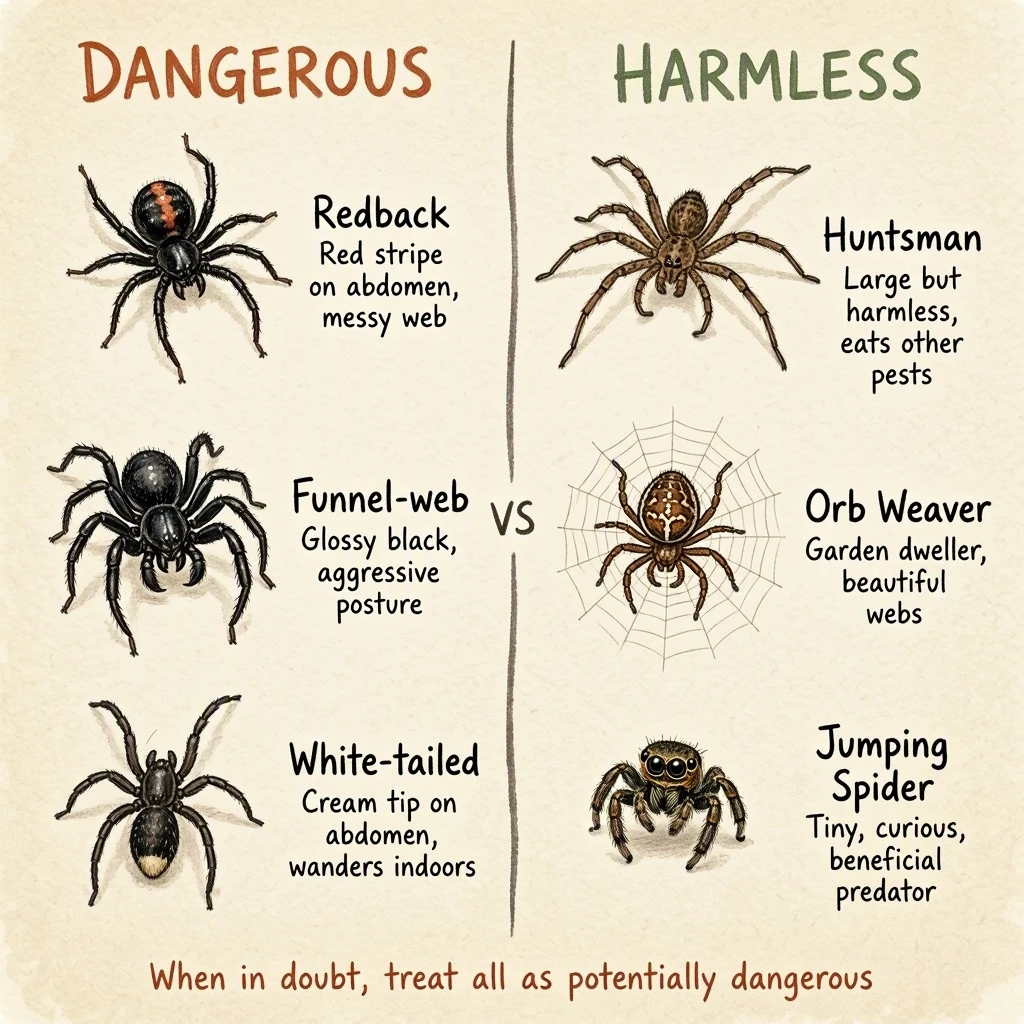
1. Huntsman Spiders (Sparassidae)
Appearance:
- Large, flat-bodied spiders (body up to 5cm, leg span much larger)
- Brown to grey in colour
- Long, angular legs
- Fast-moving
Where found:
- Walls and windows indoors
- Under bark and rocks outdoors
- Often enter homes seeking prey or shelter
Risk: Harmless to humans. Not aggressive. Bites are rare and mild if they occur.
What to do: If indoors and you want it gone, catch and release outside. They’re beneficial predators that eat other insects. Don’t panic—their size is intimidating but they’re not dangerous.
2. Daddy Long-Legs / Cellar Spiders (Pholcidae)
Appearance:
- Very small body with very long, thin legs
- Pale brown or grey
- Often found in clusters
Where found:
- Corners of rooms, ceilings, sheds
- Often build loose, irregular webs
Risk: Harmless to humans. Not aggressive.
What to do: Generally leave them alone. They’re harmless and help control other insects. If you prefer them gone, remove webs and spiders manually.
3. Orb-Weaver Spiders (Orb-weaving spiders)
Appearance:
- Varies by species, but generally rounded bodies
- Often have patterned abdomens
- Build distinctive circular (orb) webs
Where found:
- Around homes: under eaves, on porches, in gardens
- Webs often visible between plants, fences, or structures
Risk: Harmless to humans. Not aggressive. Bites are extremely rare.
What to do: Webs can be removed if they’re in inconvenient locations. Spiders are harmless. Consider relocating webs away from high-traffic areas rather than eliminating spiders.
4. Trapdoor Spiders (Idiopidae and others)
Appearance:
- Medium to large, robust spiders
- Dark brown to black
- Build burrows with hinged lids (trapdoors) in soil
Where found:
- Burrows in soil, often near foundations, in gardens
- Rarely enter homes
Risk: Harmless to humans. Not aggressive. Can deliver a painful bite if handled, but not dangerous.
What to do: Leave them alone. They’re beneficial predators. If a burrow is in an inconvenient location, it can be sealed after the spider has left (they’re nocturnal and may emerge at night).
5. Wolf Spiders (Lycosidae)
Appearance:
- Medium to large, robust, hairy spiders
- Grey, brown, or black with various patterns
- Excellent eyesight, agile hunters
Where found:
- Ground-dwelling, found in gardens, under rocks, in soil
- Occasionally enter homes, especially at night
Risk: Harmless to humans. Can deliver a painful bite if threatened, but not dangerous. Not aggressive.
What to do: If found indoors, catch and release outside. They’re beneficial predators. Don’t handle them.
Venomous Spiders in Adelaide: Know These
While most spiders are harmless, a few venomous species occur in Adelaide. These are the ones to be able to identify:
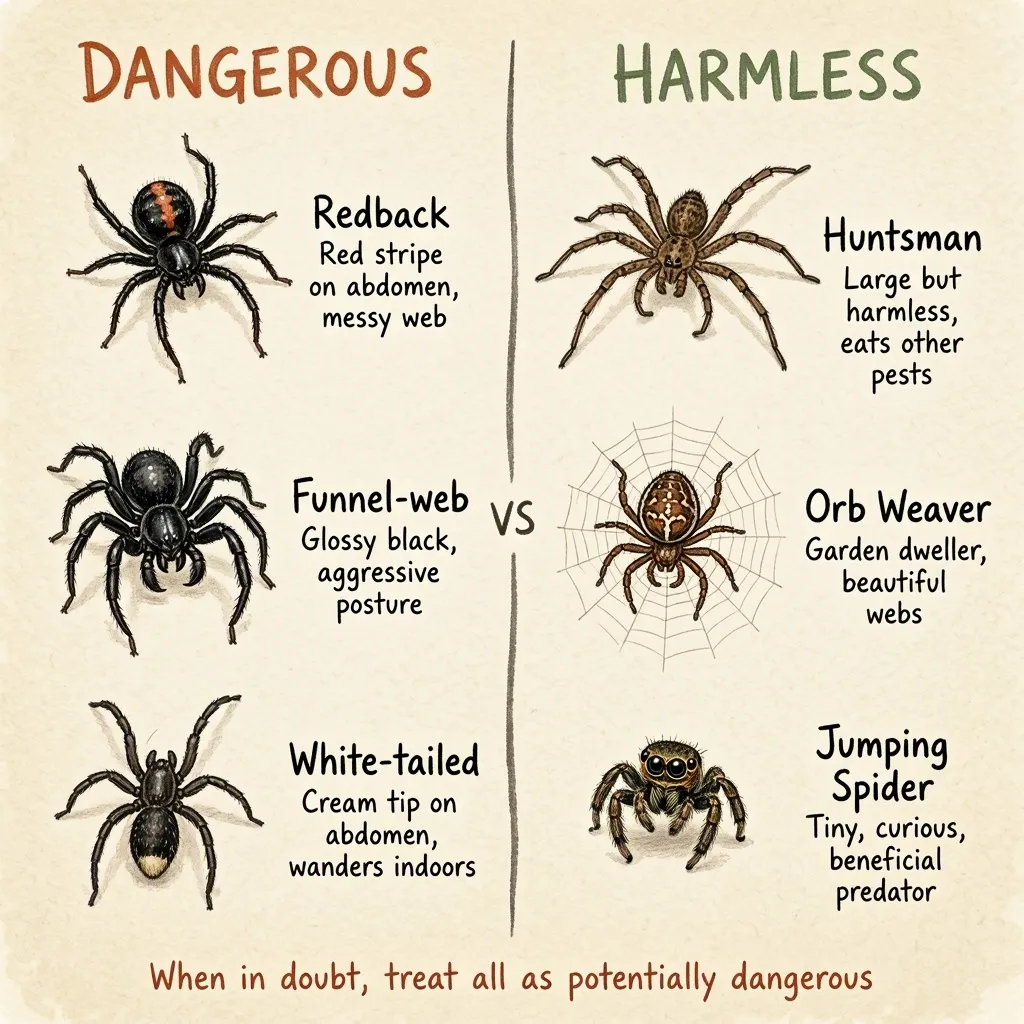
1. Redback Spider (Latrodectus hasselti)
Appearance:
- Female: Small (about 1cm body), black with distinctive red or orange stripe on back (sometimes interrupted). Round, Globular abdomen.
- Male: Much smaller, paler, less distinctive markings. Often overlooked.
Where found:
- Sheltered, undisturbed areas:
- Sheds, garages, storage areas
- Under furniture, especially outside or in cluttered areas
- Around outdoor furniture, play equipment
- In debris, rocks, wood piles
- Mailboxes, behind bins
- Corners of outdoor structures
Web: Messy, irregular webs (not neat orb webs). Often built in corners, crevices, and sheltered spots.
Risk: Venomous. Bite can cause severe pain, sweating, nausea, muscle cramps, and other symptoms. Antitoxin is available at hospitals. While bites can be serious, fatalities are extremely rare with modern treatment.
What to do if you find one:
- Don’t handle it
- If indoors and in a concerning location, call a professional for removal
- Be cautious in areas where redbacks are likely (sheds, under furniture, around outdoor items)
- Shake out shoes and check before putting hands in concealed areas
Prevention: Reduce shelter areas (declutter sheds, garages), check outdoor furniture and play equipment, be cautious when reaching into concealed areas.
2. White-Tail Spider (Lampona species)
Appearance:
- Medium-sized (about 1-2cm body)
- Greyish or brownish with distinctive white tip (tail) on abdomen
- Elongated body shape
Where found:
- Indoors, commonly in bedrooms and living areas
- Hunts other spiders at night (including redbacks)
- May be found on walls, ceilings, floors
Risk: Venomous, but bites are usually mild compared to redbacks. Can cause pain, swelling, and in some cases more significant local reactions. Not considered as medically significant as redbacks.
What to do if you find one:
- Don’t handle it
- If indoors, can be caught and released outside or removed by professional
- Be aware they’re beneficial in some ways (they eat other spiders including redbacks), but also venomous
Prevention: Reduce other spiders (their prey), seal entry points, reduce clutter.
3. Recluse Spiders (NOT in Adelaide)
Important: Recluse spiders (Loxosceles species, including the brown recluse) are NOT found in South Australia. They’re found in other parts of the world (North America, some other regions) but not in Australia. If you’ve heard about dangerous recluse spiders, don’t worry—they’re not in Adelaide.
Spiders to Be Cautious About: Summary
| Spider | Venomous? | Common in Adelaide? | Danger Level | What to Do |
|---|---|---|---|---|
| Redback | Yes | Yes | Moderate—bite painful, rarely serious with treatment | Avoid, call professional if found indoors in concerning location |
| White-tail | Yes | Yes | Low-moderate—bite can be painful but usually not serious | Avoid handling, can be caught and released |
| Huntsman | No | Yes, very common | Harmless | Catch and release if indoors, don’t panic |
| Wolf spider | No | Yes | Harmless—bite possible if handled but not dangerous | Catch and release |
| Orb-weaver | No | Yes | Harmless | Remove webs if inconvenient, spiders are fine |
| Daddy long-legs | No | Yes | Harmless | Leave alone or remove |
| Trapdoor | No | Yes | Harmless | Leave alone |
| Recluse | Yes (elsewhere) | NO—NOT in Adelaide | N/A | Don’t worry—this spider is NOT in Adelaide |
How to Identify a Spider: What to Look For
When trying to identify a spider, note these features:
- Size: How big is it? (Body size, not including legs)
- Colour: What colour is the body? Any markings or patterns?
- Body shape: Is the abdomen round, elongated, flat?
- Legs: How long are the legs compared to body? Any distinctive features?
- Where found: Indoors or outdoors? Where exactly? (This helps narrow down species)
- Web: Is there a web? What does it look like? (Orb web, messy web, no web)
- Behaviour: Is it active and moving, or stationary? Hunting or in a web?
If you can safely capture a photo, that helps with identification. Don’t handle spiders to take photos—use a camera with zoom or ask someone else to photograph it.
What to Do If You Find a Spider You Can’t Identify
- Don’t panic. Most spiders are harmless.
- Don’t handle it. Even harmless spiders can bite if handled.
- Observe and note the features listed above.
- If it’s in a concerning location (bedroom, children’s room, where you can’t avoid it), consider:
- Catch and release (for larger, easily-caught spiders like huntsmen)
- Professional removal (for venomous species or if you’re uncomfortable)
- If you’re bitten and concerned, seek medical attention. For redback bites, go to hospital—antitoxin is available.
When to Call a Professional for Spider Identification and Removal
Consider calling MR Solutions if:
- You’ve found a spider you believe is a redback or white-tail
- You’ve found multiple spiders and are concerned about an infestation
- You have a spider phobia or the spiders are affecting your enjoyment of your home
- You want preventive spider treatment
- You’re unsure what species you’re dealing with and want expert identification
MR Solutions provides spider identification assistance and professional spider control across Adelaide’s southern suburbs.
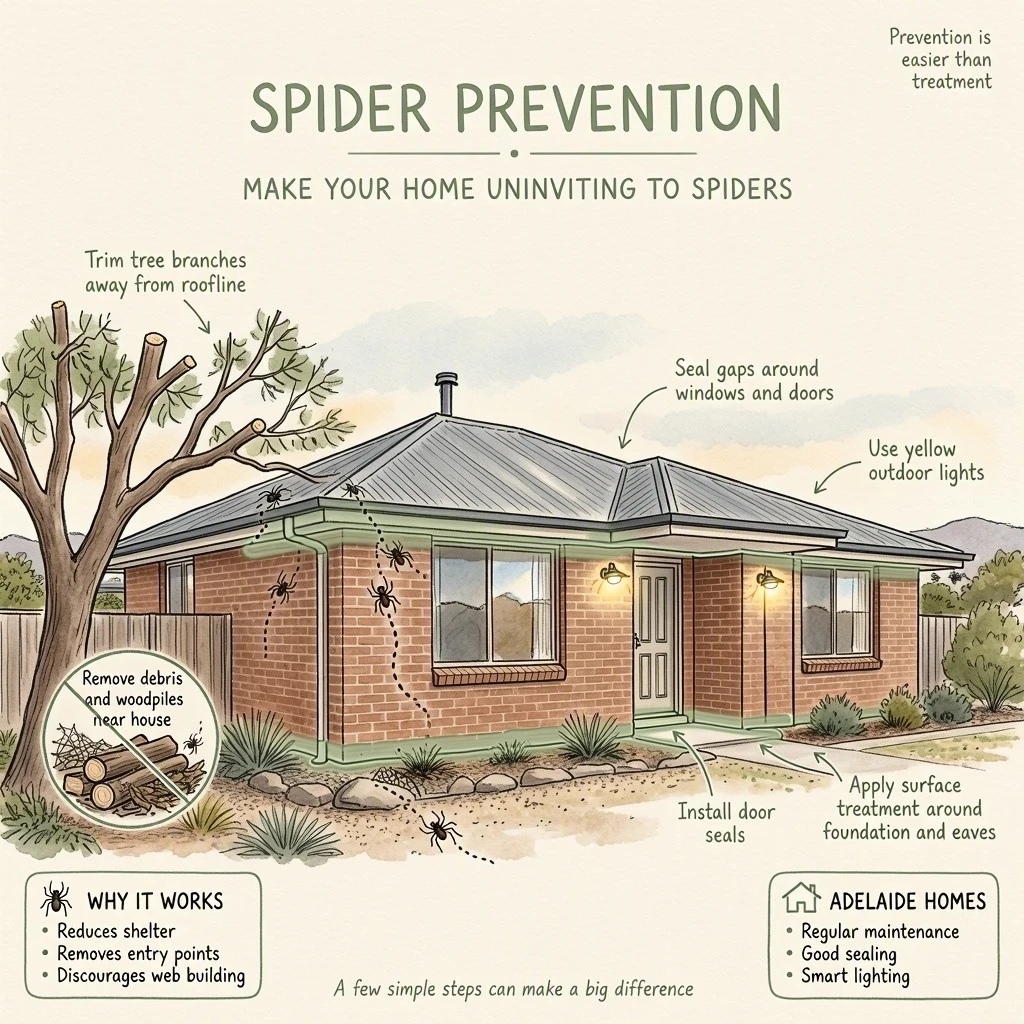
Spider Prevention: Reducing Spider Problems
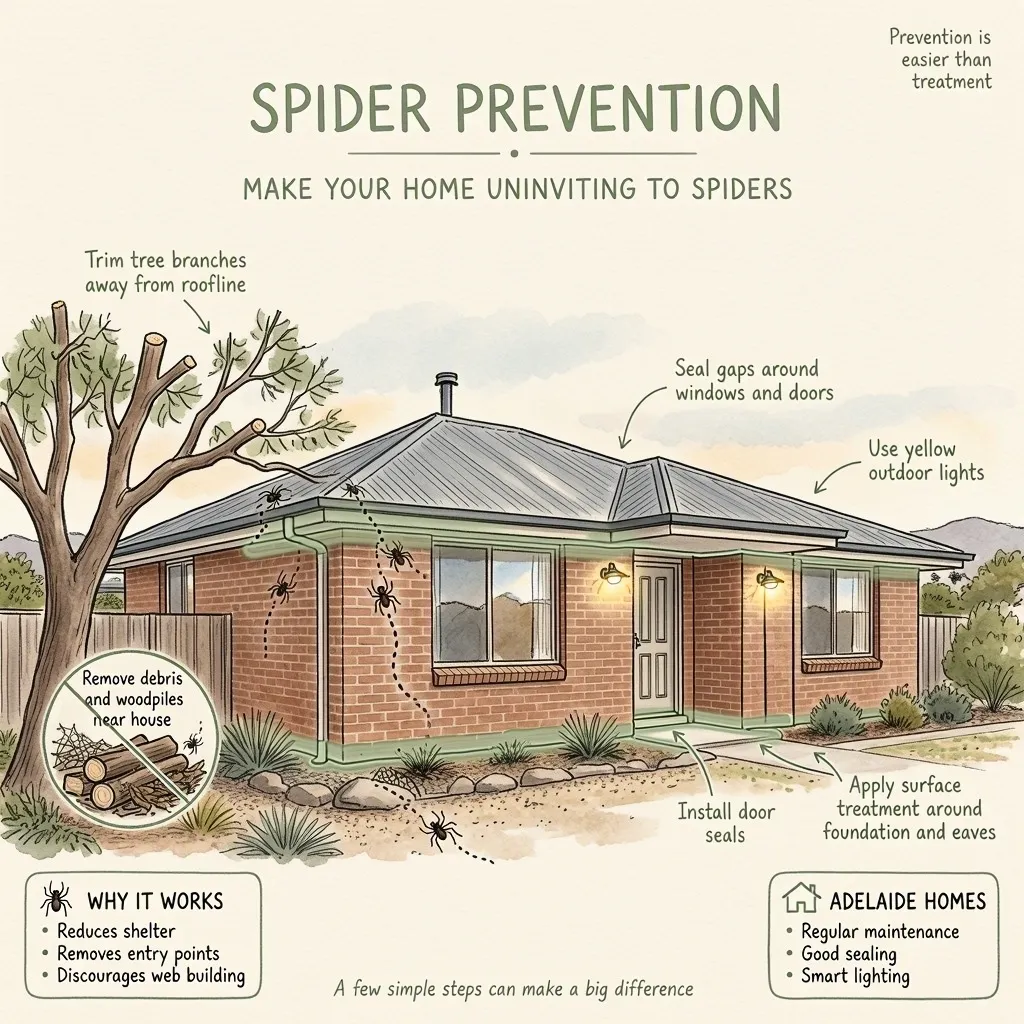
Regardless of species, these steps reduce spider activity:
- Reduce insect prey — Fewer insects = fewer spiders. Manage lighting (less insect-attracting lights), clean food residues, manage waste, reduce moisture.
- Seal entry points — Gaps around doors, windows, pipes, vents allow spiders to enter. Seal with appropriate materials.
- Reduce shelter — Declutter storage areas, remove cardboard, reduce undisturbed areas where spiders can hide and build webs.
- Manage outdoor areas — Keep garden beds away from walls, trim vegetation away from house, manage wood piles and debris.
- Regular cleaning — Vacuum corners, behind furniture, remove webs when you see them.
- Professional treatment — For persistent problems or preventive control, professional spider treatment creates a lasting barrier (2-3 months effectiveness).
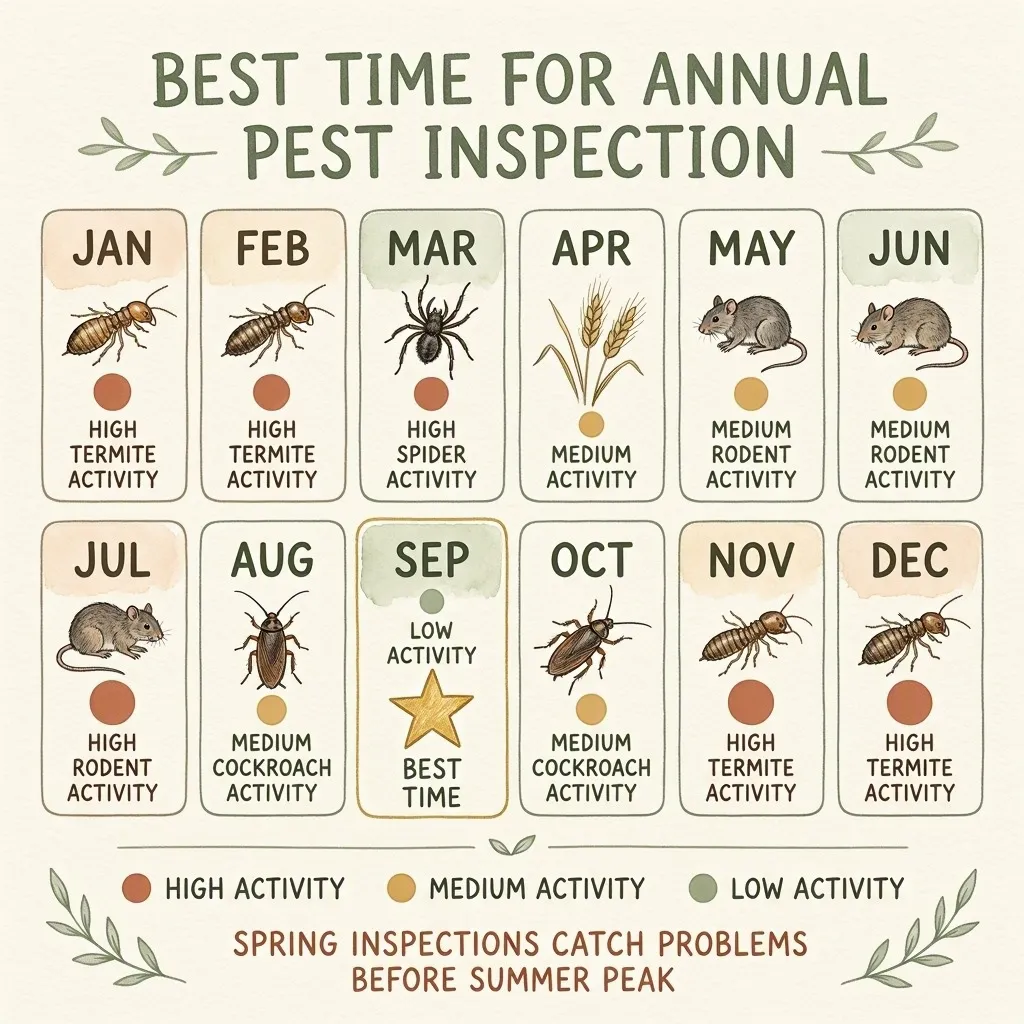
Seasonal Pest Activity Calendar
- Termite activity is rated high through the warmer months
- Spider activity is rated medium
- Rodent and cockroach activity levels are shown month by month
- Also marks the best time for pest inspections
Frequently Asked Questions
What’s the most dangerous spider in Adelaide? The redback spider is the most medically significant common spider in Adelaide. Their bite can be painful and cause systemic symptoms, but antitoxin is available at hospitals and fatalities are extremely rare with treatment. White-tail spiders are also venomous but less significant.
How do I tell if a spider is a redback? Female redbacks are small (about 1cm), black with a distinctive red or orange stripe on their back (the stripe may be interrupted). They build messy, irregular webs in sheltered areas like sheds, under furniture, in debris. Males are much smaller and less distinctive.
Are huntsman spiders dangerous? No. Huntsman spiders are large and intimidating but completely harmless to humans. They’re not aggressive and rarely bite. If found indoors, they can be caught and released outside.
What’s the difference between a huntsman and a wolf spider? Both are hunting spiders (don’t build webs to catch prey), but huntsmans are typically larger, flatter, and have longer legs relative to body. Wolf spiders are more robust and hairy. Both are harmless.
Can I tell if a spider is venomous by its colour? Not reliably. Colour alone isn’t a good indicator of venomosity. Some venomous spiders (redbacks) have distinctive markings, but others (white-tails) are more subdued. Best to learn the specific species rather than relying on general colour rules.
Should I kill spiders I find in my home? Most spiders are harmless and beneficial (they eat other insects). For harmless spiders, catch and release outside is the most humane approach. For venomous species (redbacks, white-tails) in concerning locations, professional removal is recommended. Don’t handle any spider.
How do I keep spiders out of my bedroom? Reduce insect prey (good sanitation, no food in bedroom), seal entry points (check windows, doors, gaps), reduce clutter (especially under beds and in corners), and consider professional spider treatment if the problem persists. White-tail spiders are known to enter bedrooms.
---
Need Professional Pest Control?
Our licensed technicians serve Seaford and surrounding southern suburbs with transparent pricing and eco-friendly treatments. Get your free quote in 30 seconds.