How to Get Rid of Spiders: A Guide for Southern Adelaide Homes
What Actually Removes Spiders
Spiders don’t respond to most home remedies the way people expect. The reason is straightforward: spiders aren’t following a scent trail the way ants do. They are hunting prey and seeking shelter. “Repelling” them works only while the deterrent is active and only for the individuals you happen to hit.
Clear the existing webs and nesting spots
An undisturbed web is an invitation to stay. Removing webs regularly — particularly around eaves, window frames, corners of external walls, sheds, and outdoor furniture — disrupts established spiders and makes the area less attractive to new ones. A soft broom or vacuum with an extension handle covers most external surfaces quickly.
This is not a complete solution on its own. A redback nest in a sheltered subfloor corner or behind stored items will persist regardless of what happens on the external wall. But it reduces the visible population meaningfully.
Reduce the prey that keeps them there
Spiders stay where the food is. In Southern Adelaide homes, the prey is usually other insects — ants, flies, moths, cockroaches — attracted by outdoor lighting, open waste, or moisture:
- Switch outdoor lighting. Bright white lights at night attract moths and flying insects. Switching to amber or sodium vapour globes dramatically reduces the insect activity — and the spider pressure that follows.
- Keep waste sealed. Open rubbish bins, pet food left out, and uncovered compost all feed the insect population that spiders hunt.
- Manage moisture. Damp garden beds against walls, leaking downpipes, and poor subfloor ventilation support the conditions spiders and their prey like.
Seal the entry points
Spiders don’t need much of a gap. Check around door frames and window seals, pipes and conduit penetrations through walls, weep holes in brick, and roof eaves and soffits where roofing meets fascia. A tube of gap filler and a roll of door seal tape handles most of these in an afternoon.
The one thing that actually works long-term: a residual barrier
A professional perimeter barrier treatment is the single most effective option, and the one thing DIY products don’t replicate. A licensed technician applies a residual spray to the areas spiders actually use — eaves, window frames, sheds, garages, subfloors, and the external perimeter — creating a treated zone that kills spiders on contact for 6–12 months.
The difference from supermarket sprays is real: retail products are shorter-acting, less concentrated, and applied to the wrong surfaces. For redbacks in particular, professional treatment is the safest approach — their webs are often in places that are difficult to treat without the right products and proper access, and their bites are medically significant.
One or two spiders on a wall is easy to ignore. A redback under the garden bench, a white-tail in the shed, or a column of huntsmen moving across the living room wall at night is harder to dismiss. For Southern Adelaide homeowners, spiders are the most persistent household pest after ants — and the one where the line between nuisance and medically significant is drawn by a single species.
Here’s the honest breakdown: what actually removes spiders, what doesn’t, which species you’re likely dealing with around Seaford, and when DIY makes sense versus when a professional treatment is the safer call.
What Doesn’t Work (and why it keeps getting recommended)
- Peppermint oil, vinegar, citrus. These may deter spiders briefly in a small enclosed space, but they break down quickly, don’t eliminate a population, and don’t stop new spiders arriving. A temporary deterrent at best.
- Catching and releasing one at a time. Fine for a single huntsman or harmless house spider. Not a solution for a home with redbacks or a recurring white-tail problem — you’re addressing individuals, not the conditions or the population.
- Over-the-counter “spray and forget” products. These often kill the spider you hit but leave the nesting areas untouched, and wear off quickly outdoors.
- Ignoring the prey source. If your outdoor lights run all night, your bins are open, and your subfloor is damp, no amount of web-clearing will hold.
When DIY Makes Sense — and When It Doesn’t
The dividing line is species and frequency.
Reasonable to handle yourself
- A single huntsman or harmless house spider — relocate it, close the gap it came through, and move on.
- Occasional garden orb-weavers or black house spiders where the issue is web appearance rather than any risk — clear the webs and keep up the web clearing.
- Routine web clearing and light reduction as ongoing maintenance — genuinely useful regardless of whether you have a treatment done.
Call a professional
- Any redback you can’t confidently locate and reach — their webs are often in sheltered, elevated, or confined spaces, and their bite is medically significant.
- Recurring spider activity — if you’re seeing spiders regularly despite clearing webs and reducing prey, there’s a nesting population or a persistent entry route that needs a proper treatment.
- Redbacks in or around the home — a professional barrier treatment is the most reliable option, covering the sheltered nesting areas that are difficult to treat safely yourself.
- A home with children, pets, or anyone with a compromised ability to respond to a bite — the risk calculation shifts toward professional treatment and a maintained barrier.
A professional spider treatment from Mr Solution covers inspection of the common nesting areas, targeted residual treatment of eaves, window frames, sheds, garages, subfloors, and the perimeter, and advice on the conditions that are letting them in. Spider treatments across Southern Adelaide start from $270, and a properly applied barrier typically provides 6–12 months of protection.
Start With What You’re Dealing With
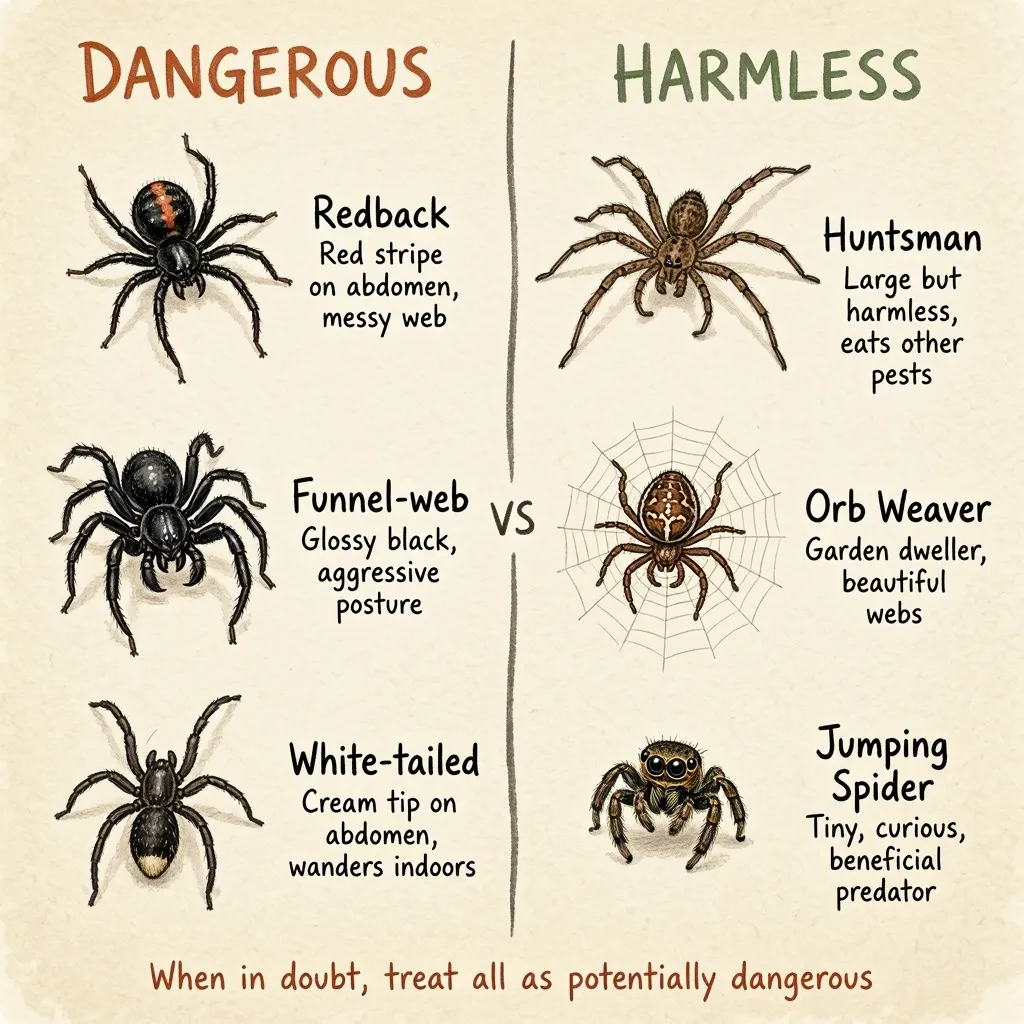
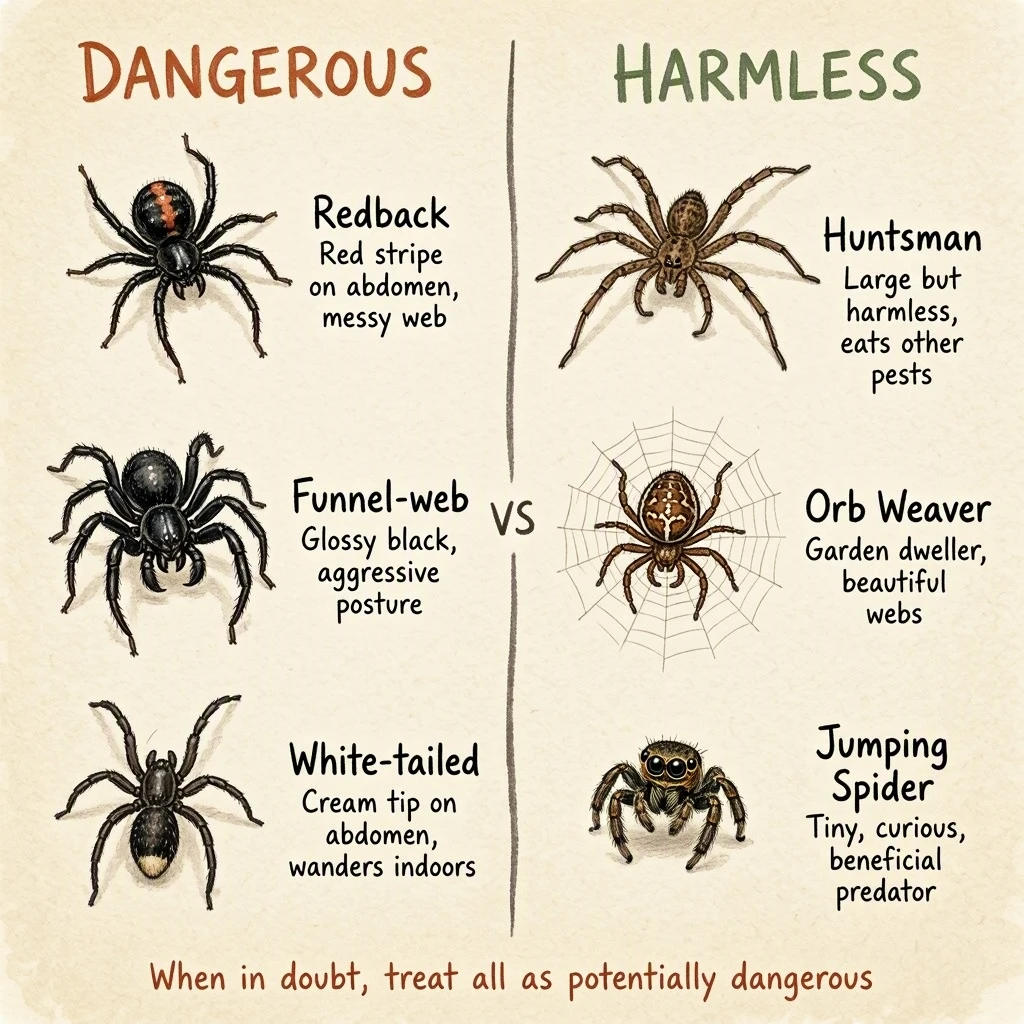
Not every spider problem has the same solution, because not every spider is the same problem. Southern Adelaide homes typically see a handful of species, and they behave very differently:
| Spider | Risk level | Typical spots | Best response |
|---|---|---|---|
| Redback | Medically significant | Sheltered, dry, undisturbed: under outdoor furniture, letterboxes, fence lines, sheds, under eaves, cluttered storage | Professional treatment — nests are often in hard-to-reach places; bites are painful |
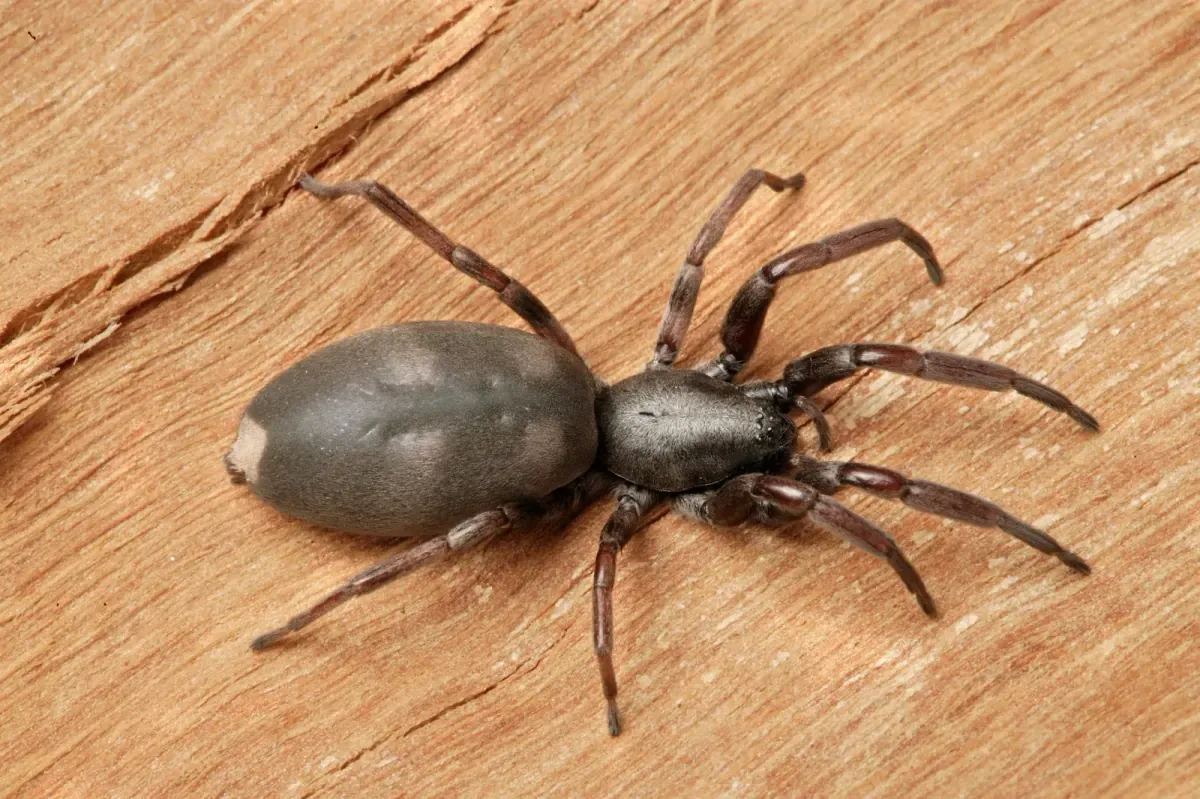
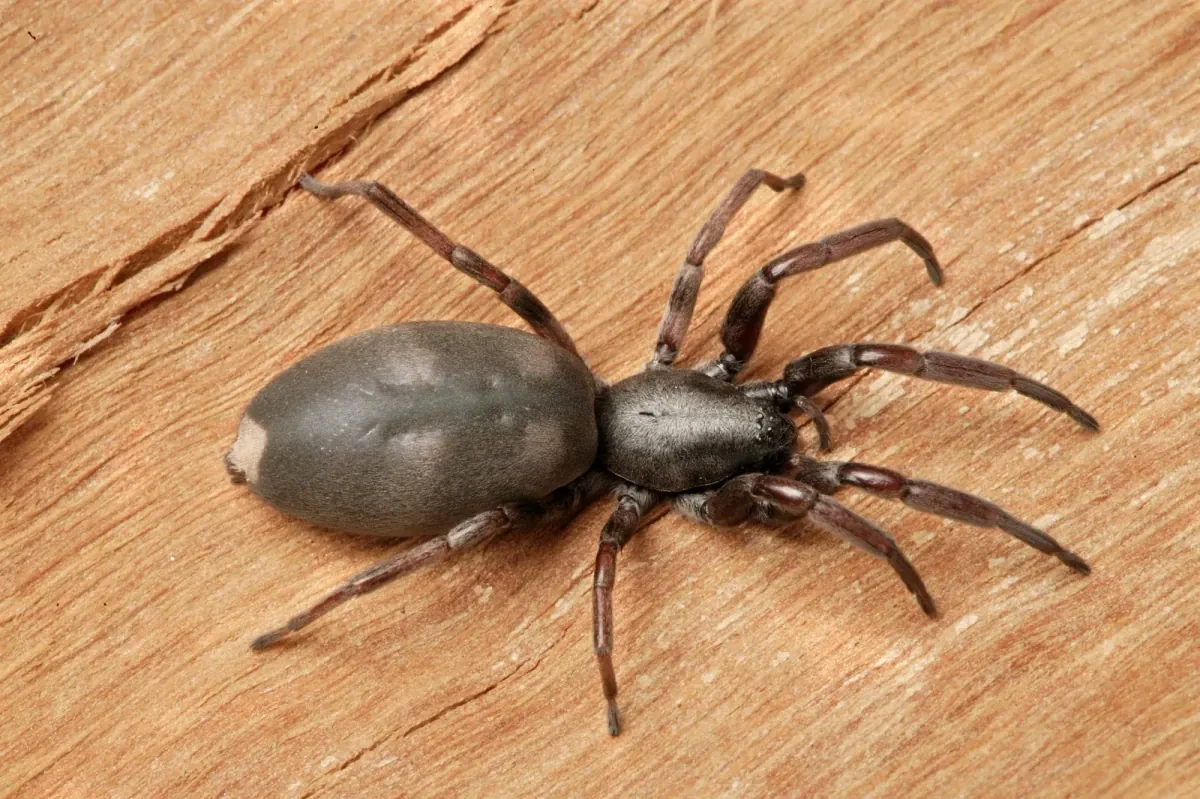
| White-tailed | Low–moderate (painful bite, rarely serious) | Indoor, often in clothing, bedding, shoes — active at night | Remove and relocate where safe; reduce indoor harborage; professional treatment if frequent |
| Huntsman | None (beneficial) | Walls, windows, ceilings — often enters chasing prey or with autumn weather | Relocate; usually best left alone. They eat cockroaches and other pests |
| Black house | Low | Corners, ceilings, sheds — builds untidy webs | Clear webs; reduce insect prey; generally nuisance only |
| Garden orb-weaver | None | External — between trees, fences, under eaves; large circular webs | Remove webs if appearance is the issue; no indoor threat |
The species that matters most in Southern Adelaide is the redback. They favour the dry, sheltered spots that homes in this area have in abundance — older subfloors, brick and stone walls with plenty of crevices, sheds, and the area around outdoor furniture and fencing. If your spider problem is redbacks, quick DIY is not a safe strategy.
Frequently Asked Questions
What is the most effective way to get rid of spiders in a house?
A professional perimeter barrier treatment is the most effective option for house-invading spiders, especially redbacks. A residual spray applied to eaves, window frames, sheds, garages, subfloors, and the external perimeter provides 6–12 months of protection — significantly longer than anything available over the counter. For an active redback, professional treatment is the safest approach because their webs are often in places that are difficult to treat thoroughly without the right products and ladder safety.
Does peppermint oil or vinegar really get rid of spiders?
These home remedies may deter spiders briefly in a small, enclosed space, but they do not eliminate a population and they break down quickly. Spiders are not repelled by smell in the way some insects are — they are following prey and seeking shelter. A deterrent spray might send a few spiders elsewhere for a day or two, but it won’t stop new ones arriving, and it won’t reach the nesting spots where redbacks and white-tails establish.
Should I kill every spider I find in my home?
No. Many house spiders are harmless and some are genuinely beneficial — huntsman spiders, for example, eat cockroaches and other pests. Redbacks and white-tailed spiders are the ones worth taking seriously in Southern Adelaide. If you can identify that a spider is not a risk, relocation is better than killing it. If you can’t identify it safely, or you’re finding them regularly, a professional inspection is the better call.
How long does a professional spider treatment last?
A properly applied residual spider barrier typically provides 6–12 months of protection, depending on the products used, the weather exposure of the treated surfaces, and how quickly they are washed or weathered away. Outdoor areas with heavy rain or direct sun will lose residual faster than sheltered eaves and subfloors. Re-application is usually needed once a year to keep continuous coverage.
What’s the difference between spider removal and spider prevention?
Removal deals with the spiders currently in or around your home — clearing webs, treating nesting areas, and reducing the active population. Prevention addresses the conditions that let them establish: sealing entry points, reducing outdoor lighting that attracts their prey, managing clutter, and maintaining a residual perimeter barrier. The best results come from doing both — clear what’s there, then make the home less attractive to new arrivals.
Need Professional Pest Control?
Our licensed technicians serve Seaford and surrounding southern suburbs with transparent pricing and eco-friendly treatments. Get your free quote in 30 seconds.