Termites vs Ants: How to Tell the Difference
Find a cluster of small pale insects in a damp skirting board, or a swarm of winged bugs around a window after warm weather, and the first question is almost always the same: are these termites, or just ants? It’s a question worth getting right — one is a nuisance, the other can quietly eat the structure of your home.
The good news is that termites and ants are easy to tell apart once you know the three features to look at. This guide breaks them down for Southern Adelaide homeowners.
Termites vs Ants: The Three Key Differences
You can separate termites from ants by their waist, their antennae, and their wings. Get a close look (a photo zoomed in works well) and check these three things.
| Feature | Termite | Ant |
|---|---|---|
| Waist | Broad and straight — no narrowing | Narrow, clearly pinched “wasp waist” |
| Antennae | Straight, bead-like | Bent, elbowed |
| Wings (winged stage) | 4 wings, all equal length, longer than the body | 4 wings, front pair larger than the rear |
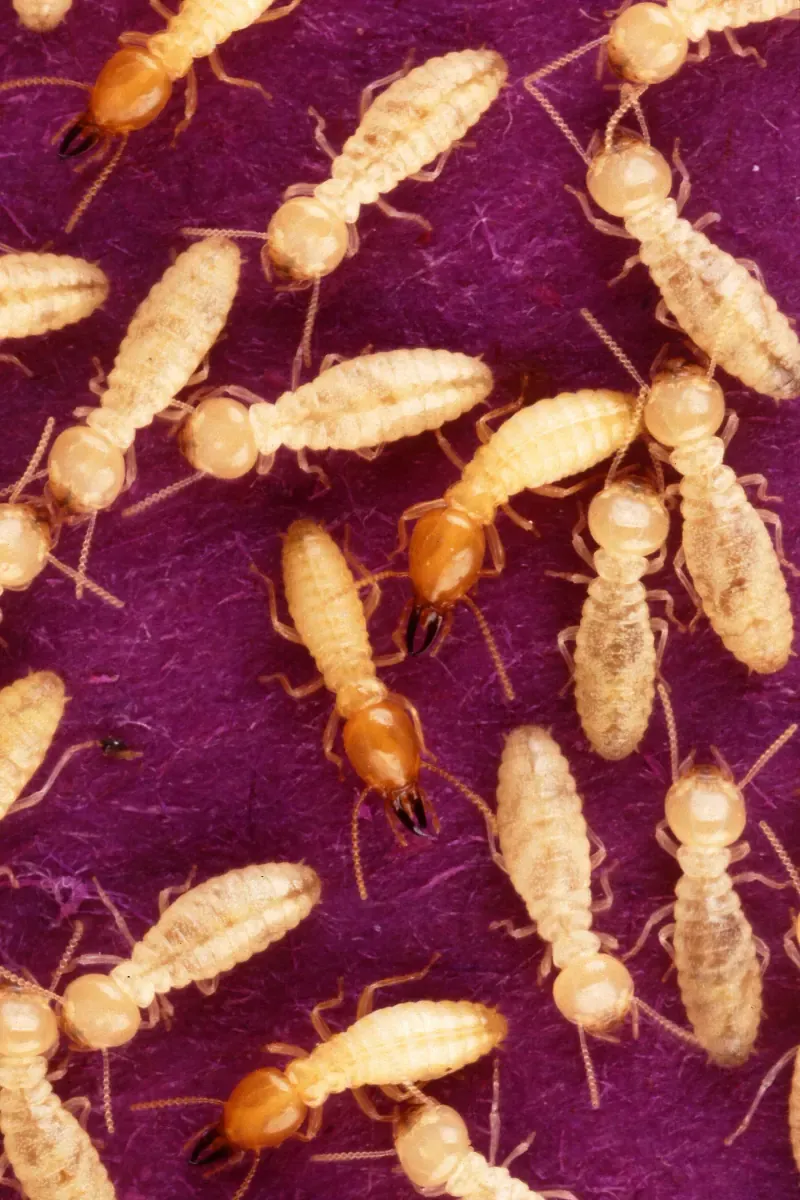
| Colour | Creamy-white, translucent (workers) | Darker brown to black |
| Behaviour | Avoids light; hides in timber and mud tubes | Forages in the open, in trails |
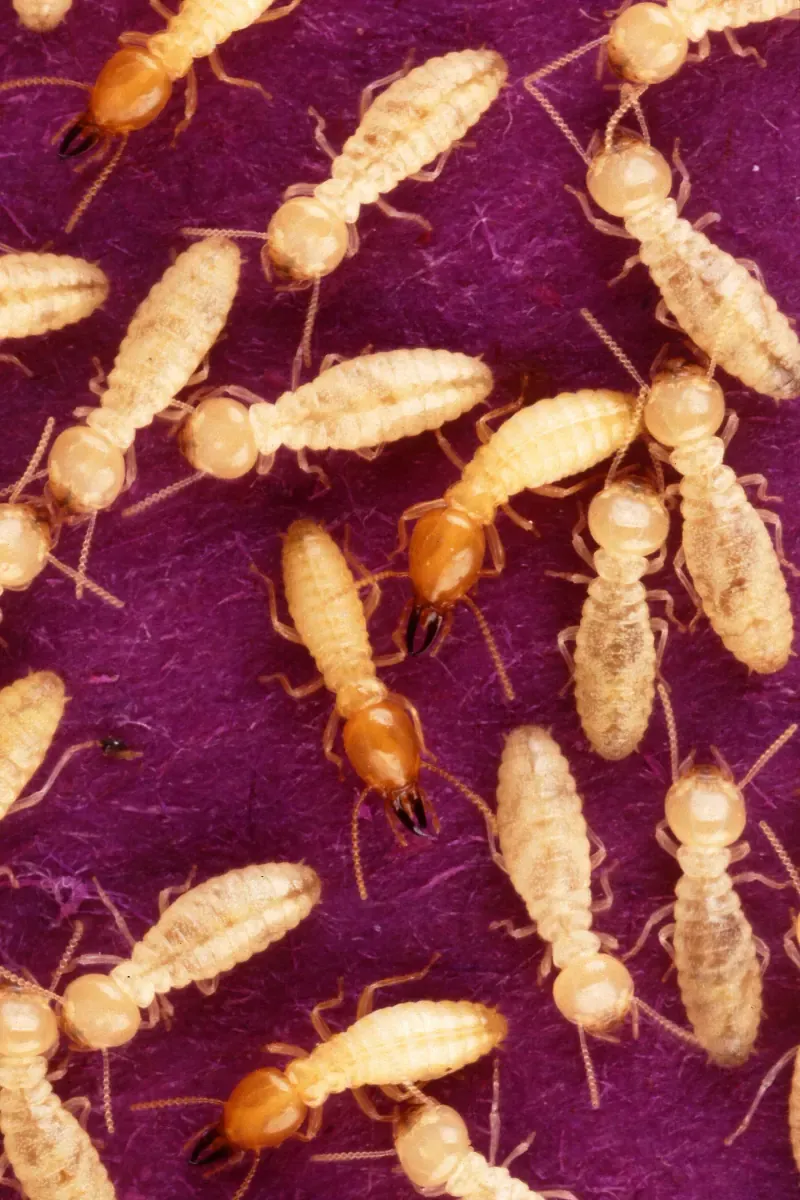
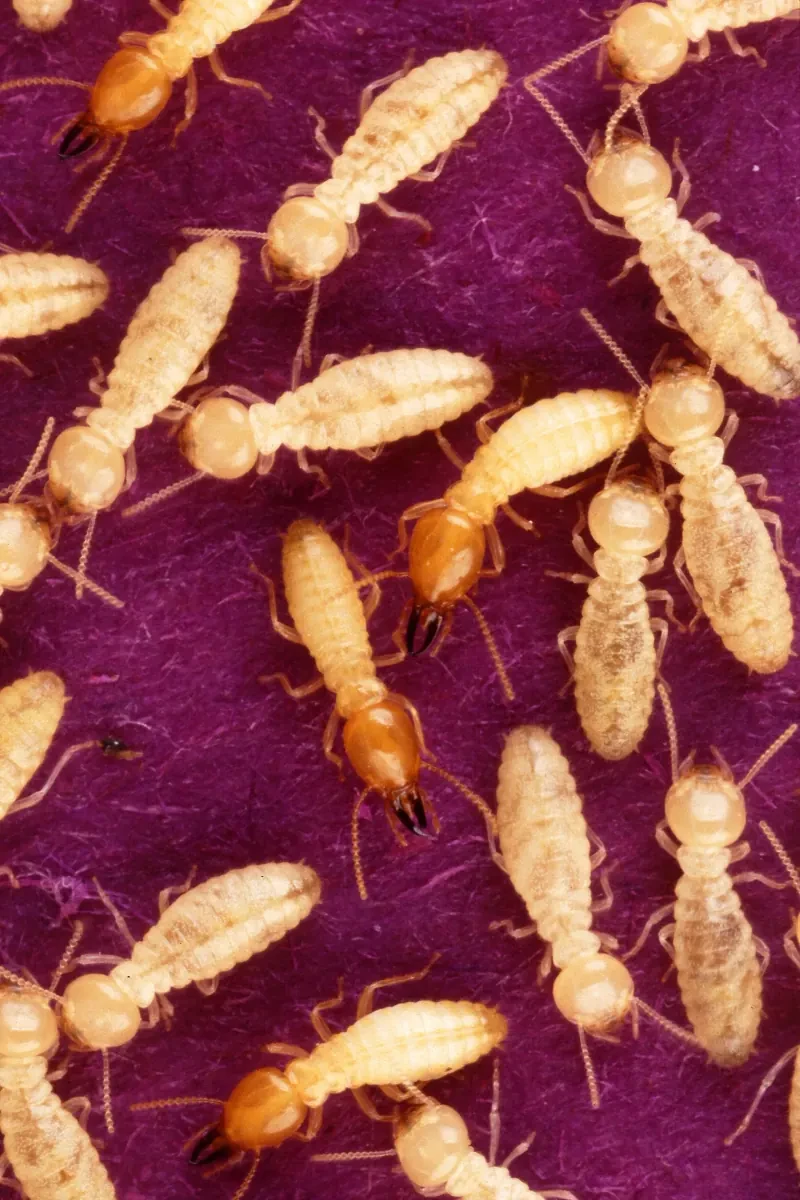
The colour point is where the old nickname comes from: termite workers are pale and soft-bodied, which is why Australians call them white ants — even though termites aren’t ants at all. They’re actually more closely related to cockroaches.
Why Winged Swarmers Cause the Most Confusion
Most mix-ups happen during swarming season, when both termites and ants produce winged reproductive adults (called alates) that fly off to start new colonies. Side by side, the winged forms are the easiest to confuse — and the easiest to tell apart once you know what to look for.
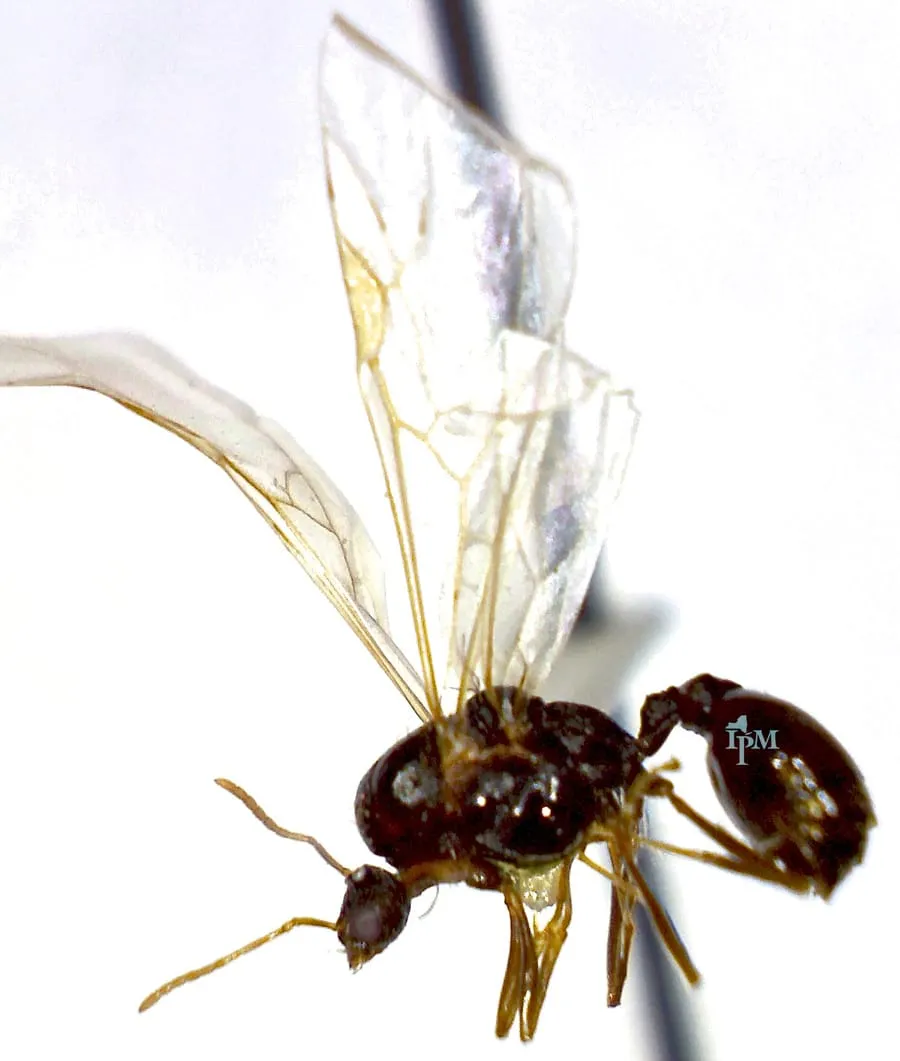
A flying ant, like the one above, has that unmistakable narrow waist and elbowed antennae, with front wings larger than the back pair. A flying termite has a straight, thick waist, straight antennae, and four wings all the same length — noticeably longer than its body. Termite alates also shed their wings very easily, so a small pile of equal-length discarded wings on a windowsill is a classic sign of termites, not ants.
Why It Matters for Southern Adelaide Homes
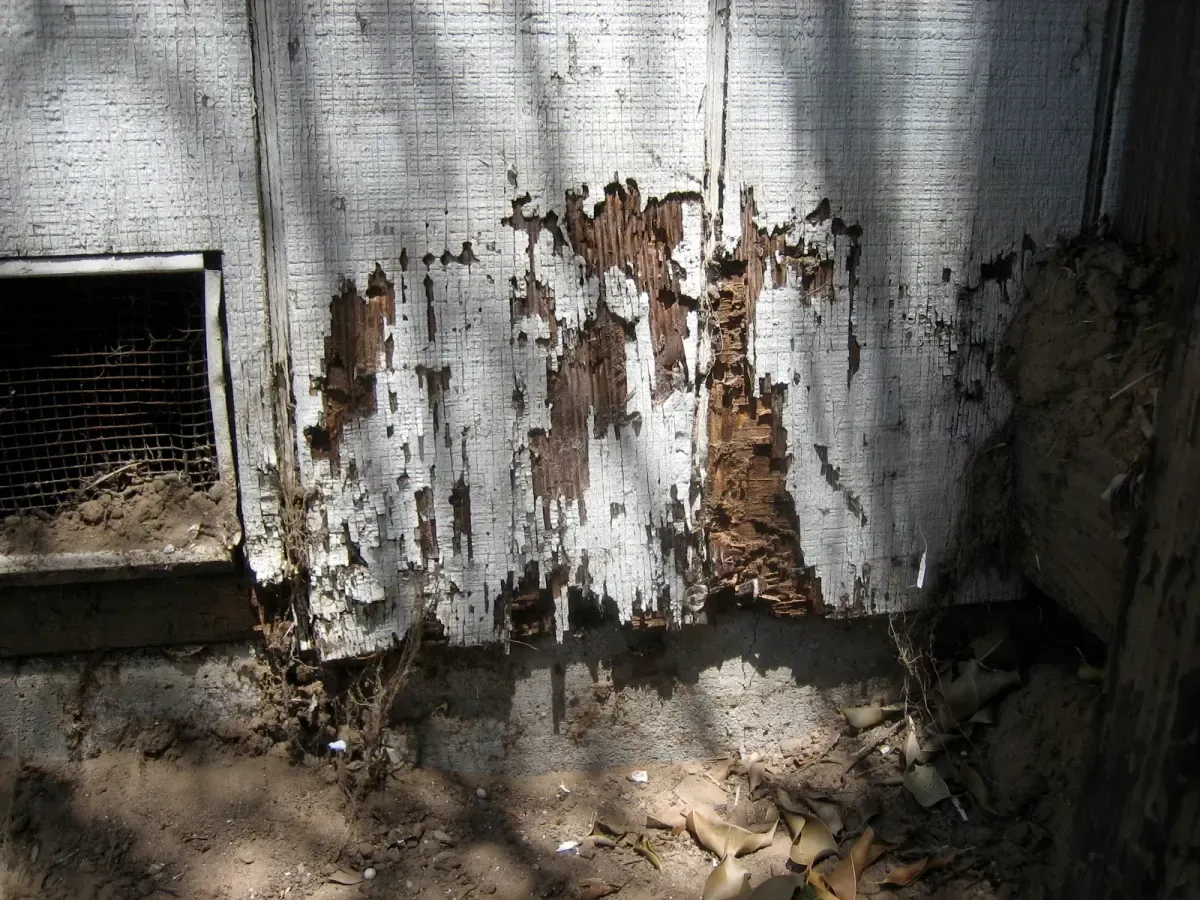
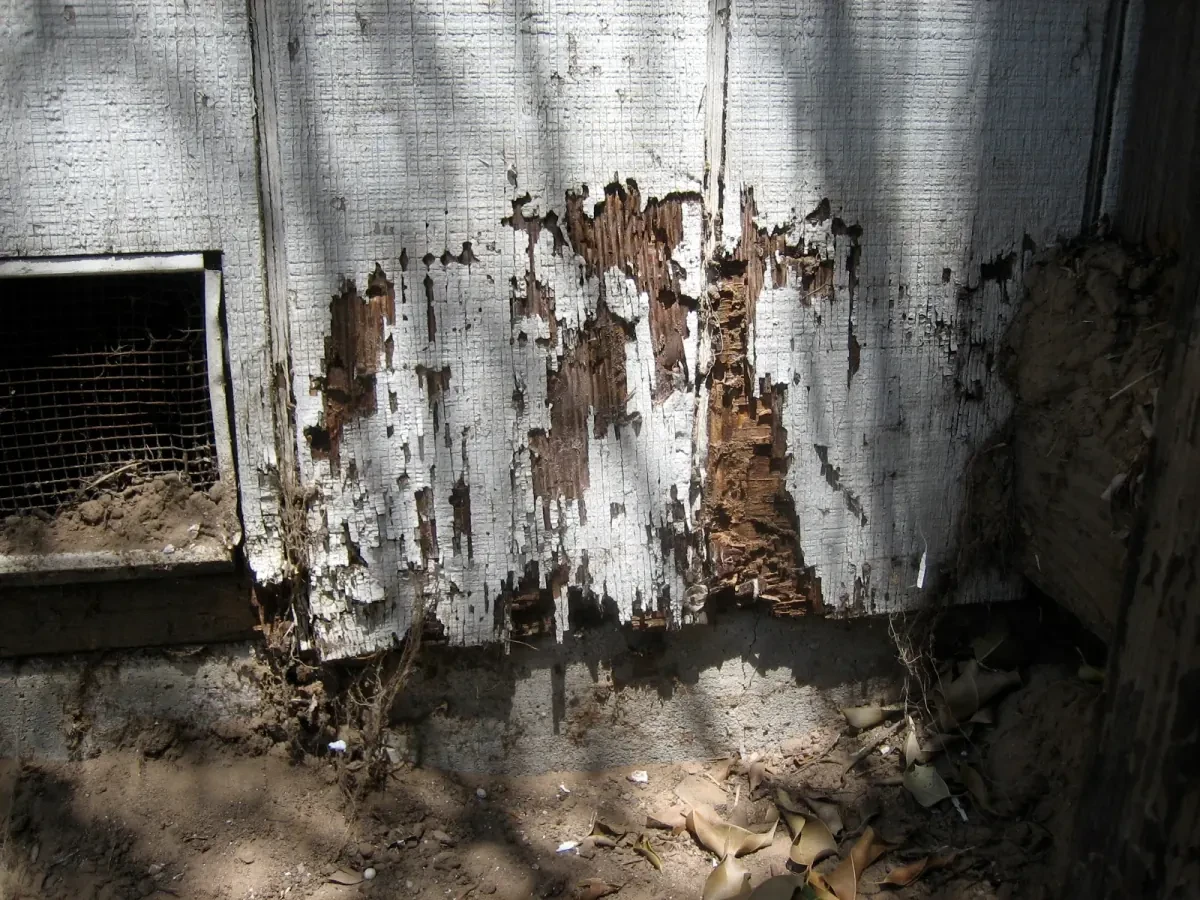
This isn’t just trivia. Subterranean termites — mainly Coptotermes species here in South Australia — feed on the timber in your home’s frame, and they can cause serious structural damage long before they’re noticed. Most ants, by contrast, are a nuisance: they raid the pantry or nest in the garden, but they don’t threaten the building.
That difference is exactly why misidentification is so costly. If you assume a cluster of pale insects in a door frame is “just ants” and reach for the ant spray, you can miss an active termite problem — and disturbing them can push the colony to spread. Knowing how to tell if you have termites is one of the most valuable checks a homeowner can do.
What to Do If You Think You’ve Found Termites
If the insects have a straight waist, straight antennae, pale bodies, or you’ve found piles of equal-length wings, treat it as a suspected termite problem:
- Don’t spray or disturb them. Disturbance can cause the colony to relocate and spread to other parts of the house.
- Keep evidence. Take clear photos, or seal a couple of insects and any shed wings in a container.
- Get a professional inspection. Only an inspection confirms whether termites are active and how far they’ve reached.
Our termite (white ant) treatment and inspection service covers Seaford and Southern Adelaide from $290, using thermal imaging and moisture detection to find activity that isn’t visible on the surface. If what you’ve found turns out to be ants after all, our ant control service handles that too — but it’s always worth confirming which one you’re dealing with first.
Hero image: Formosan subterranean termites (Coptotermes formosanus), Scott Bauer, USDA Agricultural Research Service — public domain.
Need Professional Pest Control?
Our licensed technicians serve Seaford and surrounding southern suburbs with transparent pricing and eco-friendly treatments. Get your free quote in 30 seconds.