Eco-Friendly Pest Control Adelaide: Green Options
eco-friendly pest control options in Adelaide. Learn about green pest management approaches, what's possible, and how MR Solutions balances effectiveness with environmental responsibility.
Environmental responsibility is increasingly important to Adelaide homeowners. Many people want effective pest control but also want to minimise environmental impact. The good news? There are approaches that balance effectiveness with environmental consideration—and professional pest controllers can work with these priorities.
At MR Solutions, we understand that some customers have environmental concerns about pest control. This guide explains what eco-friendly pest control means, what options are available, and how to approach pest control with environmental responsibility.
What Does “Eco-Friendly Pest Control” Mean?
”Eco-friendly pest control” can mean different things to different people. Generally, it refers to pest control approaches that:
- Minimise environmental impact — Using products and methods that have lower impact on the environment, non-target organisms, and ecosystems.
- Use Integrated Pest Management (IPM) — A systematic approach that combines multiple methods: prevention, monitoring, and targeted treatment only when necessary.
- Use lower-toxicity products where effective — Choosing products with lower environmental impact when they can effectively solve the problem.
- Focus on prevention — Reducing the need for chemical treatment by addressing root causes (entry points, food sources, moisture, shelter).
- Be targeted and minimal — Using the minimum amount of product needed, in the smallest area needed, to solve the problem.
Important reality check: Complete elimination of all chemicals while effectively controlling pests is not always possible. Some pest problems require chemical treatment to be solved effectively. The goal is to balance effectiveness with environmental responsibility—not to sacrifice effectiveness for ideology.
Integrated Pest Management (IPM): The Foundation of Eco-Friendly Pest Control
IPM is a systematic approach to pest control that’s considered the gold standard for environmentally responsible pest management. IPM principles include:
1. Inspection and Identification
- Correctly identify the pest — Different pests require different approaches
- Understand the pest’s biology and behaviour — This informs the most effective and minimal approach
- Assess the extent of the problem — Determines what level of intervention is needed
2. Prevention
Address the root causes that allow pests to thrive:
- Exclusion: Seal entry points to prevent pests from entering
- Sanitation: Remove food sources that attract pests
- Moisture management: Fix leaks, reduce moisture that attracts pests
- Habitat modification: Remove shelter and harborage areas
- These are all chemical-free and environmentally harmless
3. Monitoring
- Regular monitoring to detect pest activity early
- Early detection allows smaller, more targeted intervention
- Monitoring determines whether and when treatment is needed
4. Threshold-Based Treatment
- Treatment only when necessary — Not on a schedule, but when pest activity crosses a threshold
- Targeted treatment — Only where pests are active, not broadcast broadly
- Minimal effective amount — Use the smallest amount needed
5. Multiple Control Methods
- Combine approaches — Prevention + monitoring + targeted treatment
- Non-chemical methods first — Where effective (exclusion, trapping, sanitation)
- Chemical methods when needed — Using appropriate products, correctly applied
6. Evaluation
- Assess effectiveness of treatment
- Adjust approach if needed
- Continue monitoring to ensure problem is resolved and doesn’t return
IPM is not a specific product—it’s an approach. Any pest controller can practice IPM principles. Ask your pest controller if they use an IPM approach.
Eco-Friendly Pest Control Options
1. Non-Chemical Methods (Most Environmentally Friendly)
These approaches have minimal environmental impact:
Exclusion (Sealing Entry Points):
- Seal gaps around doors, windows, pipes, vents
- Install door sweeps, weather-stripping
- Screen vents and windows
- Completely chemical-free, highly effective for preventing entry
Sanitation:
- Remove food sources (seal food, clean crumbs, manage waste)
- Reduce moisture (fix leaks, reduce condensation)
- Reduce clutter and shelter
- Chemical-free and effective as part of pest prevention
Trapping:
- For rodents: traps (snap traps, live traps) — no chemicals
- Must be placed where non-target animals can’t access them
- Effective for rodent control, monitoring
- Chemical-free, but requires correct placement and monitoring
Physical Removal:
- Remove webs, spiders manually
- Vacuum pests and egg sacs
- Physical, chemical-free approach for some situations
Habitat Modification:
- Move garden beds away from walls
- Trim vegetation away from house
- Remove wood piles and debris near house
- Manage outdoor lighting (less insect-attracting lights)
- Chemical-free, reduces pest attraction and entry
2. Lower-Toxicity Chemical Options
When chemical treatment is necessary, some options have lower environmental impact:
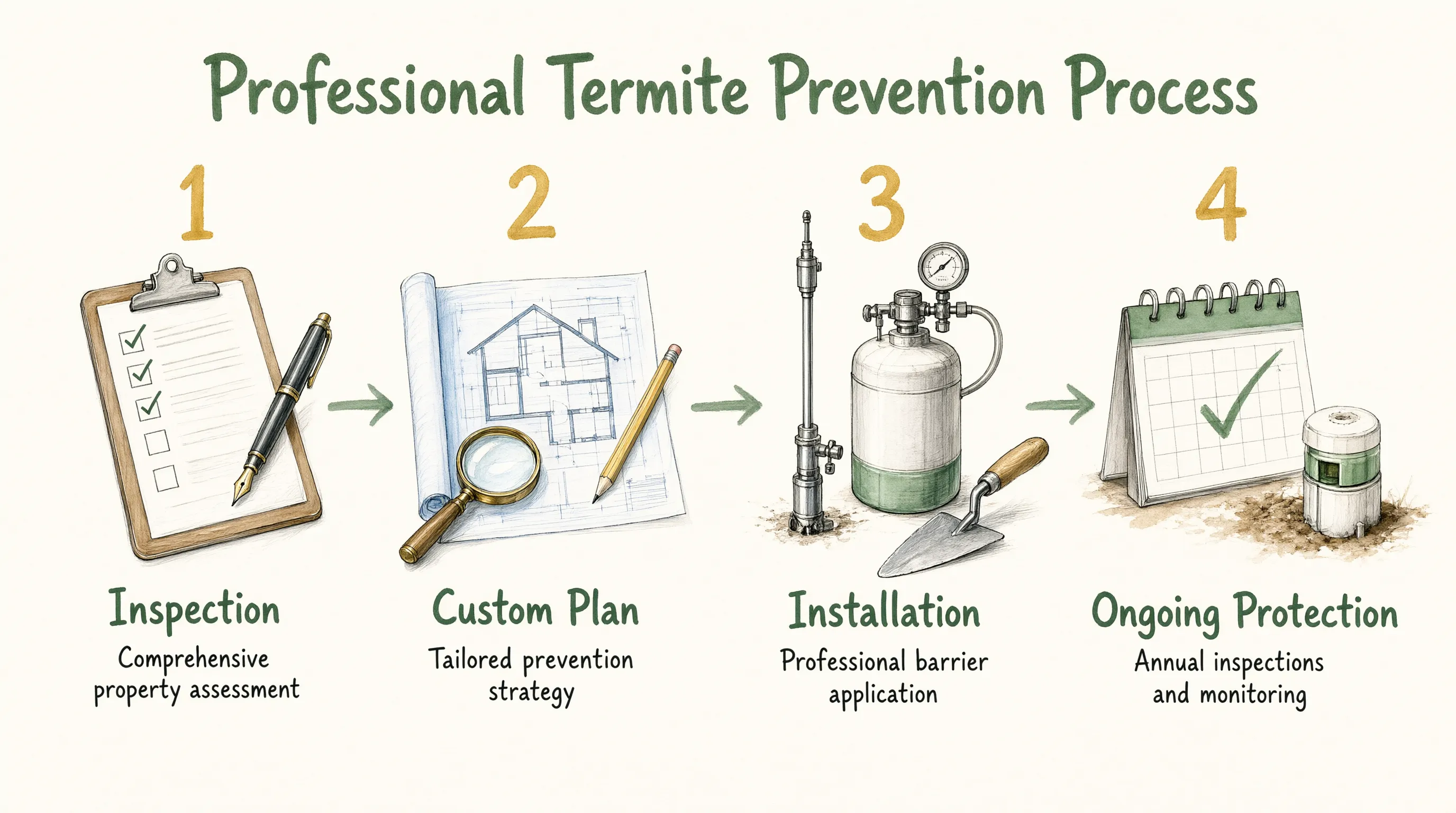
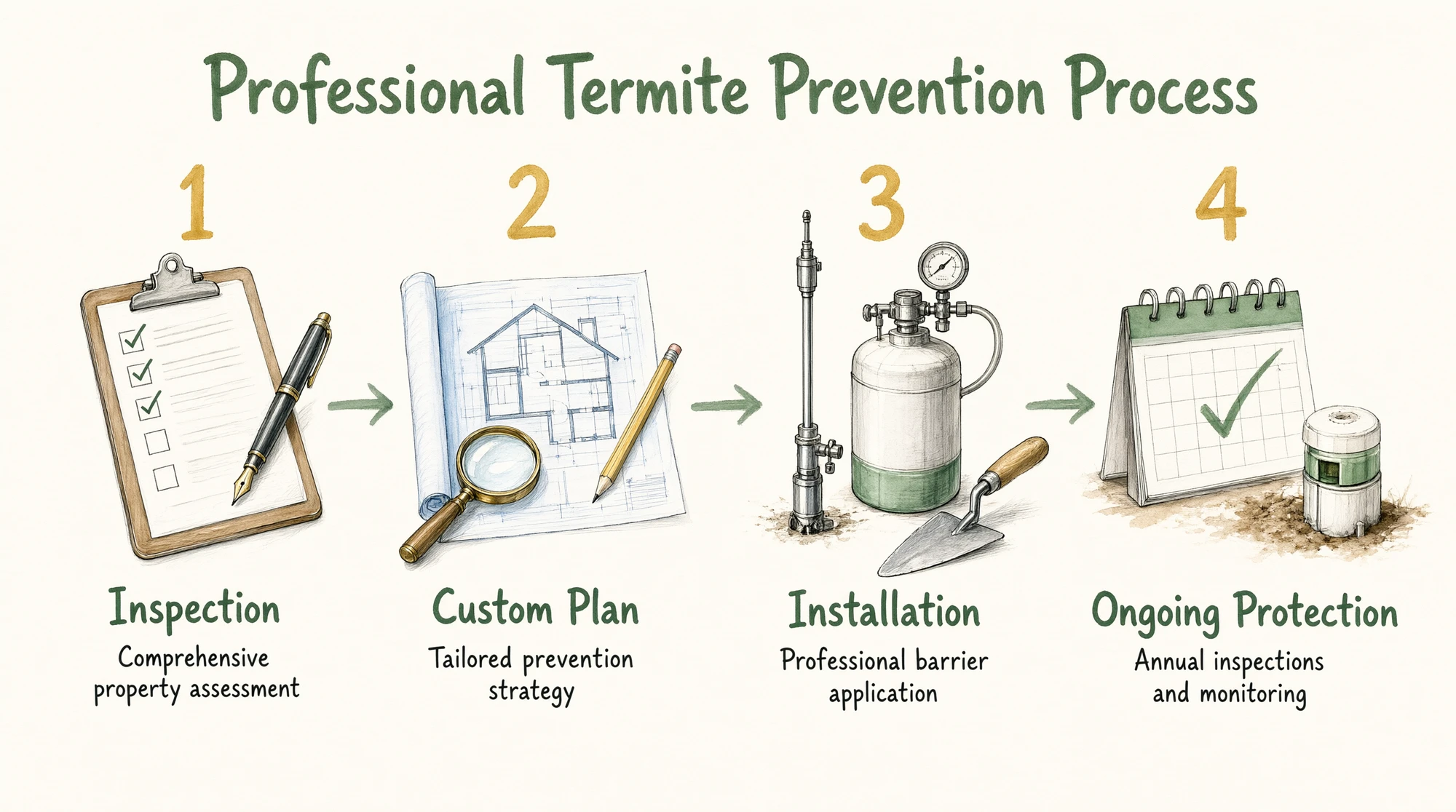
Lower-toxicity termiticides (for termite barriers):
- Some modern termiticides have lower environmental impact profiles
- Non-repellent termiticides (like Fipronil-based) are effective and, when used correctly, have managed environmental risk
- Professional use according to label minimizes environmental impact
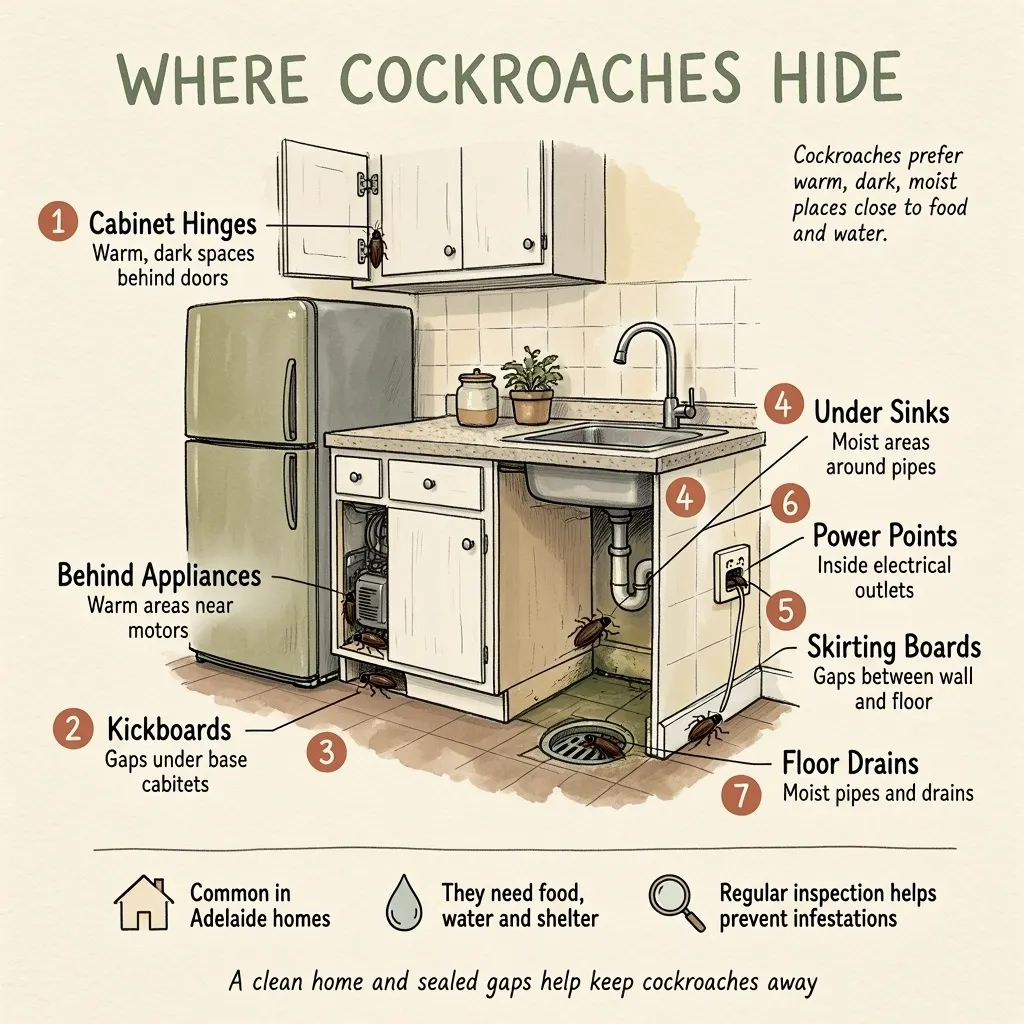
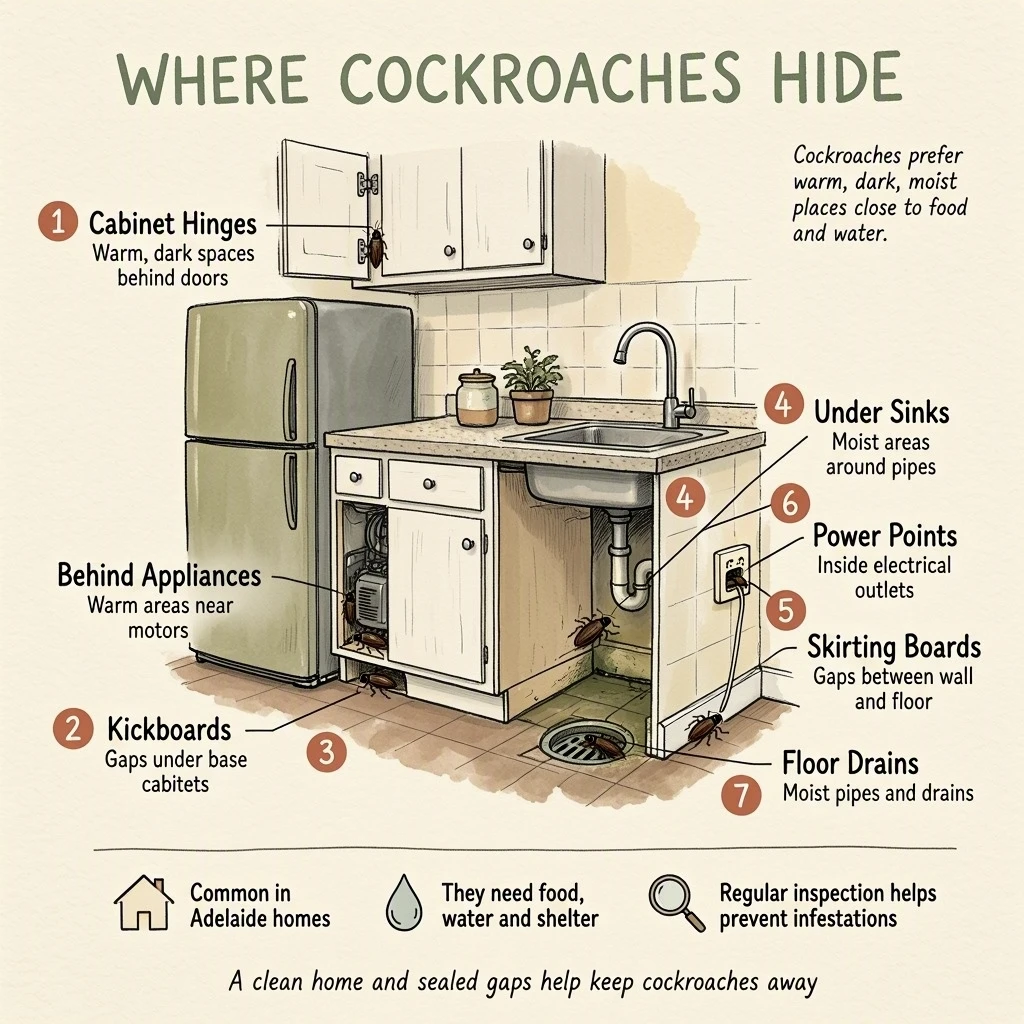
Gel baits (for cockroaches, ants):
- Small amounts of bait placed in specific locations
- Less chemical used overall compared to broad spraying
- Targeted application reduces environmental exposure
- Workers carry bait back to colony, effective with minimal chemical
Insect growth regulators (IGRs):
- Disrupt pest reproduction rather than killing directly
- Lower toxicity to non-target organisms in some cases
- Used for some pest situations
Botanical/organic products:
- Some products derived from natural sources (plant oils, etc.)
- May have lower persistence in environment
- Effectiveness varies—some work well, some are less effective
- Important to assess effectiveness, not just “natural” label
Important: “Natural” or “organic” doesn’t automatically mean safe or effective. Some natural products can still be toxic to non-target organisms. Effectiveness must be assessed. The goal is effective pest control with minimal environmental impact—not using products that don’t work just because they’re “natural.”
3. Targeted Application Methods
How products are applied affects environmental impact:
Targeted spot treatment:
- Products applied only where pests are active
- Not broadcast broadly across entire areas
- Less chemical used overall
Crack and crevice treatment:
- Products applied into cracks, crevices, harbourage areas
- Minimal exposure to environment
- Effective for many pests
Bait stations:
- Products contained in secure stations
- Minimal environmental release
- Effective for rodents and some insects
Void treatments:
- Products applied into wall voids, subfloor areas
- Confined application, less environmental exposure
- Effective for many pests
What’s NOT Realistic: Myths About Eco-Friendly Pest Control
Myth: “All pest control can be done without any chemicals”
Reality: Some pest problems require chemical treatment to be solved effectively. Termite barriers, for example, require termiticides to create a protective zone. Severe infestations may require chemical treatment. The goal is to use chemicals judiciously and correctly, not to avoid them entirely when they’re needed.
Myth: “Natural products always work”
Reality: Effectiveness varies. Some natural products work well for some pests; others don’t work well. Peppermint oil, for example, is often touted as a spider repellent, but scientific evidence for its effectiveness is weak. Using ineffective products means the pest problem persists—which is not environmentally friendly either.
Myth: “Eco-friendly pest control is always cheaper”
Reality: Sometimes it is (non-chemical methods can be inexpensive), but sometimes effective eco-friendly approaches cost similar to or more than conventional approaches (e.g., more labour-intensive methods, specialized products). What matters is effectiveness and environmental impact, not just cost.
Myth: “If a product says ‘eco-friendly’ or ‘green,’ it’s environmentally safe”
Reality: These terms are marketing language, not regulated definitions. Check the actual product, its active ingredients, its safety data, and its environmental impact. Don’t rely on marketing labels alone.
Balancing Effectiveness and Environmental Responsibility
The most environmentally responsible approach to pest control is one that:
- Actually solves the pest problem — Ineffective treatment is not environmentally friendly (pests continue, potentially worsening, and more treatment may eventually be needed)
- Uses the minimal intervention needed — Start with prevention and non-chemical methods where effective; use chemical methods only when needed and in the most targeted way
- Uses correct products correctly — When chemicals are needed, use appropriate products, correctly applied, at correct dosage
- Considers the whole picture — A small amount of correctly-used chemical that solves a pest problem may have less overall environmental impact than an ineffective “natural” approach that allows pests to proliferate
- Prioritizes prevention — The most environmentally friendly pest control is preventing pests from becoming a problem in the first place
Working with a Pest Controller on Environmental Concerns
If you have environmental concerns about pest control:
- Discuss your concerns upfront — Tell your pest controller about your priorities and concerns
- Ask about their approach — Do they use IPM principles? Do they consider environmental impact?
- Ask about options — What non-chemical methods are available? What lower-toxicity products could be used? What’s the most environmentally responsible approach for your situation?
- Understand the trade-offs — Be open about the fact that effectiveness is also important. An environmentally “perfect” approach that doesn’t solve the problem is not a good outcome.
- Make informed decisions — With information about options, effectiveness, and environmental impact, you can make decisions that balance your priorities
MR Solutions and Environmental Responsibility
At MR Solutions, we:
- Understand environmental concerns — We recognise that many customers care about environmental impact
- Use IPM principles — We focus on prevention, monitoring, and targeted treatment
- Select products appropriately — We consider effectiveness and safety profile
- Apply products correctly — Minimal, targeted application according to label
- Provide honest advice — We’ll discuss options and trade-offs openly
- Prioritize effectiveness — We won’t recommend approaches that won’t solve your problem
Our commitment: Effective pest control that considers environmental responsibility where possible, without compromising on solving your pest problem.
Frequently Asked Questions
What is the most eco-friendly pest control method? The most eco-friendly methods are non-chemical: exclusion (sealing entry points), sanitation (removing food and moisture), trapping (for rodents, with correct placement), and habitat modification. These have minimal environmental impact. However, they may not solve all pest problems—some situations require chemical treatment.
Are there organic pest control products that work? Some organic products work for some pests, but effectiveness varies widely. Some work well; others don’t work much better than placebo. Effectiveness must be assessed case by case. Don’t rely on “organic” label alone—check whether the product actually works for your pest problem.
Is professional pest control compatible with environmental values? Yes, when done responsibly. Professional pest controllers using IPM principles, targeted application, appropriate products, and correct application can achieve effective pest control with managed environmental impact. The key is that the professional uses chemicals correctly (minimal, targeted, according to label) rather than excessively or incorrectly.
What can I do to make pest control more environmentally friendly? Focus on prevention: seal entry points, manage sanitation and moisture, reduce clutter and shelter, manage outdoor attractants. These chemical-free approaches reduce the need for treatment. When treatment is needed, work with a professional who uses targeted, minimal application.
Do natural repellents (peppermint oil, vinegar, etc.) work? Evidence for most natural repellents is weak. Some people report success, others don’t. Scientific support is limited. They’re unlikely to solve an established pest problem. They may provide minor deterrence for some people but shouldn’t be relied upon as the sole approach.
Are termite barriers environmentally friendly? Termite barriers require termiticides, which are chemicals. Modern termiticides, when used correctly according to label by professionals, have managed environmental risk. The environmental impact of termite barriers must be weighed against the alternative: termite damage (which can be extensive, is not covered by insurance, and may lead to more extensive intervention later). For many homeowners, the environmental impact of barrier treatment is acceptable given the essential protection it provides.
---
Need Professional Pest Control?
Our licensed technicians serve Seaford and surrounding southern suburbs with transparent pricing and eco-friendly treatments. Get your free quote in 30 seconds.