Why Annual Pest Inspections Save Adelaide Homeowners Money
Annual pest inspections aren't just about peace of mind—they save money. Learn how early detection prevents costly damage. Expert advice from MR Solutions.
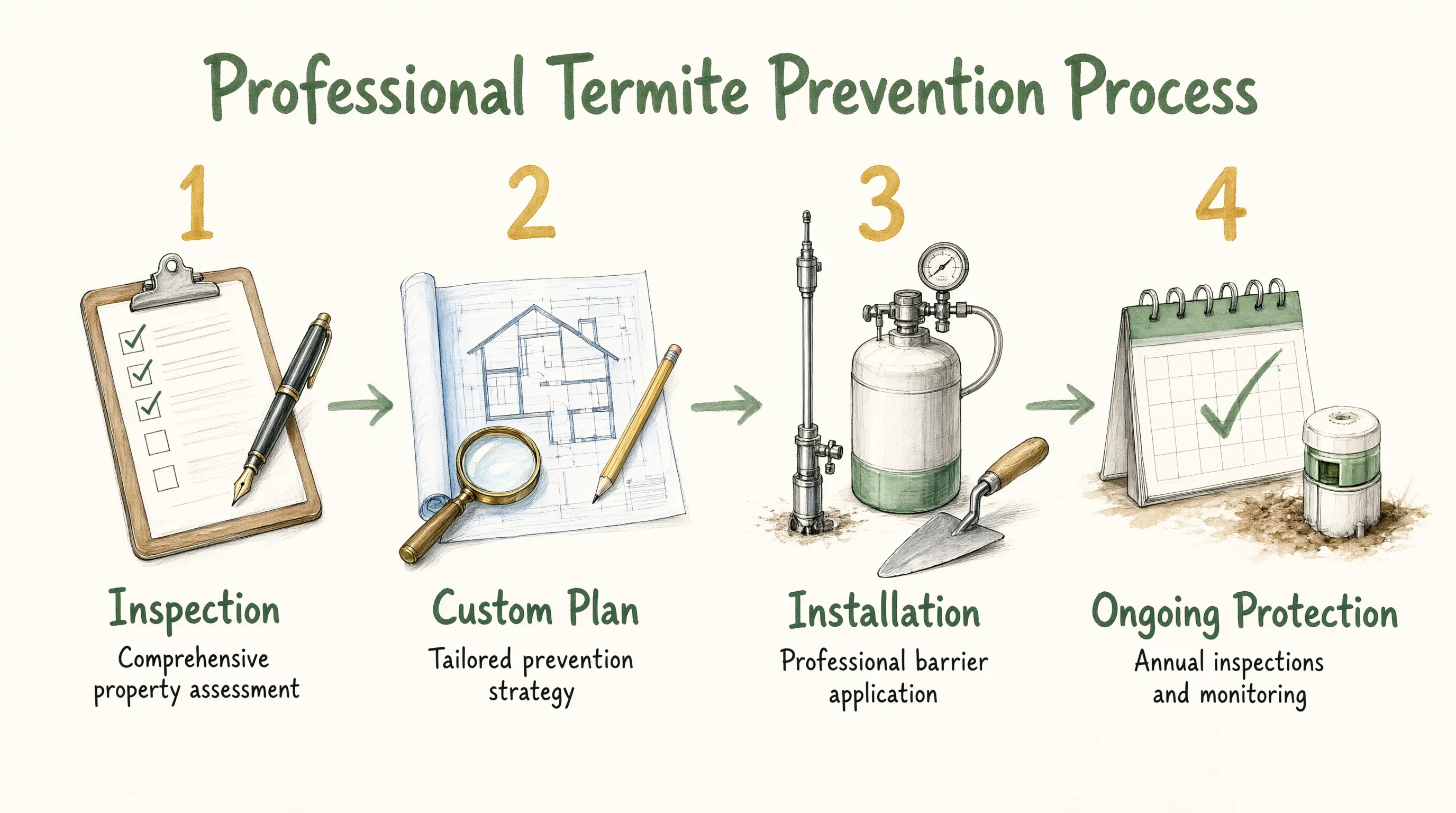
When you think about pest control costs, you might see annual pest inspections as an expense. But the reality is quite the opposite: annual pest inspections are one of the best money-saving investments an Adelaide homeowner can make.
At MR Solutions, we’ve seen the cost difference between early detection and delayed treatment countless times. This guide explains why annual pest inspections save money—and how much they can save you.
The True Cost of Pest Damage in Adelaide
Before understanding how inspections save money, it helps to understand what pest damage costs:
Termites: The Most Expensive Pest
Termites cause more financial damage to Australian homes than any other pest:
- Over $100 million in damage annually across Australia
- Average homeowner spends $5,000-$50,000 on termite damage repairs
- Most home insurance policies do NOT cover termite damage
- Damage can be extensive before detection because termites work hidden inside timber
Consider a scenario:
- A homeowner ignores minor signs or has no inspections
- Termites work undetected for months or years
- Significant structural damage occurs
- Repair costs: $10,000-$50,000+
- The homeowner bears the full cost (insurance won’t cover it)
Now consider the alternative:
- Annual termite inspections ($300-$700 each)
- Early detection of small activity
- Treatment cost: $500-$1,500 (for small, early problem)
- Total cost over several years: $1,500-$4,000 in inspections
- Damage prevented: $10,000-$50,000+
The maths is clear: Annual inspections cost less than 5% of potential termite damage.
Cockroaches: Hidden but Costly
Cockroach infestations can be costly:
- Property damage: Cockroaches chew on various materials, contaminate food
- Health costs: Cockroaches can trigger allergies and asthma, spread bacteria
- Treatment costs: Severe infestations require more extensive, more expensive treatment
- Business costs: For food businesses, cockroach problems can mean compliance issues, reputational damage, product loss
Early detection through regular inspection prevents small problems from becoming severe, expensive infestations.
Rodents: More Than Just a Nuisance
Rodent problems can be expensive:
- Electrical cable damage: Rodents gnaw electrical cables—a fire hazard. Repairing damaged wiring can cost thousands.
- Property damage: Damaged insulation, stored goods, building elements
- Health costs: Disease transmission, contamination
- Escalating infestations: Rodents breed quickly. A small problem becomes large.
Early detection (hearing sounds, finding droppings, regular inspection) allows early treatment, preventing extensive damage.
Ants, Spiders, and Other Pests
While less expensive than termites or rodents, these pests also have costs:
- Treatment costs: Established infestations require more extensive, more expensive treatment
- Property damage: Carpenter ants can damage timber; some pests damage materials
- Quality of life: Pests affecting enjoyment of home, stress, discomfort
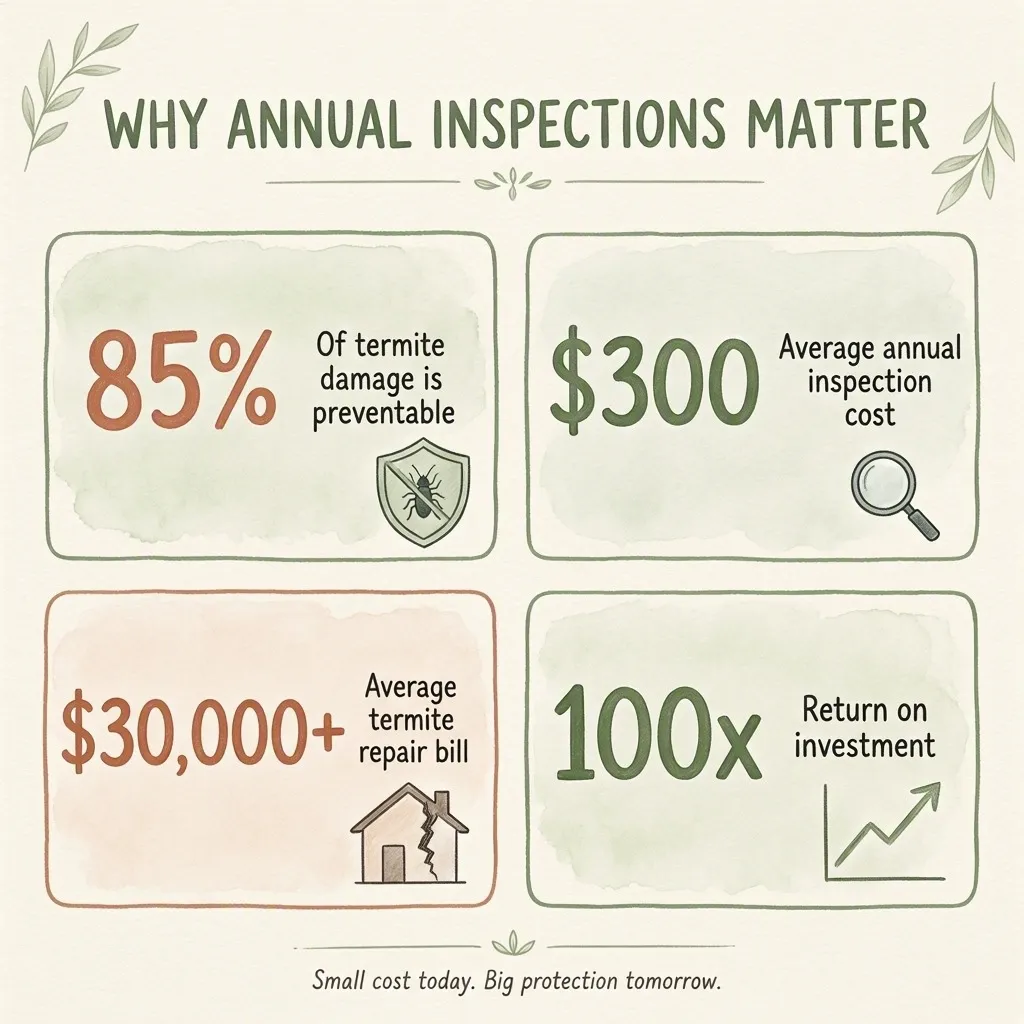
Early detection and treatment prevent these costs from escalating.
How Annual Pest Inspections Save Money
1. Early Detection = Smaller, Less Expensive Treatment
The most direct way inspections save money:
- Small problem: Early detection of a small termite activity, a few cockroaches, a small ant colony
- Small treatment: Smaller scope, less product, less time, less expense
- Large problem (if undetected): Extensive infestation, more product, more time, more expense, potential damage
Example:
- Termite inspection finds small, localised activity: Treatment $500-$1,500
- Termites undetected for years, major damage: Repairs $10,000-$50,000+
Savings: Tens of thousands of dollars in potential damage.
2. Preventing Problems Before They Develop
Annual inspections don’t just detect existing problems—they identify conditions that could lead to future problems:
- Moisture issues: A leaky pipe, poor drainage, condensation—these attract pests and can be addressed before pests become a problem
- Entry points: Gaps, cracks, entry points that pests could use—sealing them prevents entry
- Wood-to-soil contact: Garden beds against walls, timber touching soil—these are termite risk factors that can be addressed
- Shelter and harborage: Clutter, stored items, undisturbed areas—reducing these prevents pest establishment
Addressing these conditions proactively prevents pests from becoming a problem in the first place, saving the cost of treatment and potential damage.
3. Insurance Considerations
Most Australian home insurance policies do not cover termite damage. This means:
- If termites damage your home: You bear the full cost of repairs—$5,000-$50,000+
- An annual inspection ($300-$700) is a small investment to detect and prevent this uninsured loss
- Inspection reports can also be valuable for property transactions (buying/selling), providing documentation for buyers and sellers
The insurance reality: Without inspections, you’re essentially self-insuring against termite damage—a risky and potentially very expensive position.
4. Protecting Property Value
Pest-free homes maintain their value better:
- Termite history must be disclosed in South Australian property sales—history of termite damage can affect property value and saleability
- Regular inspections and treatment provide documentation that your home is well-maintained and pest-free
- Pre-purchase inspections (for buyers) can identify issues before purchase, avoiding costly surprises
Investing in regular inspections protects your property value by preventing damage and providing documentation of good maintenance.
5. Avoiding the “Emergency” Premium
When pests are discovered late (as an emergency):
- Urgent treatment may cost more (rush fees, extensive treatment needed)
- Established infestations require more extensive, expensive treatment
- Damage repair adds significant cost on top of treatment
Regular inspections avoid the “emergency” scenario—catching problems early, when treatment is routine and less expensive.
6. The Cumulative Cost of Multiple Pests
A home can have multiple pest issues over time:
- Termites one year
- Ants the next
- Spiders becoming a problem
- Rodents seeking shelter in winter
- Cockroaches establishing in kitchen
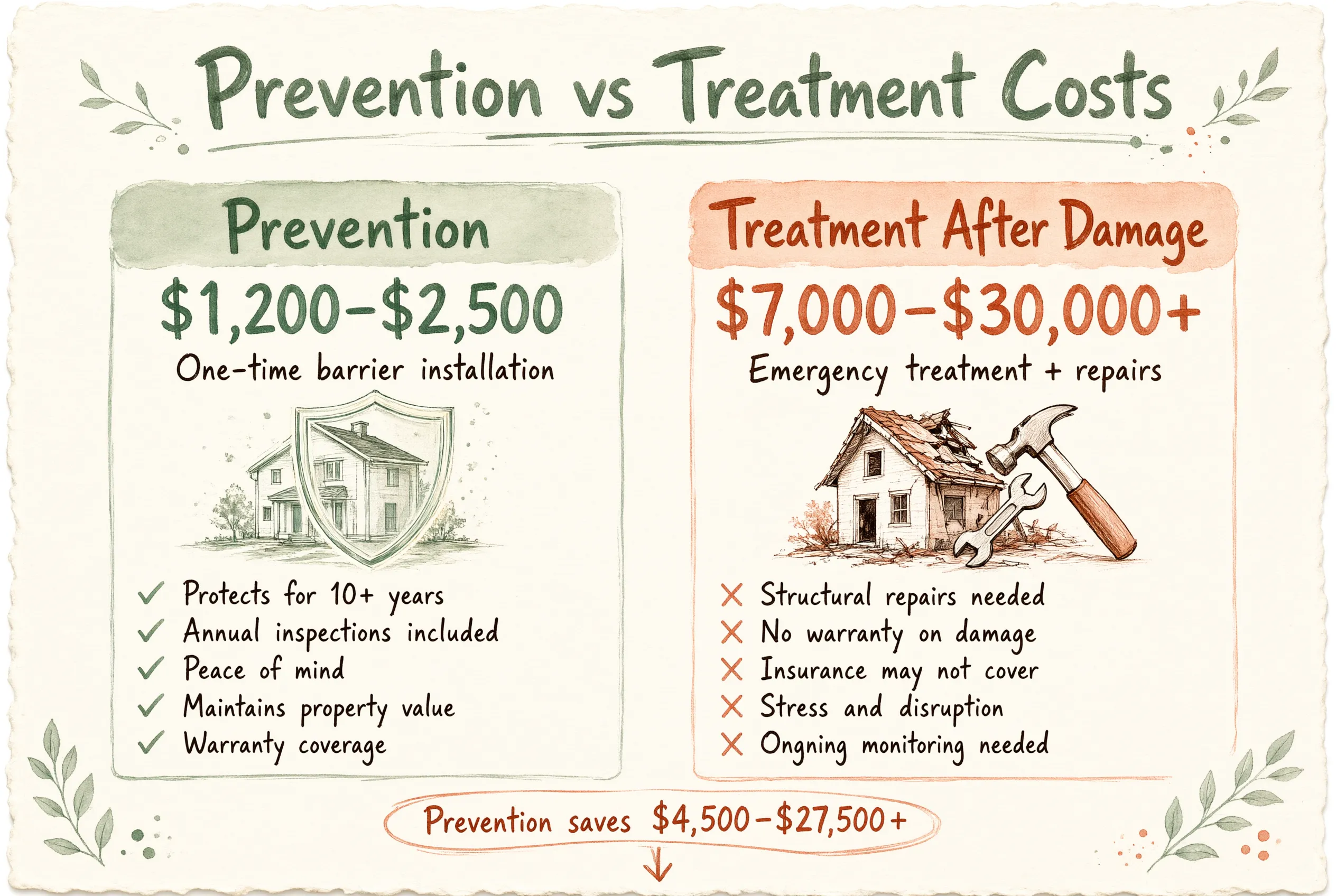
Annual inspections catch all of these early, when each is small and inexpensive to treat. Without inspections, each could develop into a larger, more expensive problem.
The Return on Investment of Annual Pest Inspections
Let’s do the maths:
Annual pest inspection cost: $300-$700 per year
Potential savings from one early detection:
| Scenario | Cost Without Inspection | Cost With Inspection | Savings |
|---|---|---|---|
| Early termite detection | $10,000-$50,000+ (damage) | $300-$700 (inspection) + $500-$1,500 (treatment) | $9,000-$48,000+ |
| Early cockroach detection | $500-$1,500+ (severe treatment) | $300-$700 (inspection) + $250-$500 (early treatment) | $100-$1,000+ |
| Early rodent detection | $500-$2,000+ (extensive treatment + potential damage) | $300-$700 (inspection) + $300-$600 (early treatment) | $100-$1,400+ |
| Condition identified (moisture, entry point) | Potential future pest problem + damage | $300-$700 (inspection) + cost to fix condition | Difficult to quantify, but significant |
The ROI: Even one early detection that prevents significant damage can save thousands of dollars—far exceeding the cost of years of inspections.
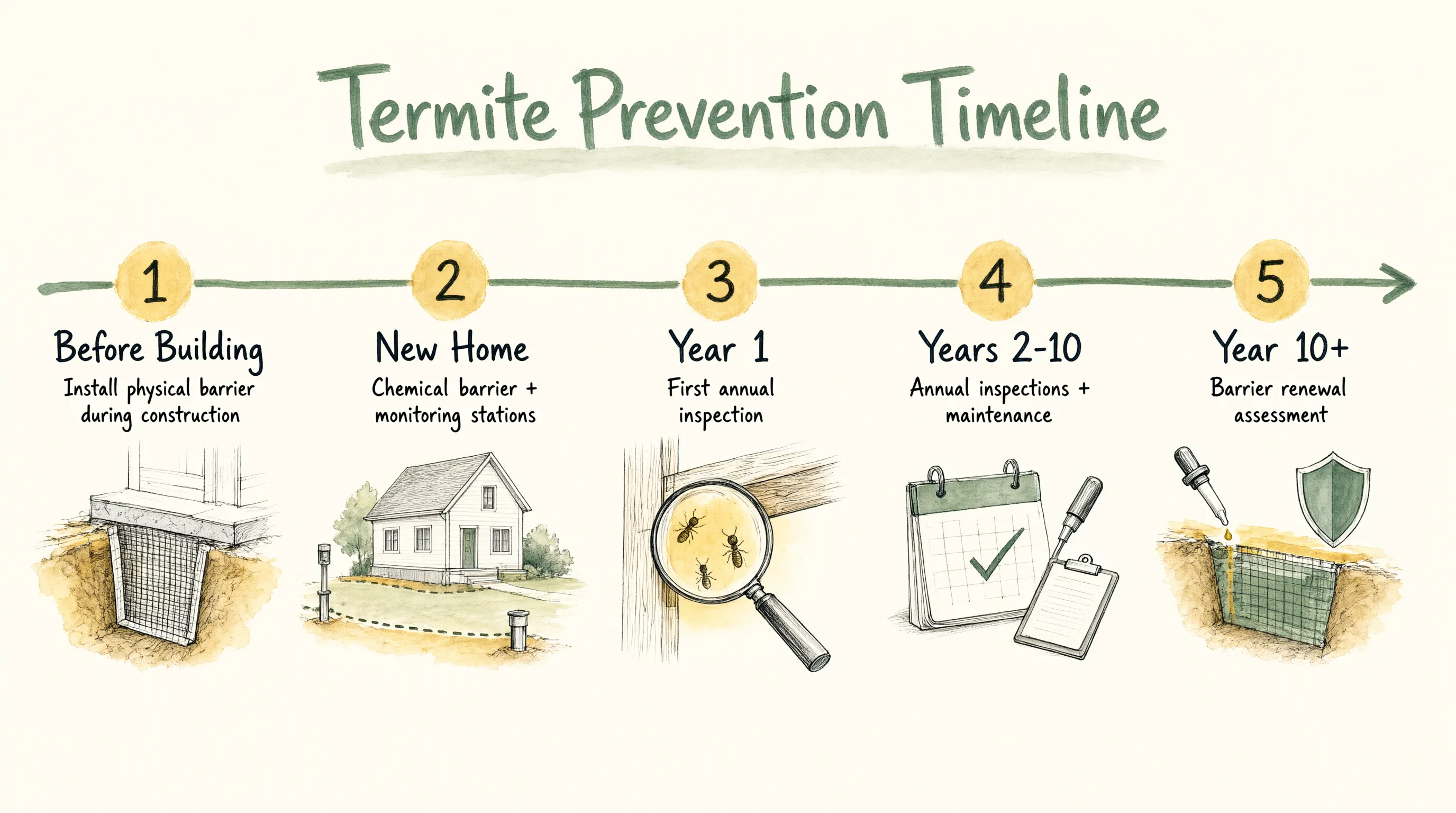
Conservative estimate: If annual inspections prevent just one significant termite problem over the life of homeownership, they’ve saved $10,000-$50,000+—a return of 10x-100x the cost of inspections.
What Annual Pest Inspections Include
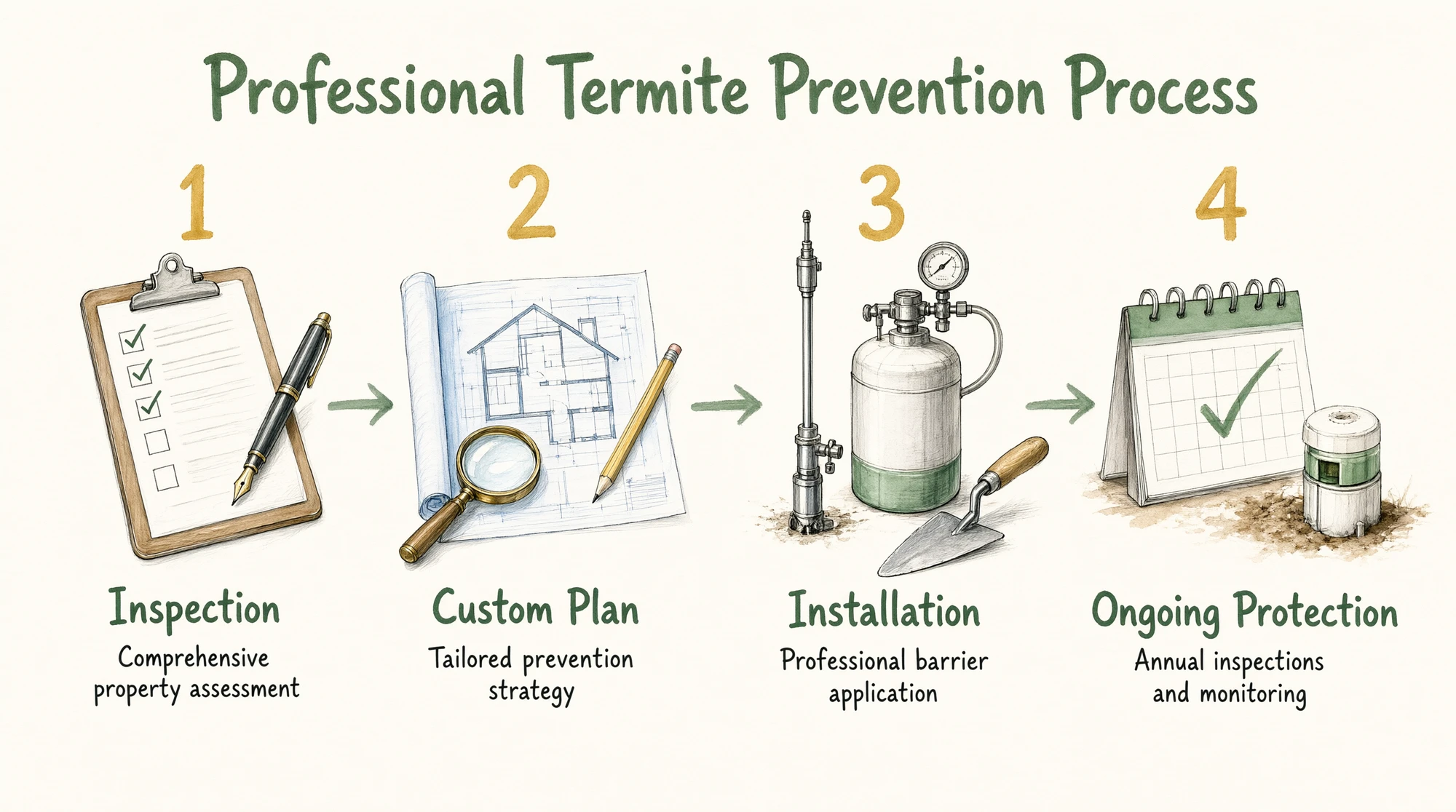
A professional annual pest inspection typically includes:
Termite Inspection (Critical Component)
- Visual inspection of all accessible areas for termite activity
- Inspection of foundations, walls, floors, roof void, subfloor (if accessible)
- Identification of conditions conducive to termites (moisture, wood contact, etc.)
- Written report with photos
- Recommendations for treatment or prevention if needed
General Pest Assessment
- Check for signs of other common pests (ants, cockroaches, spiders, rodents)
- Assessment of pest conditions (entry points, food sources, moisture, shelter)
- Advice on pest prevention
Recommendations
- If pests or conditions are found: recommendations for treatment or prevention
- If no issues found: advice on ongoing prevention and next inspection timing
Documentation
- Written report for your records
- Useful for property transactions (buying/selling)
- Useful for tracking pest status over time
What Inspections Don’t Replace
Annual inspections are valuable, but they don’t replace:
- Regular pest treatments: Inspections detect problems; treatments solve them. Many homeowners benefit from both annual inspections AND regular pest treatments (see Day 28 on packages).
- Preventive measures: Inspections identify issues, but you need to act on recommendations (fix leaks, seal entry points, reduce clutter, etc.).
- Immediate action when you see pests: If you notice pests between inspections, don’t wait for the next scheduled inspection—act promptly.
Frequency: How Often Should You Have Pest Inspections?
Annual inspections are recommended for all Adelaide homes.
Why annually:
- Pests are active year-round
- Conditions that attract pests can develop over time
- Early detection every year maximises the chance of catching problems when small
- Annual frequency is a reasonable balance of cost and benefit
More frequent inspections may be recommended if:
- You’ve had previous termite activity
- Your home is on piers with timber flooring (higher termite risk)
- You have garden beds against the house
- There’s a history of moisture issues
- You live in a termite-prone area
Special situations:
- Before purchasing a property: Always get a pre-purchase inspection
- Before selling: Consider having an inspection ready
- After treatment: Follow recommended inspection schedule for warranty maintenance
Common Objections to Annual Inspections (And Why They’re Wrong)
“I haven’t seen any pests, so I don’t need an inspection”
Reality: Many pests are hidden. Termites work inside timber, unseen. Cockroaches hide during the day. Rodents are nocturnal. Absence of visible pests doesn’t mean absence of pests. Inspections detect what you can’t see.
Savings: An inspection ($300-$700) could detect hidden termites before they cause thousands in damage.
”Inspections cost too much”
Reality: At $300-$700 per year, inspections cost less than 1% of potential termite damage ($5,000-$50,000+). The cost of one inspection is less than a tank of petrol; the cost of one termite repair is like buying a car.
Savings: The inspection itself is inexpensive. The potential savings are enormous.
”I have a barrier, so I don’t need inspections”
Reality: Barriers can break down, be compromised, or termites can find ways around them. Annual inspections confirm barriers are intact and detect any breakthrough activity.
Savings: An inspection could detect barrier failure early, preventing termite entry and damage.
”I’ll know if I have a problem—I’ll see it”
Reality: By the time you see visible signs of termites (damage, wings, etc.), significant damage may have already occurred. Termites are experts at hiding. Inspections detect problems before they become visible.
Savings: Early detection through inspection allows treatment when the problem is small, not after extensive damage.
MR Solutions Annual Inspection Services
At MR Solutions, we provide professional annual pest inspections across Adelaide’s southern suburbs:
Our inspection services:
- Thorough termite inspection (the most critical component)
- General pest assessment
- Identification of conditions conducive to pests
- Written report with photos
- Clear recommendations
- Transparent pricing with no hidden fees
Inspection types available:
- Standard annual maintenance inspections
- Pre-purchase inspections (for property buyers)
- Comprehensive inspections (where thermal imaging is appropriate)
Serving Adelaide’s southern suburbs: Seaford, Seaford Rise, Hallett Cove, Hallett Cove South, Woodcroft, Myponga Beach, Aldinga Beach, Aldinga Scrub, Trott Park, Trott Park East, Happy Valley, Happy Valley Ridge, Brighton, Brighton East, Old Noarlunga, Noarlunga Centre, Sheidow Park, Crouch End, and all surrounding areas.
Frequently Asked Questions
How much does an annual pest inspection cost? Annual pest inspections in Adelaide typically cost $300-$700, depending on property size and inspection type. Pre-purchase inspections with detailed reports cost $400-$700. Contact MR Solutions for an accurate quote.
How often should I have a pest inspection? Annually for all Adelaide homes. This provides regular detection of problems when they’re small and inexpensive to treat, and identifies conditions that could lead to future problems.
Is an annual pest inspection worth the cost? Absolutely. For $300-$700 per year, you receive early detection of problems (potentially saving thousands in damage), identification of conditions that could lead to future problems, documentation for your records, and peace of mind. The cost is far less than the potential cost of pest damage.
What’s included in a pest inspection? A professional pest inspection typically includes: visual inspection of all accessible areas (exterior, interior, roof void, subfloor if accessible), use of inspection tools (moisture meters, etc.), written report with photos, clear explanation of findings, and recommendations. Termite inspection is a critical component.
Do I need a pest inspection if I have regular pest treatments? It depends on your treatments. General pest treatments address common pests but may not include thorough termite inspection. Annual termite inspections are recommended for all homes regardless of general pest treatment. Some pest control packages include annual termite inspection—check your package details.
Can I get a pest inspection when I’m buying a house? Yes, pre-purchase inspections are standard in South Australian property transactions. MR Solutions provides pre-purchase inspections with detailed reports suitable for buyers, sellers, and real estate agents. Always get a pre-purchase inspection before buying a property.
What if the inspection finds nothing? That’s good news—it means your home is pest-free and in good condition. The inspection still provides value: documentation of your home’s pest status, advice on maintaining that status, and early detection for future issues. An inspection that finds nothing is still worth the cost for the peace of mind and prevention.
---
Need Professional Pest Control?
Our licensed technicians serve Seaford and surrounding southern suburbs with transparent pricing and eco-friendly treatments. Get your free quote in 30 seconds.