Ants in the House? Complete Guide to Identification & Control
Dealing with ants in your Adelaide home? Learn to identify ant species, understand why they're entering, and get effective treatment options. Professional ant control available.
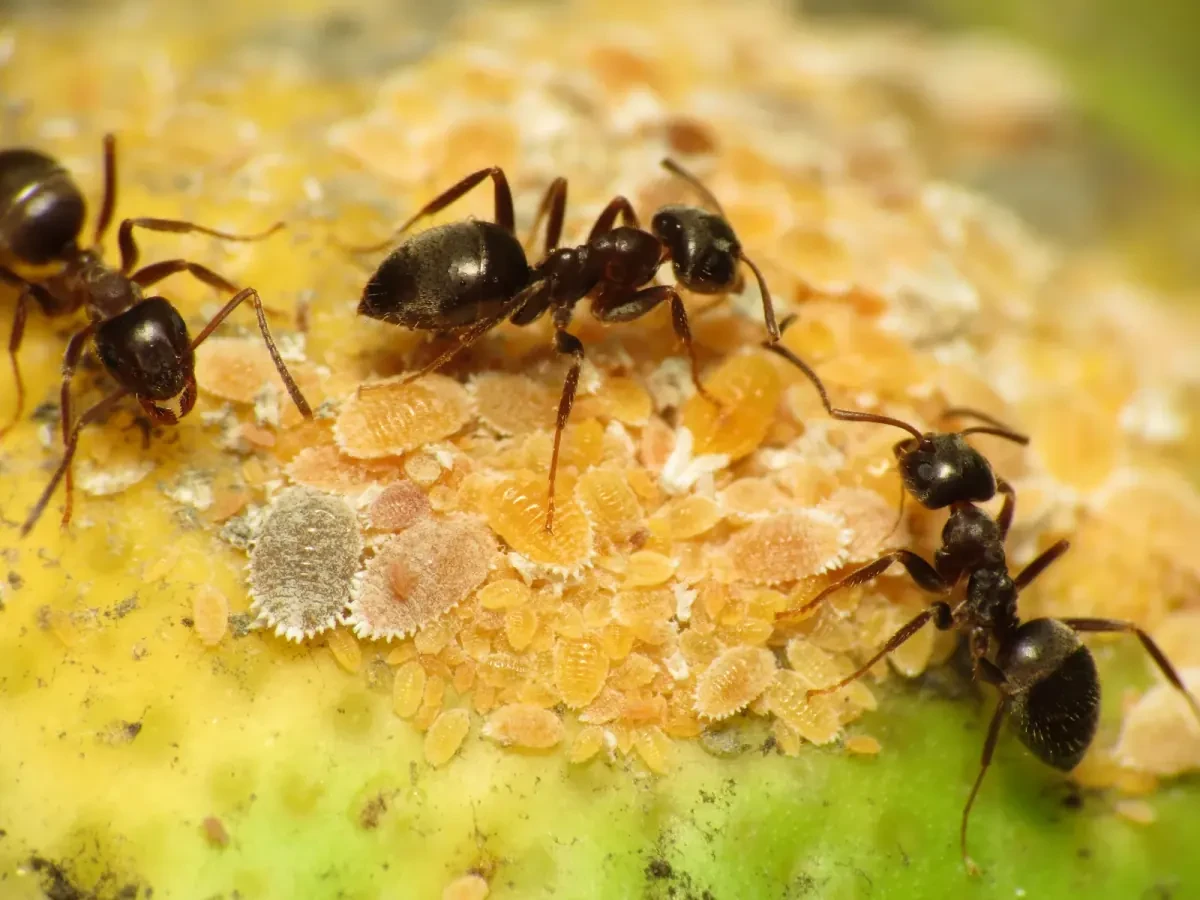
Ants are the most common pest problem in Australian homes—and Adelaide is no exception. With our warm climate and the variety of ant species in South Australia, many homeowners find themselves battling ants at some point.
The good news? Most ant problems are solvable with the right approach. This guide helps you identify what type of ants you have, understand why they’ve invaded your home, and choose the most effective treatment method.
Why Are There Ants in My House?
Before treating ants, it helps to understand why they’re there. Ants don’t randomly wander into homes—they’re following a purpose.
Common Reasons Ants Enter Adelaide Homes
- Food seeking — The most common reason. Ants scout for food sources and recruit other workers when they find them. Sweet, greasy, and protein-rich foods are particularly attractive.
- Water seeking — During dry periods, ants may enter homes seeking moisture. Leaks, condensation, and pet water bowls can attract ants.
- Seasonal activity — Ant activity typically increases in warmer months (spring and summer). Some species send out reproductive ants (winged “flying ants”) during specific seasons.
- Nest nearby — If an ant nest is close to your home (in garden beds, under paths, in wall voids), workers will forage indoors regularly.
- Shelter seeking — Some ants may move indoors for shelter, especially during extreme weather or if their outdoor nest has been disturbed.
Understanding Ant Behaviour
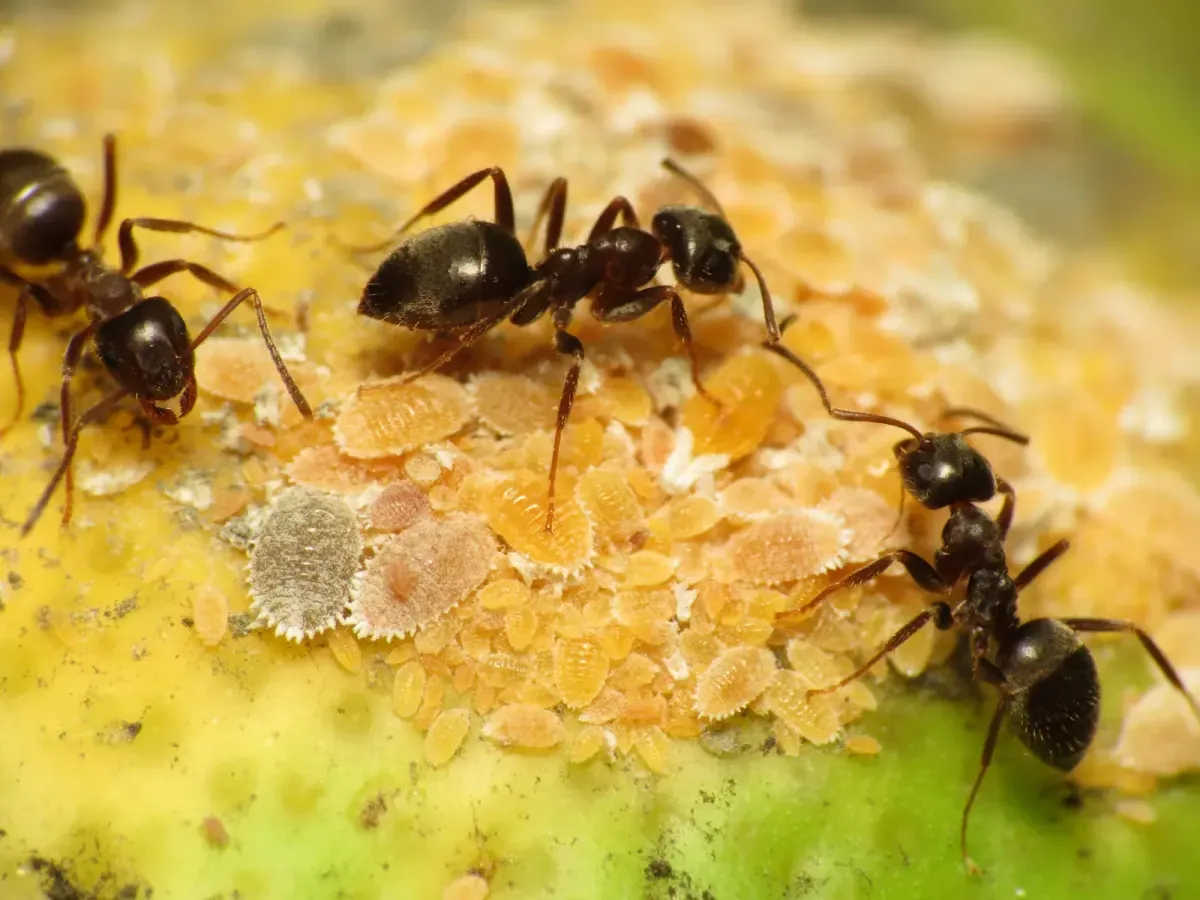
Ants are highly organised social insects. When you see ants in your house:
- Individual scout ants are searching for resources. They lay pheromone trails that other ants follow.
- Trail formation — Once a food source is found, ants follow the pheromone trail, creating the visible “line” of ants people notice.
- Colony structure — Ant colonies have queens (reproductive), workers (foragers and care-takers), and sometimes soldiers. Killing visible workers doesn’t eliminate the colony.
Key insight: To eliminate an ant problem, you usually need to address the colony, not just the visible workers.
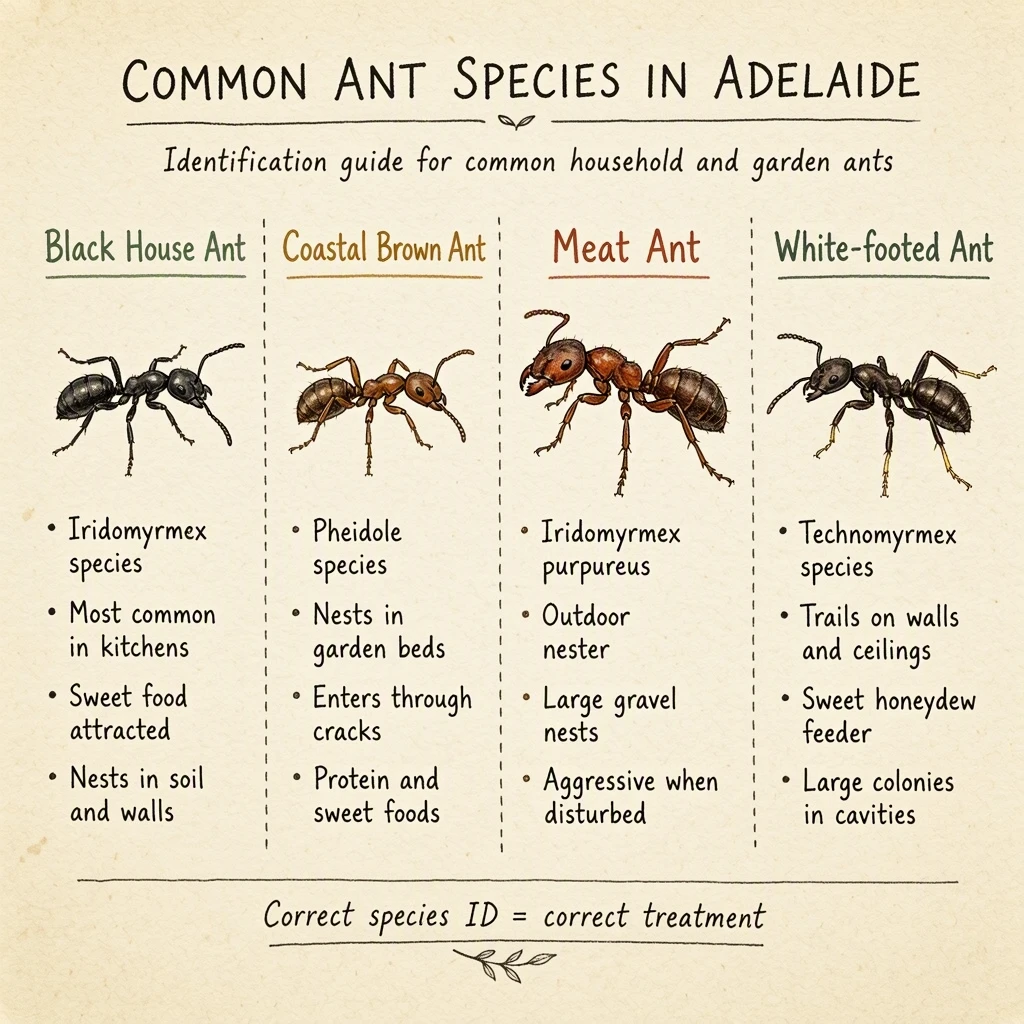
Common Ant Species in Adelaide Homes
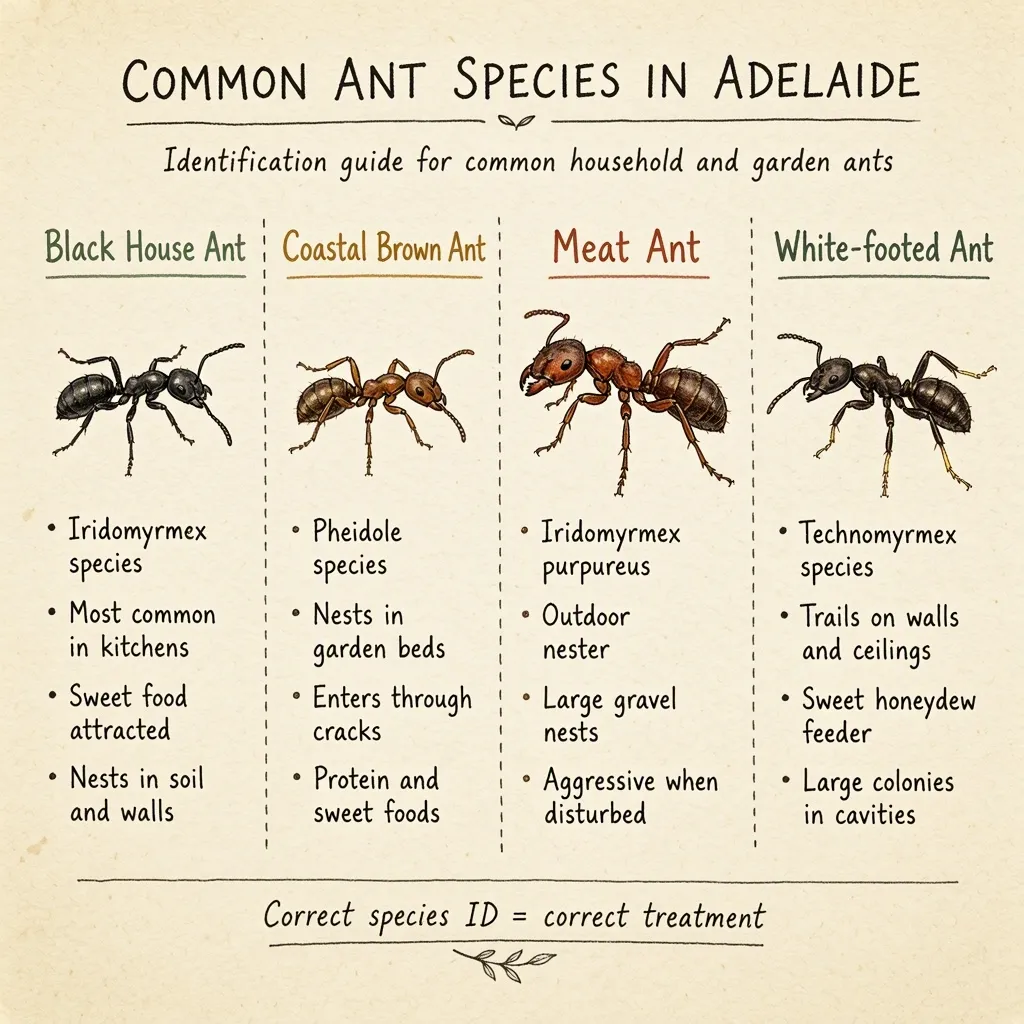
Different ant species require different treatment approaches:
1. Black House Ant (Ochetellus glaber)
- Appearance: Small (2-3mm), shiny black, uniform size
- Behaviour: Very common in Australian homes. Attracted to sweet foods. Form clear trails to food sources.
- Treatment: Baiting is generally effective. Workers take bait back to the colony.
2. Argentine Ant (Linepithema humile)
- Appearance: Small (2-3mm), light to dark brown, slightly translucent
- Behaviour: Aggressive, forms supercolonies. Very persistent—can be difficult to eliminate.
- Treatment: Requires thorough baiting and often ongoing management.
3. Sugar Ant (Camponotus consobrinus)
- Appearance: Larger (5-15mm), black with red or orange legs/branded variations
- Behaviour: Australia’s largest common ant. Attracted to sweet foods. Slow-moving.
- Treatment: Baiting effective. Larger size makes them more visible.
4. Pharaoh Ant (Monomorium pharaonis)
- Appearance: Very small (1-2mm), light yellow to brown
- Behaviour: Difficult to eliminate. “Budding” (colony splitting) means killing workers can spread the colony.
- Treatment: Specialised treatment needed. DIY efforts can make the problem worse.
5. Carpenter Ant (Camponotus species)
- Appearance: Large (6-12mm), black, sometimes with red legs
- Behaviour: Nest in timber—can damage wood structures. Don’t eat wood (unlike termites) but excavate it for nesting.
- Treatment: Requires identifying and treating nest locations. May be confused with termites.
Important note: Carpenter ants and termites are often confused. See our guide on termites vs ants for clarification.
Signs You Have an Ant Problem
Visible Signs
- Ant trails — Lines of ants moving between nest and food source
- Scattered ants — Ants appearing in multiple areas
- Flying ants — Winged reproductive ants emerging (often indicates established colony nearby)
- Nest mounds — Outdoor nest entrances (dirt mounds, small holes in soil)
Less Obvious Signs
- Food contamination — Ants in pantry items, pet food, or stored food
- Damage — Carpenter ant excavation in timber (visible as small holes with sawdust-like frass)
- Persistent activity — Ants returning after you’ve cleaned or sprayed
How to Get Rid of Ants in Your House
DIY Methods (For Minor Problems)
1. Eliminate Food Sources
- Clean thoroughly — Wipe counters, sweep floors, clean up spills immediately
- Store food in sealed containers — Especially sweet foods, cereals, pet food
- Manage waste — Use bins with tight lids, take rubbish out regularly
- Clean pet feeding areas — Don’t leave pet food out, clean bowls after feeding
2. Disrupt Trails
- Wipe trails with vinegar or detergent solution — Removes pheromone trails, confusing ants
- Focus on entry points — Clean around windows, doors, and where ants are entering
Note: This provides temporary relief but doesn’t eliminate the colony.
3. Seal Entry Points
- Check for gaps around windows, doors, pipes, and vents
- Seal with caulk, weather-stripping, or mesh
- This reduces ant entry but doesn’t eliminate the nest
4. Ant Baits (Consumer Products)
Over-the-counter ant baits can work for some species:
- Place baits near ant activity (not on trails—ants need to discover them)
- Don’t spray around baits (repels ants from the bait)
- Be patient—baits take time to work as workers carry poison back to the colony
- Different baits work on different species; if one doesn’t work, try another
Limitations: Consumer baits may not be effective for large infestations, Argentine ants, or pharaoh ants.
When DIY Doesn’t Work
DIY methods may fail when:
- The colony is large or has multiple queens (Argentine ants)
- The nest is inaccessible (inside wall voids, roof spaces)
- The species is resistant to consumer products
- The problem keeps recurring despite treatment
- You have pharaoh ants (DIY can make the problem worse)
Professional Ant Control: How It Works
What Professional Ant Treatment Includes:
- Inspection and identification — Determining the ant species is critical for effective treatment
- Baiting strategy — Professional baits are more effective than consumer products. Proper placement and monitoring ensure workers carry bait back to the colony
- Surface treatment — Where appropriate, residual insecticide treatment of entry points and harbourages
- Nest treatment — If the nest location is accessible, direct treatment can eliminate the colony
- Exclusion advice — Identifying and recommending sealing of entry points
- Follow-up — Ant control often requires follow-up visits to restock baits, monitor activity, and ensure elimination
Why Professional Treatment is More Effective:
- Correct identification leads to correct treatment
- Professional-grade baits have better attractiveness and effectiveness
- Strategic placement based on ant behaviour knowledge
- Follow-up ensures the colony is actually eliminated
- Experience with difficult species (Argentine ants, pharaoh ants)
Ant Control Cost in Adelaide
See our pest control cost guide for detailed pricing. Typical ant control costs:
| Situation | Typical Cost |
|---|---|
| Minor ant problem | $150-$250 |
| Moderate infestation | $250-$400 |
| Severe/problematic infestation | $400-$600+ |
| Argentine ant treatment (more complex) | $300-$600+ |
Factors affecting cost:
- Species (some require more intensive treatment)
- Extent of activity
- Property size
- Number of treatment visits required
How to Prevent Ants Coming Back
After ant treatment, these steps help prevent recurrence:
- Maintain cleanliness — Regular cleaning, especially in kitchen areas. Wipe spills immediately. Store food in sealed containers.
- Manage waste — Use sealed bins. Remove rubbish regularly. Don’t let garbage accumulate.
- Seal entry points — Maintain weather-stripping, seal gaps around pipes and vents.
- Manage outdoor ant nests — If outdoor nests are the source, consider professional treatment of nest areas. Keep garden beds away from walls where possible.
- Reduce moisture — Fix leaks. Reduce condensation. Ensure good ventilation.
- Pet food management — Don’t leave pet food out. Clean bowls. Store pet food in sealed containers.
- Regular maintenance — For properties prone to ant problems, regular professional treatment (as part of general pest control) can prevent ant issues from developing.
Ants vs Termites: Don’t Confuse Them
A common mistake is confusing ants with termites (white ants). Key differences:
| Feature | Ants | Termites (White Ants) |
|---|---|---|
| Waist | Pinched, narrow | Thick, no constriction |
| Antennae | Elbowed (bent) | Straight, bead-like |
| Wings (if present) | Forewings longer than hindwings | Two pairs equal length |
| Diet | Varied—sweet, protein, some plant material | Cellulose—wood, paper, cardboard |
| Damage | Nuisance, some species damage timber (carpenter ants) | Structural timber damage, costly |
| Treatment | Baiting, surface treatment | Soil barriers, baiting systems, different products |
If you’re unsure whether you have ants or termites, a professional inspection can identify what you’re dealing with. Getting this wrong could mean treating the wrong pest and allowing the real problem to continue.
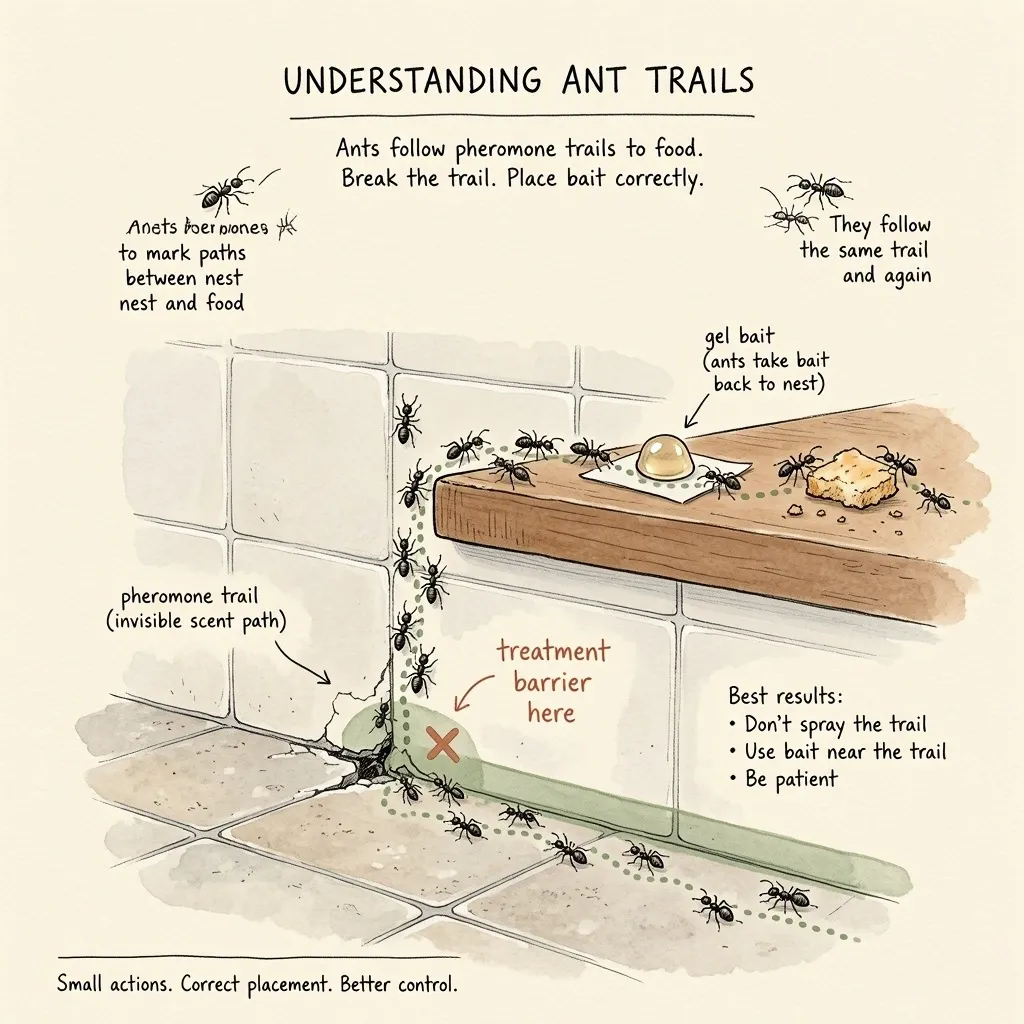
Understanding Ant Trails
- Ants follow pheromone trails — an invisible scent path that marks the route between nest and food
- They follow the same trail between the nest and the food source
- Break the trail by placing bait correctly
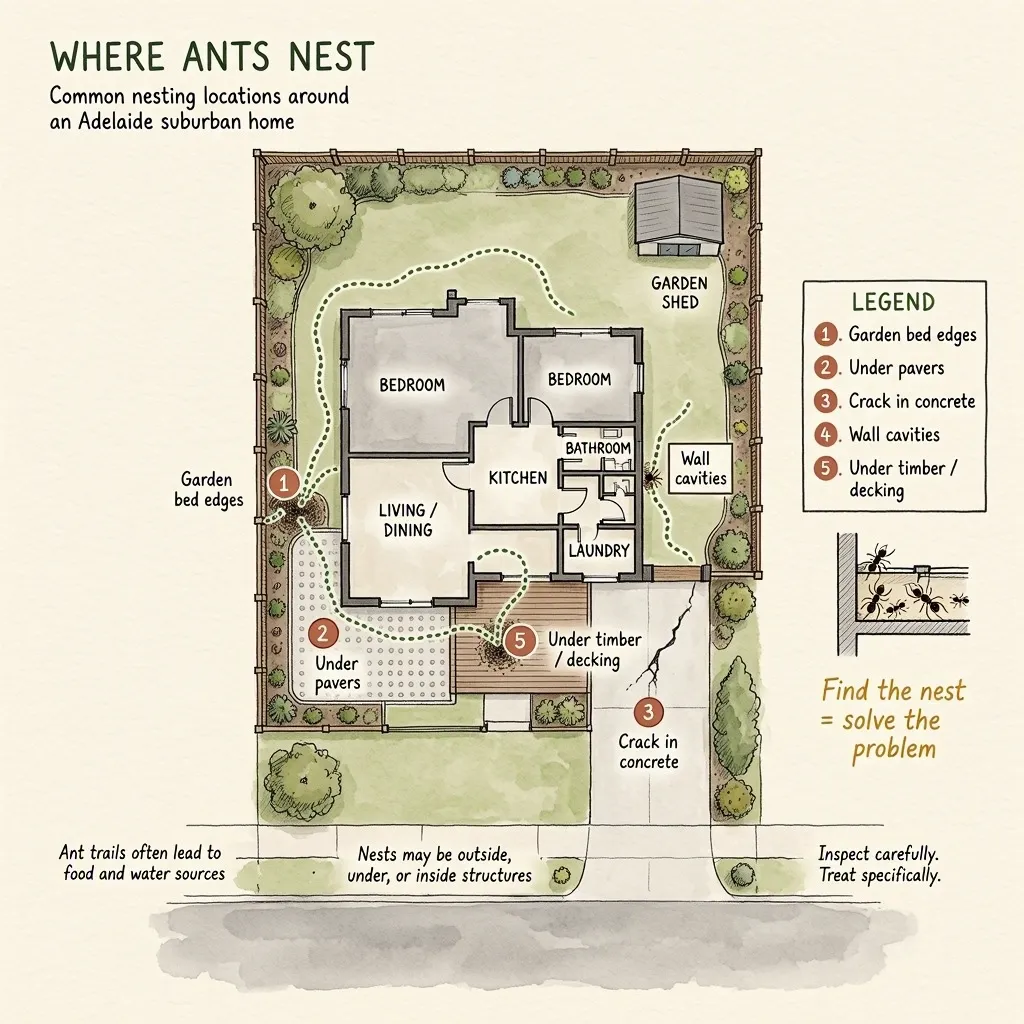
Common Nesting Locations
- Garden bed edges
- Under pavers
- Cracks in concrete
- Wall cavities
- Under timber decking
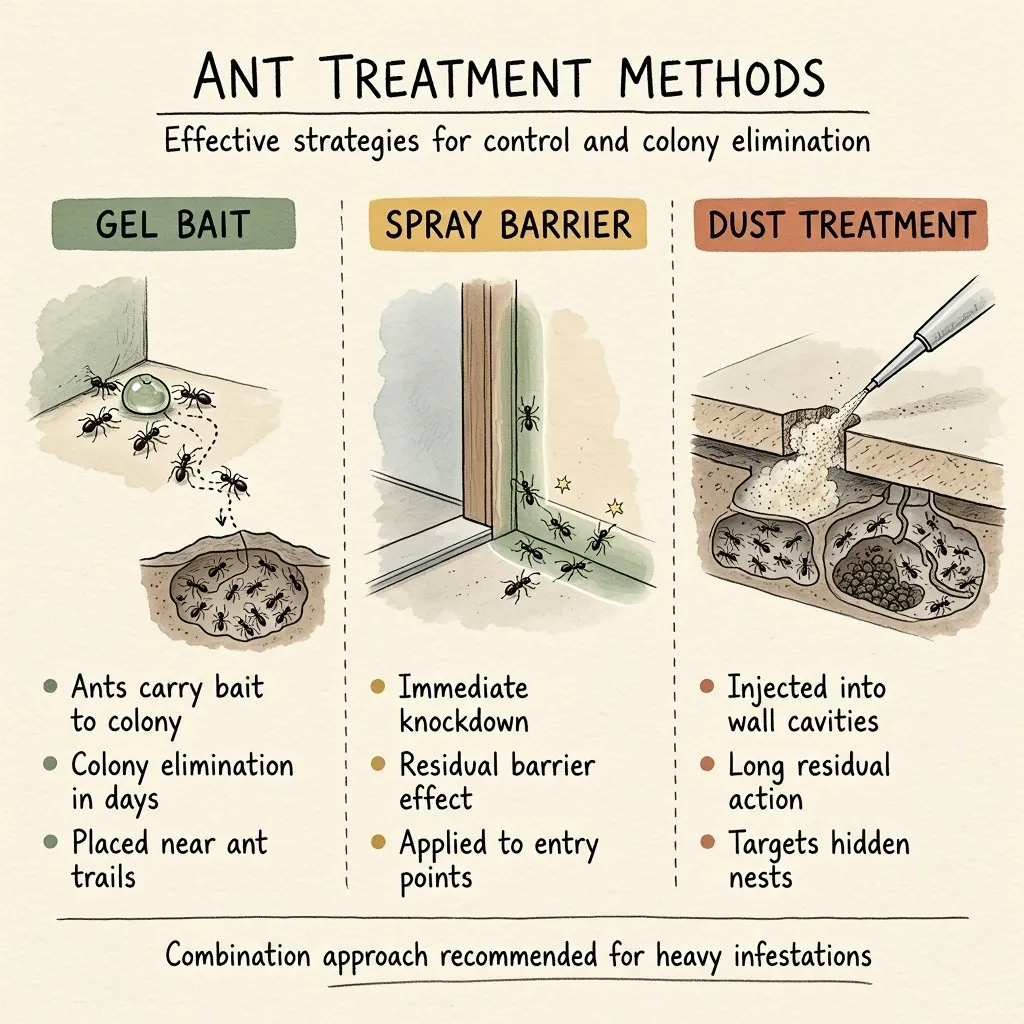
Ant Treatment Methods
- Baiting: ants carry bait back to the colony — colony elimination in days
- Bait is placed near ant trails
- Residual barrier: immediate knockdown with a long residual effect, applied to entry points
- Targets hidden nests
- Combination approach recommended
When to Call a Professional for Ant Control
Consider professional ant control if:
- DIY methods haven’t worked
- You have a large or persistent infestation
- You’re dealing with difficult species (Argentine ants, pharaoh ants)
- The ants are returning repeatedly
- You’re unsure of the ant species
MR Solutions can assess your situation and recommend the best approach.
---
Need Professional Pest Control?
Our licensed technicians serve Seaford and surrounding southern suburbs with transparent pricing and eco-friendly treatments. Get your free quote in 30 seconds.