Signs You Have Termites: Early Detection Guide
Worried about termites? Learn the early warning signs—mud tubes, hollow timber, stuck doors, flying termites—and what to do if you spot them.
Termites are cryptic. They work in darkness, inside walls, beneath floors, and underground. By the time most homeowners discover termite activity, significant structural damage has often already occurred.
That’s why knowing the early warning signs of termites is so important. The earlier you detect termites, the smaller the problem—and the less expensive the treatment.
At MR Solutions, we help Adelaide homeowners detect and treat termite problems. This guide covers the signs that indicate termites may be present in your home.
Why Early Detection Matters
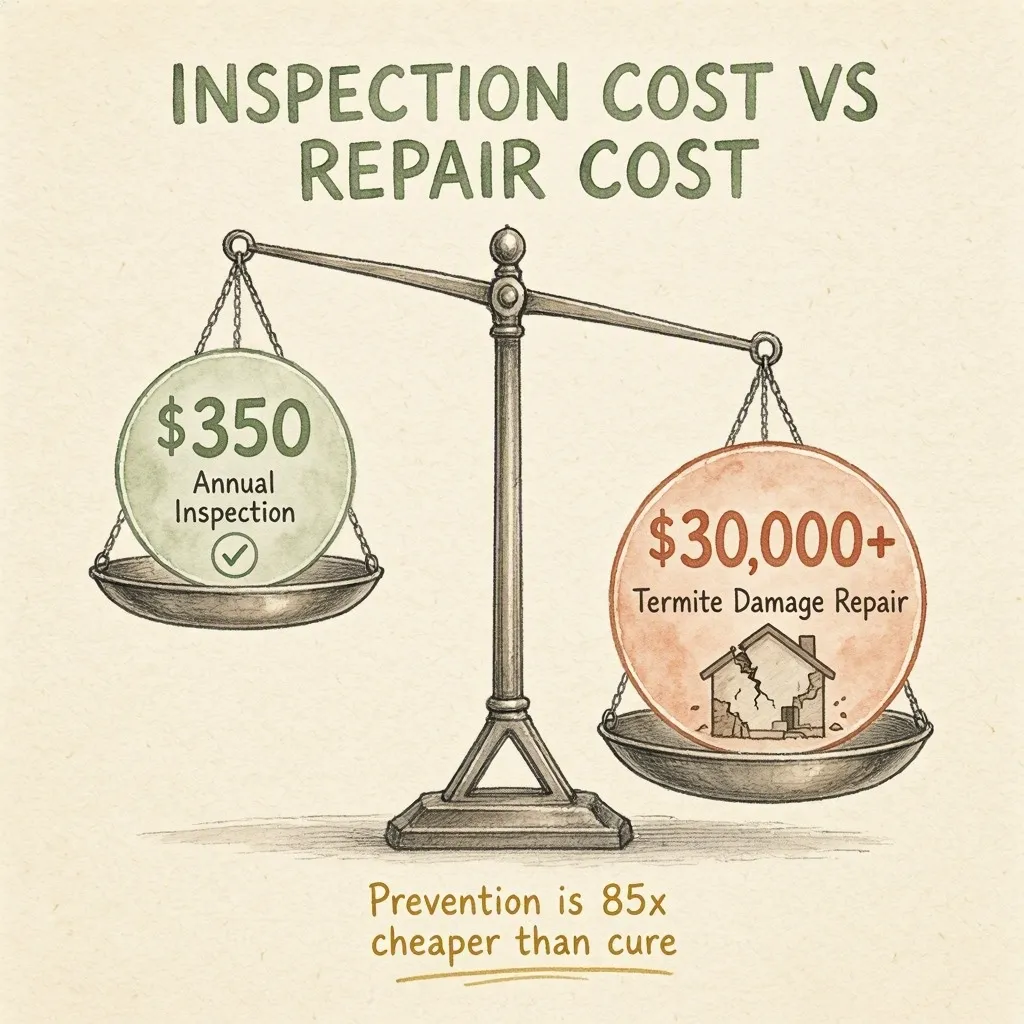
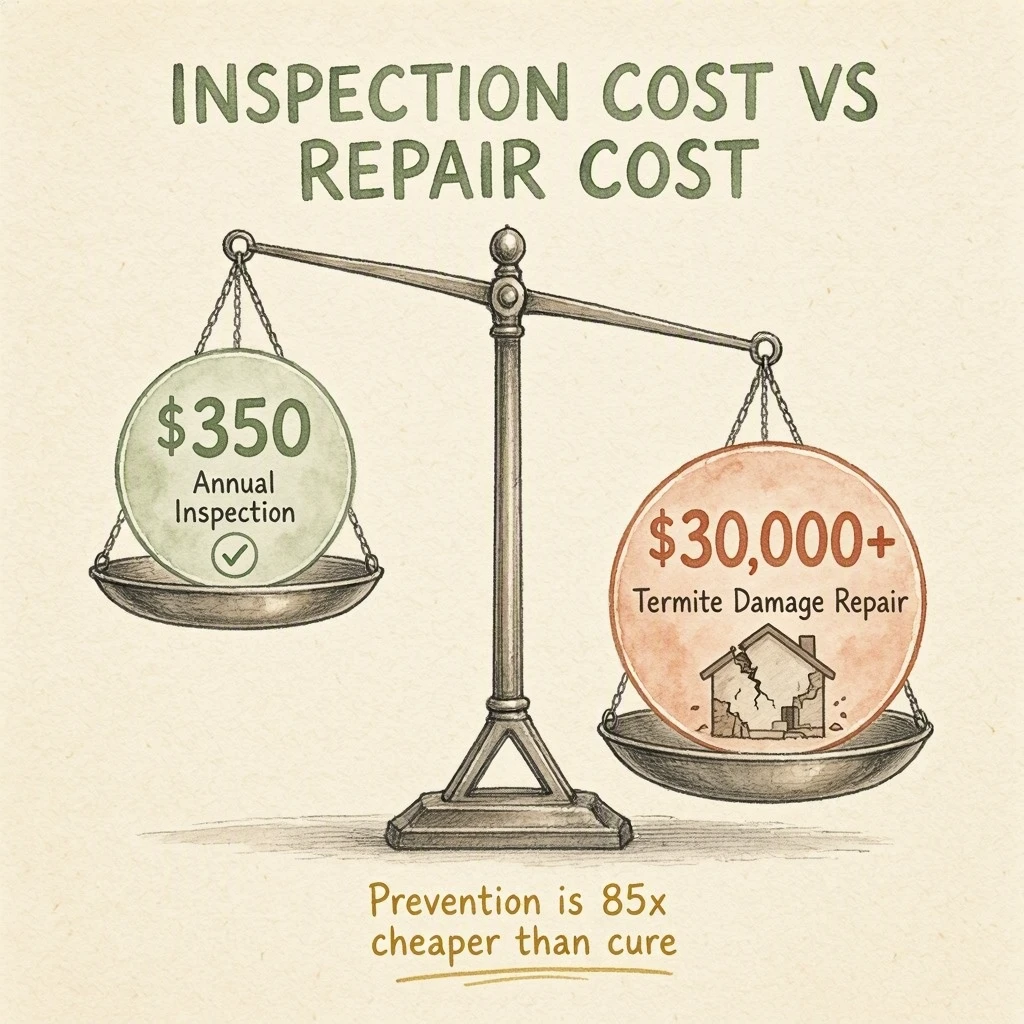
Termites cause over $100 million in damage annually across Australia. The average homeowner spends $5,000-$50,000 on termite damage repairs. Most home insurance doesn’t cover termite damage.
Early detection benefits:
- Smaller problem = smaller, less expensive treatment
- Less structural damage to repair
- Prevents termites from establishing large colonies in your home
- Protects your property value
The challenge: Termites are experts at hiding. They work inside timber, behind walls, underground. By the time visible damage appears, termites may have been active for months or years.
The solution: Know what signs to look for and act promptly if you spot them.
The Most Common Signs of Termites
1. Mud Tubes (Mud Leads)
What they look like:
- Pencil-width tunnels of soil and debris
- Usually found on walls, foundations, brickwork, piers
- May run vertically up walls or horizontally along foundations
- May branch or network
- Often appear after rain or during humid conditions
What they mean:
- Subterranean termites are using these tubes to travel between their colony (in soil) and their food source (your home’s timber)
- Presence of mud tubes strongly indicates termite activity
- Breaking open a mud tube may reveal termites inside
Where to look:
- Foundation walls
- Brickwork and masonry
- Piers and stumps
- Concrete paths and patios (cracks or joins)
- Around utility entries (pipes, conduits)
What to do:
- Don’t disturb the tubes (preserve evidence for inspection)
- Note location and take photos if possible
- Contact a professional for inspection
2. Hollow-Sounding Timber
What it sounds like:
- When you tap timber (with a screwdriver handle or knuckle), sound is hollow or empty rather than solid
- Like tapping on a thin shell rather than solid wood
What it means:
- Termites eat timber from the inside out, leaving a thin shell of wood or paint on the surface
- The interior has been consumed, creating hollow sounds
- Common in skirting boards, architraves, door frames, floorboards, timber framing
Where to check:
- Skirting boards (tap along length)
- Architraves (around doors and windows)
- Door frames and window frames
- Floorboards (particularly near walls, in corners)
- Timber furniture or fixtures
- Any timber that sounds different from surrounding timber
What to do:
- Tap along timber surfaces, listening for changes in sound
- If you find hollow-sounding timber, inspect further (look for other signs)
- Don’t probe too aggressively (may cause damage)—call a professional
- Note location for professional inspection
3. Stuck Doors and Windows
What it looks like:
- Doors or windows that were previously fine now stick or don’t close properly
- May be harder to open or close
- May appear warped or misaligned
What it means:
- Termite activity in door frames or window frames can cause warping
- Termites eating timber framing around doors/windows can cause distortion
- Moisture from termite activity can also cause warping
- Note: Stuck doors/windows can also be caused by other issues (humidity, foundation movement, paint buildup)—not necessarily termites
Where to check:
- All doors and windows that have become difficult to operate
- Door and window frames for other signs of termites (mud tubes, hollow sound, damage)
What to do:
- Check door/window frames for other termite signs
- If other signs are present, contact a professional
- Don’t assume stuck doors/windows are definitely termites—they may be other issues
4. Flying Termites (Swarmers / Alates)
What they look like:
- Small, pale/creamy white insects with wings
- Two pairs of wings of equal length (wings longer than body)
- Thick, uniform body with no pinched waist
- Straight antennae
- Often seen in clusters or in large numbers
When they appear:
- Usually after rain followed by warm weather
- Often in warmer months (spring, summer)
- May emerge from soil, from inside walls, from existing colonies
What you’ll see:
- Flying termites themselves (pale, flying insects)
- Piles of discarded wings near windowsills, door frames, spider webs—these are left behind after swarmers mate and shed their wings
- Important: Finding piles of wings all the same size is a strong sign of termites (ant wings are unequal length)
What it means:
- A mature termite colony is producing reproductive termites
- This means there’s an active, established colony nearby
- New colonies may be starting (if swarmers have found a new location)
What to do:
- Don’t panic, but act promptly
- Check for other signs of termites (mud tubes, hollow timber, damage)
- If you find wings, preserve some as evidence (they’re all same size for termites vs. different sizes for ants)
- Contact a professional for inspection
5. Discarded Wings
What they look like:
- Small, translucent wings
- Piles of wings near windowsills, door frames, spider webs, or other light sources
- All wings the same size (termite wings are equal; ant wings are unequal—forewings longer than hindwings)
What it means:
- Termite swarmers have emerged, mated, and shed their wings
- Indicates an active termite colony is or was nearby
- May indicate a new colony is starting if swarmers have found a suitable location
What to do:
- Collect some wings as evidence (in a sealed bag or container)
- Check areas where wings are found for other termite signs
- Contact a professional for inspection
6. Frass (Termite Droppings)
What it looks like:
- Drywood termites (less common in Adelaide but do occur): Small, pellet-like droppings, similar to coarse sand or coffee grounds. May accumulate in small piles below wooden items. Often hexagonal in shape (under magnification).
- Subterranean termites (most common in Adelaide): Don’t typically leave visible frass—instead, they use their droppings to build mud tubes and nests. You’re more likely to see mud tubes than frass with subterranean termites.
Where to find:
- Below timber items (floorboards, furniture, skirting boards)
- In cracks or crevices in timber
- Below small holes in timber (where termites have kicked out frass)
What it means:
- Active drywood termite infestation (if pellets are found)
- Different from subterranean termites which use mud rather than leaving frass
What to do:
- Don’t clean up immediately—preserve evidence
- Note location
- Contact a professional for identification and inspection
7. Cracks in Timber, Paint, or Plaster
What it looks like:
- Small cracks or splits in timber
- Cracks in paint on timber surfaces
- Cracks in plasterboard or drywall (particularly around timber framing behind)
- May appear as lines or splits, not large structural cracks
What it means:
- Termites eating timber from inside can cause surface cracking
- As timber is consumed, the remaining shell may crack or split
- Paint may crack over areas where timber is being consumed
Where to check:
- Skirting boards (check for cracks, lines)
- Architraves and door frames
- Floorboards
- Any timber surfaces
What to do:
- Check for other signs of termites in the area
- If cracks are accompanied by other signs, contact a professional
- Note that cracks can have other causes (age, moisture, etc.)—look for multiple signs
8. Clicking Sounds in Walls
What it sounds like:
- Soft clicking or ticking sounds coming from walls, floors, or roof voids
- Often described as faint clicking, like marshmallows clicking together
- Termites communicate by vibrating their bodies, which can produce these sounds
When heard:
- Often more noticeable at night when house is quiet
- May be heard by placing ear against wall (but don’t do this if you suspect termites—you may disturb them)
What it means:
- Can indicate active termite colony in the area
- Not always audible—many termite infestations produce no audible sounds
- Other sounds (electrical, plumbing, settling, other insects) can be mistaken for termites
What to do:
- If you hear clicking sounds and have other termite signs, contact a professional
- Don’t rely on sound alone—many termite infestations produce no audible signs
- Use sound as one possible indicator, not definitive proof
Less Obvious Signs: Conditions Conducive to Termites
Even if you don’t see direct signs of termites, certain conditions increase the risk of termite activity:
Moisture Problems
- Leaky taps, pipes, or air conditioner drainage
- Poor drainage (water pooling near foundations)
- Damp subfloor areas
- Roof leaks
- Condensation issues
Why it matters: Termites need moisture. Areas with excess moisture are more attractive to termites and may indicate conditions that could lead to termite problems.
Wood Contact with Soil
- Garden beds against walls (soil and mulch touching timber frames or foundations)
- timber retaining walls touching soil
- Firewood stored against or under the house
- Tree roots or stumps near the property
Why it matters: Termites can move directly from soil into timber without exposed travel. Wood-to-soil contact is a major risk factor.
Shelter and Harbourage
- Clutter and stored items against walls
- Cardboard boxes in storage
- Undisturbed areas where termites could establish
- Cracks and gaps in foundations, walls, floors
Why it matters: Termites need shelter. Reducing shelter makes it harder for them to establish and easier to detect them.
What to Do If You Find Signs of Termites
Step 1: Don’t Panic
Finding signs of termites is concerning, but it’s not a disaster. Termites are treatable, especially when detected early.
Step 2: Don’t Disturb the Evidence
- Don’t clean up mud tubes, frass, or wings (preserve for inspection)
- Don’t probe timber aggressively (may cause damage or disturb termites)
- Don’t spray insecticides on potential termite areas (may scatter termites, making treatment harder)
- Do note locations and take photos if possible
Step 3: Check for Multiple Signs
- Look for mud tubes, hollow timber, damage, wings, other indicators in the same area
- Multiple signs strengthen the case for termite activity
- Document what you find
Step 4: Contact a Professional
- Call a licensed pest controller for inspection
- Provide information about what you’ve found
- Professional inspection will confirm whether termites are present, identify species, locate activity, and recommend treatment
At MR Solutions, we provide thorough termite inspections and effective treatment.
Step 5: Don’t Delay
- Termite problems don’t resolve on their own
- Delaying allows termites to cause more damage
- Early treatment is less expensive and causes less damage
What NOT to Do If You Suspect Termites
- Don’t ignore the signs — Problems only get worse
- Don’t try DIY treatment — Termite treatment requires professional products, equipment, and expertise. DIY attempts often fail and can make problems worse.
- Don’t disturb termite activity — Disturbing mud tubes, breaking into infested timber, or spraying can scatter termites to new areas, making treatment more difficult.
- Don’t assume it’s not termites — If you see multiple signs, take them seriously. The cost of false alarm is an inspection; the cost of ignoring termites can be thousands in damage.
Frequency of Checking for Termites
Regular monitoring is recommended:
- Monthly: Quick visual check of common areas (mud tubes on foundations, sticking doors/windows, any visible termite signs)
- Seasonally: More thorough check of key areas
- Annually: Professional termite inspection (highly recommended for all Adelaide homes)
Key areas to check regularly:
- Foundation walls and brickwork (mud tubes)
- Skirting boards (hollow sound, cracks, damage)
- Door and window frames (sticking, damage, hollow sound)
- Any timber near soil (garden beds, retaining walls)
- After rain (mud tubes may be more visible)
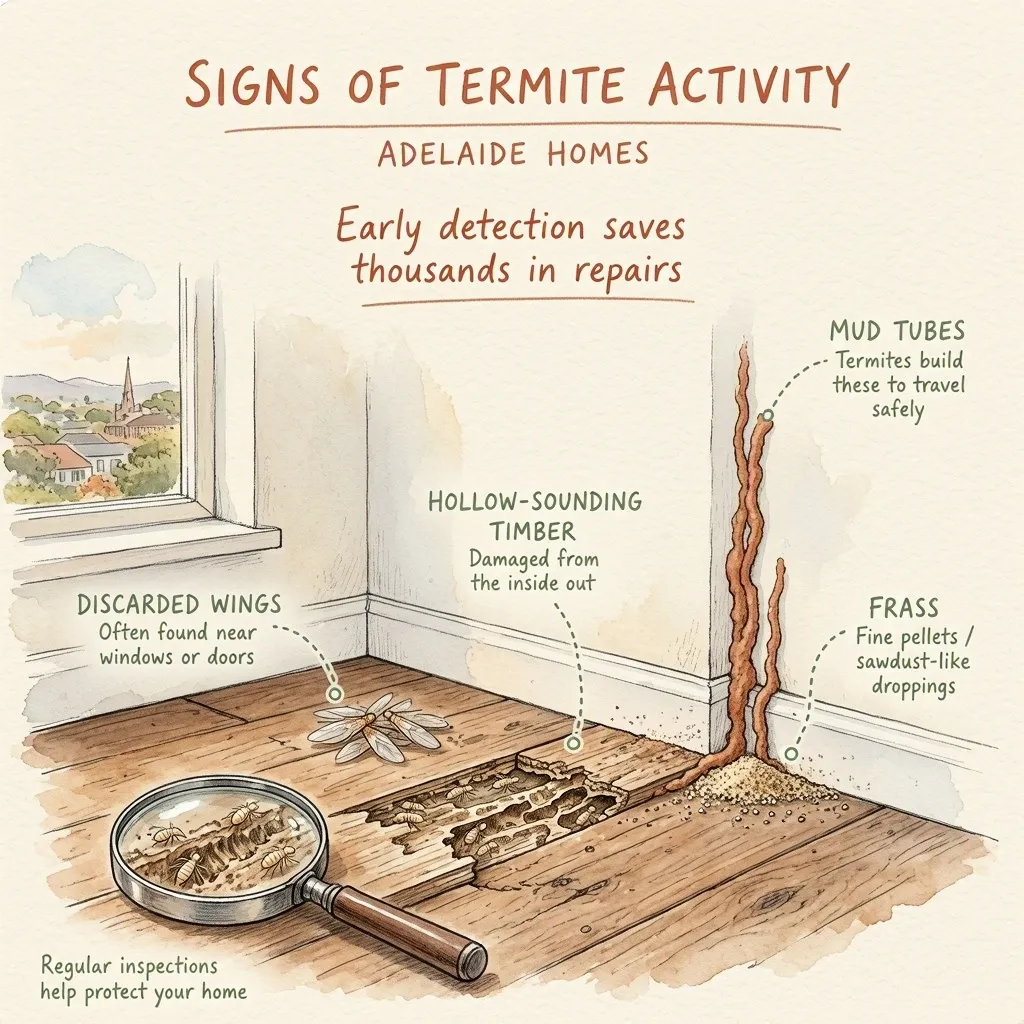
Signs of Termite Activity
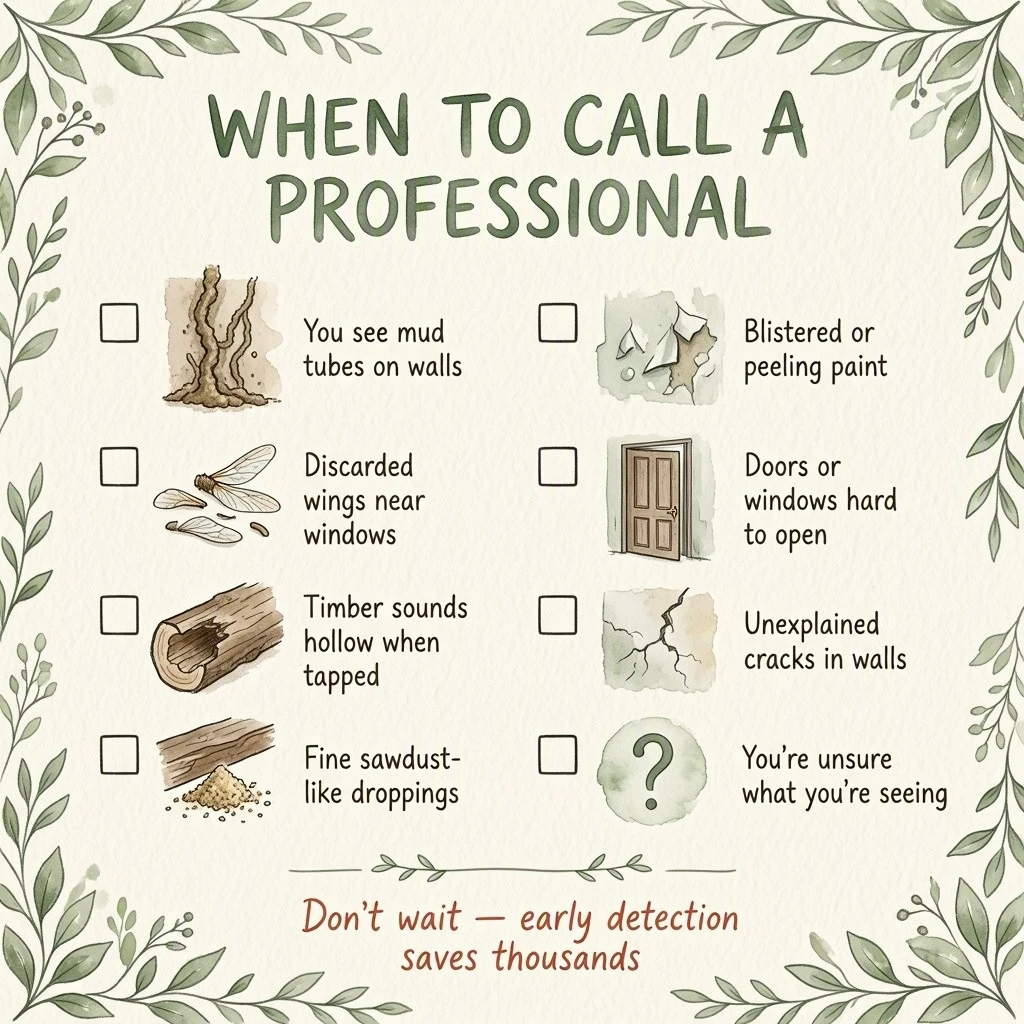
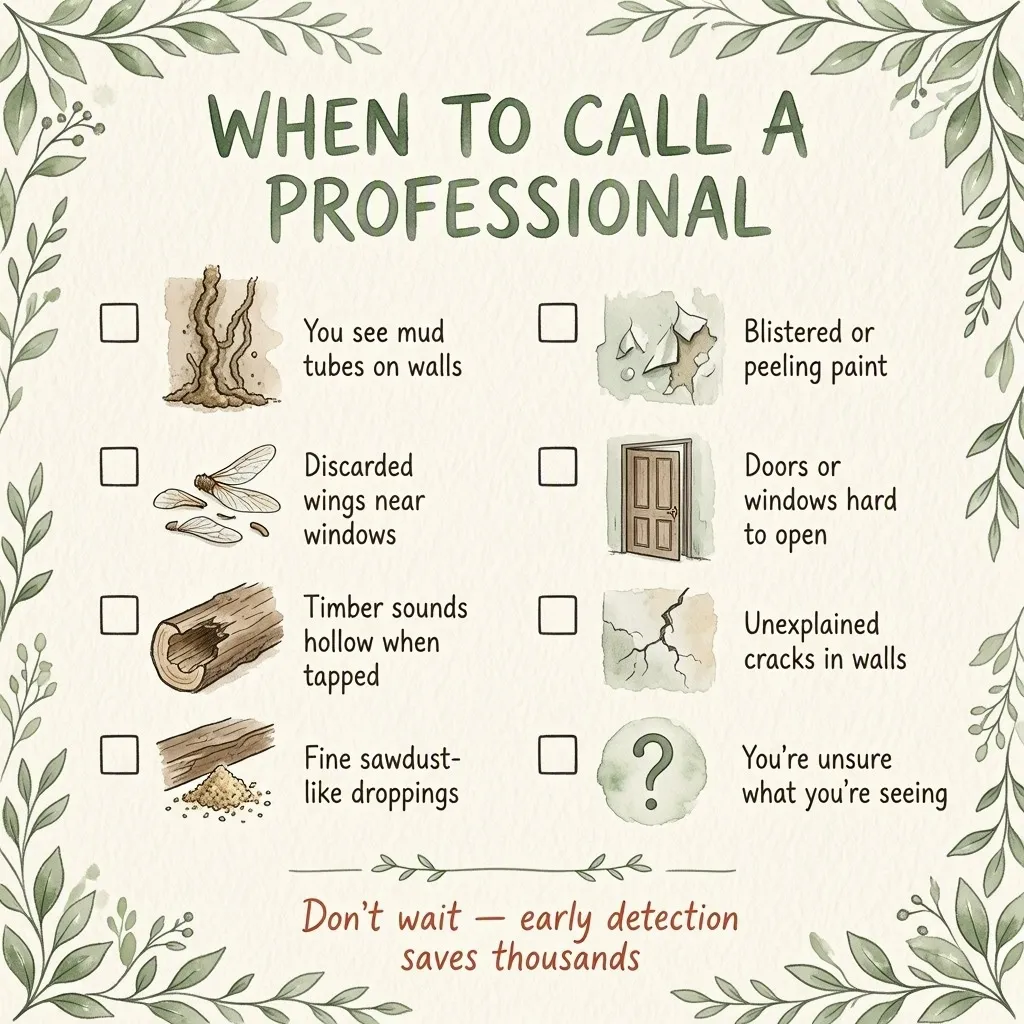
- Mud tubes — termites build these to travel safely
- Hollow-sounding timber — damaged from the inside out
- Discarded wings — often found near windows
- Frass — fine, sawdust-like pellets
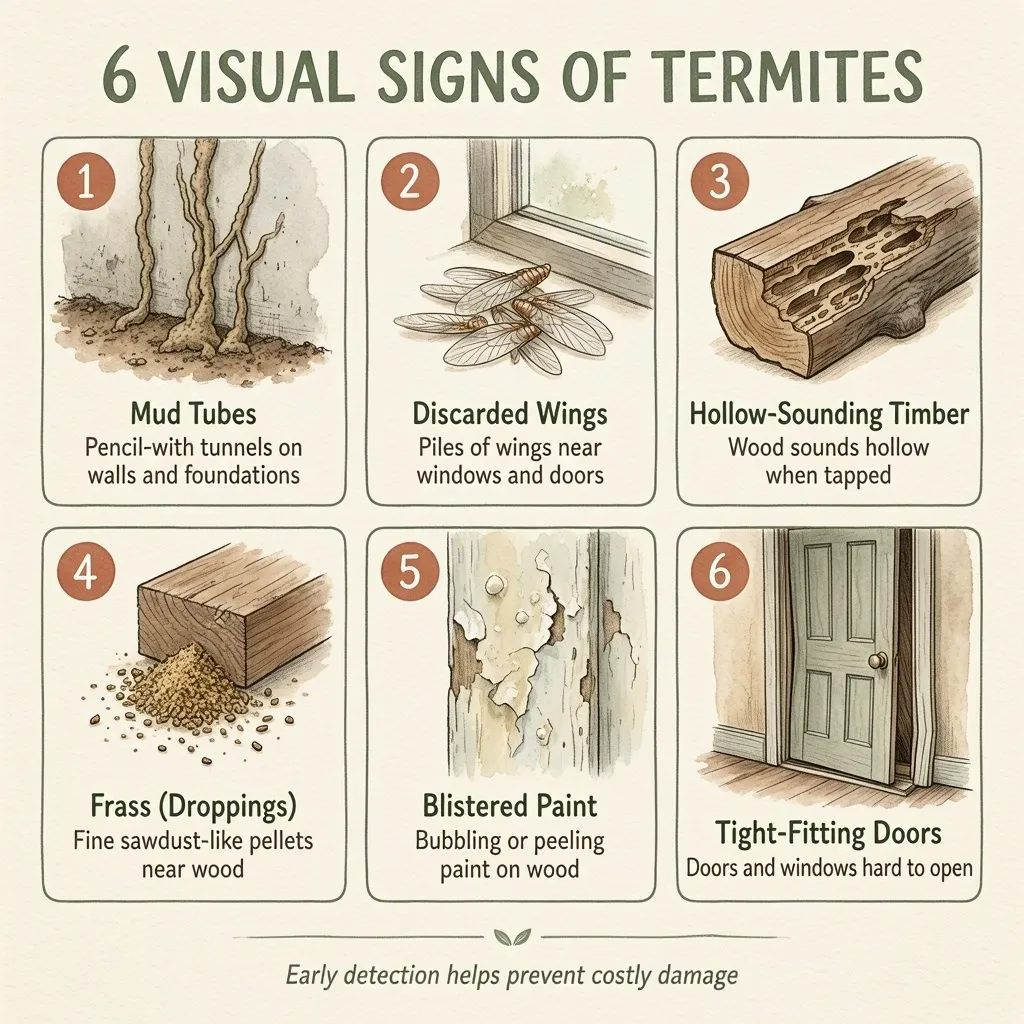
Termite Warning Signs
- Mud tubes — pencil-width tunnels on walls and foundations
- Discarded wings — piles of wings near windows and doors
- Hollow-sounding timber — wood sounds hollow when tapped
- Frass (droppings) — fine sawdust-like pellets near wood
- Blistered paint — bubbling or peeling paint
- Tight-fitting doors — doors that no longer close easily
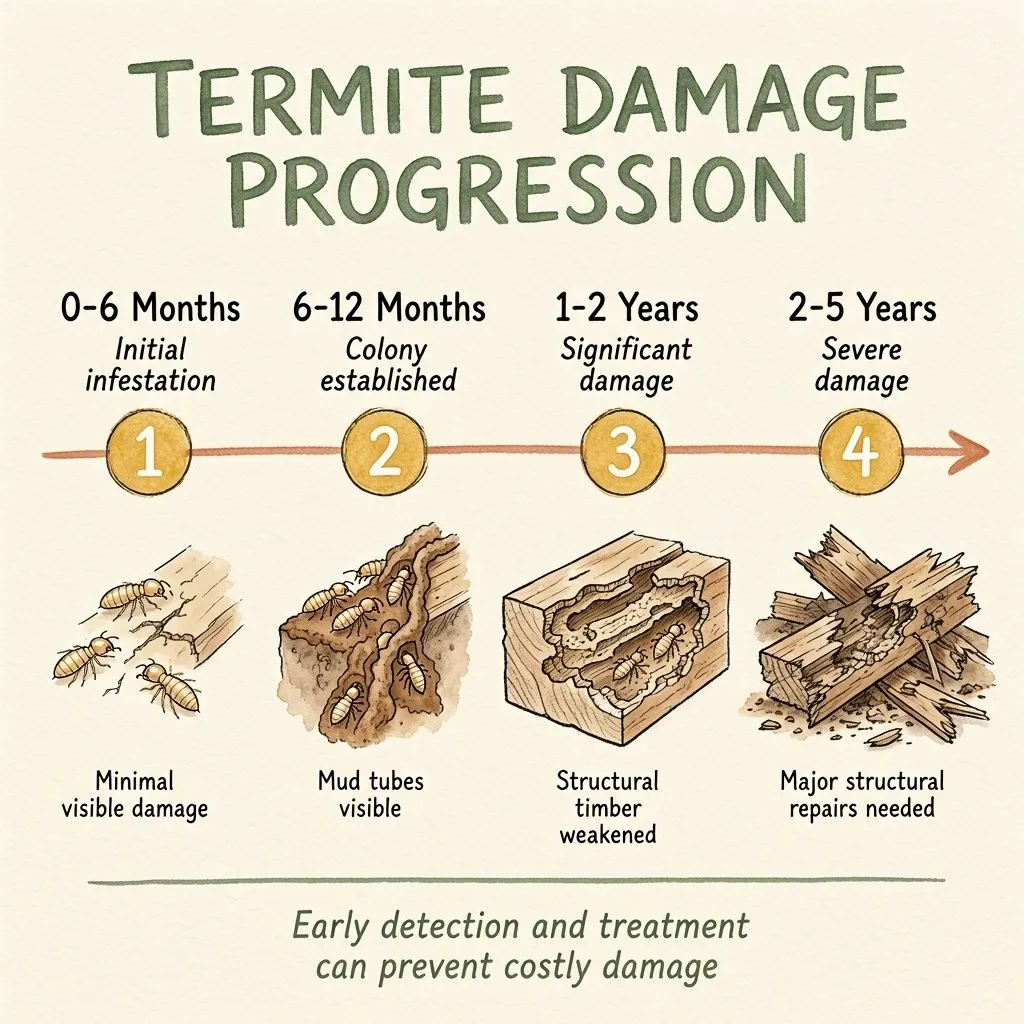
Termite Damage Timeline
- 0-6 months: initial infestation established; minimal mud tubes visible
- 6-12 months: significant damage established
- 1-2 years: severe damage; structural timber weakened
- 2-5 years: major structural repairs needed
- Early detection and treatment can prevent costly damage
Frequently Asked Questions
What are the first signs of termites? Early signs include mud tubes on foundations or walls, hollow-sounding timber (especially skirting boards and door frames), piles of discarded wings near windows, and small cracks or splits in timber. Stuck doors or windows can also be an early sign, though they can have other causes.
How can I tell if I have termites without an inspection? You can look for signs: mud tubes, hollow-sounding timber, discarded wings, frass (for drywood termites), cracks in timber/paint, stuck doors/windows, clicking sounds. However, many termite infestations produce no obvious visible signs. A professional inspection is the most reliable way to detect termites.
What’s the difference between termite damage and water damage? Both can cause similar symptoms (warped timber, stains, buckling). Termite damage often includes mud tubes, hollow-sounding timber, frass (for drywood termites), and visible termite activity. Water damage typically includes water stains, mould/mildew, and moisture issues. A professional can differentiate.
Can I see termites? Sometimes. You may see: mud tubes (which may contain termites if broken open), flying termites (swarmers) during mating flights, worker termites if you break open infested timber (small, pale, soft-bodied insects). However, termites usually stay hidden, which is why inspections are important.
How long can termites go undetected? Termites can remain undetected for months or years. They work inside timber and underground, hidden from view. By the time visible damage appears, significant damage may have occurred. This is why professional inspections are essential—even without visible signs.
What should I do if I find mud tubes? Don’t disturb them (preserve evidence). Note the location and take photos if possible. Contact a professional for inspection. Mud tubes strongly indicate termite activity. The inspector will check the tubes and surrounding areas for termites and assess the situation.
What if I find flying termites? Flying termites (swarmers) indicate a mature colony is producing reproductives. This means there’s an active colony nearby. Check for other signs (mud tubes, damage). Preserve some wings as evidence (all same size = termites; different sizes = ants). Contact a professional for inspection.
How quickly should I act if I find signs of termites? Promptly. Termite problems don’t resolve on their own and only get worse with time. The sooner you act, the less damage occurs and the less expensive treatment is. Contact a professional as soon as you find signs.
---
Need Professional Pest Control?
Our licensed technicians serve Seaford and surrounding southern suburbs with transparent pricing and eco-friendly treatments. Get your free quote in 30 seconds.