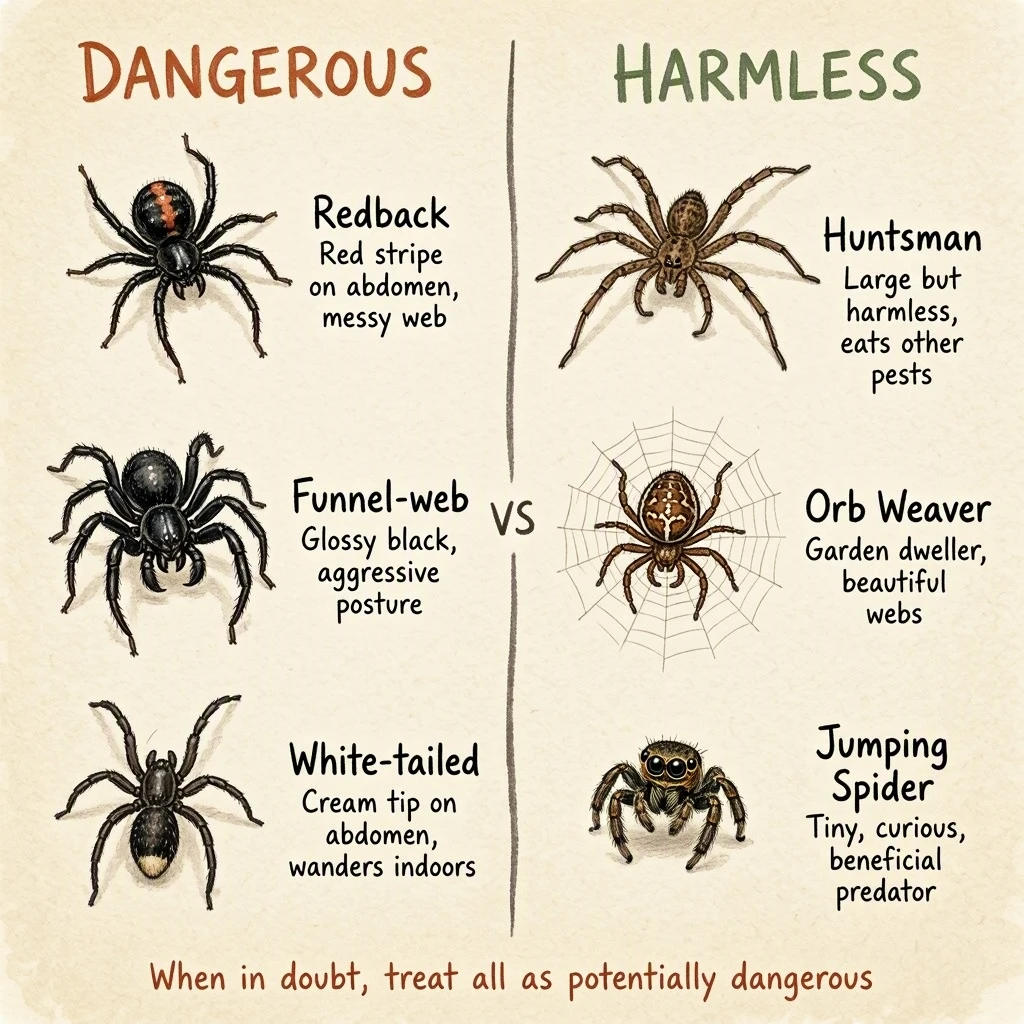
Huntsman Spider Danger to Humans: Myths and Facts
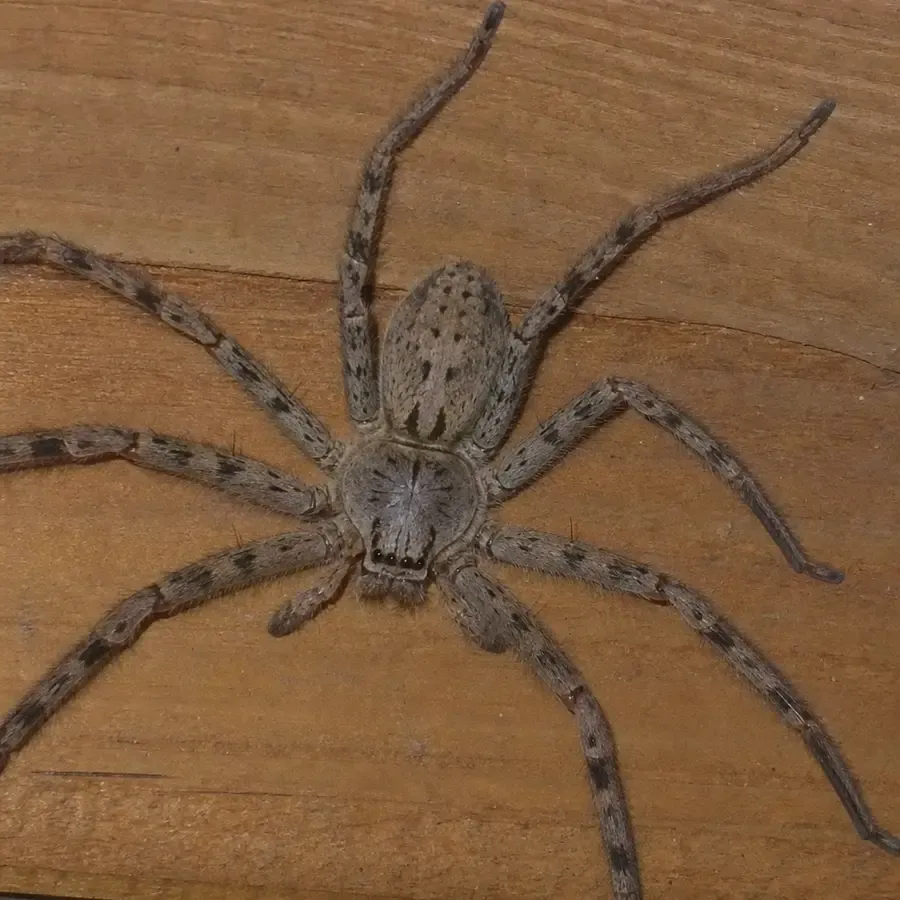
Seeing a large, fast spider on your wall can be unnerving. Huntsman spiders look intimidating, but for most people they pose very little real risk—and they’re often helpful indoor visitors because they hunt common household pests. (For additional reading, see: Australian Museum: Huntsman spiders)
This guide breaks down what huntsman spiders are, why they show up in homes, what a bite typically looks like, and how to handle an unexpected encounter calmly.
Getting to Know the Huntsman Spider
Huntsman spiders belong to the family Sparassidae.
They’re found in many warm-climate regions around the world, including parts of Australasia (such as Australia and New Zealand), Africa, Asia, the Americas, and the Mediterranean.
Size and Appearance
When it comes to size, these spiders are record-breakers. While many species range from a 3 to 6-inch leg span, the maximum leg span of giant huntsman spiders (specifically Heteropoda maxima, found in the caves of Laos) can reach about 12 inches (30 cm)—roughly the size of a dinner plate.
Identification and Movement
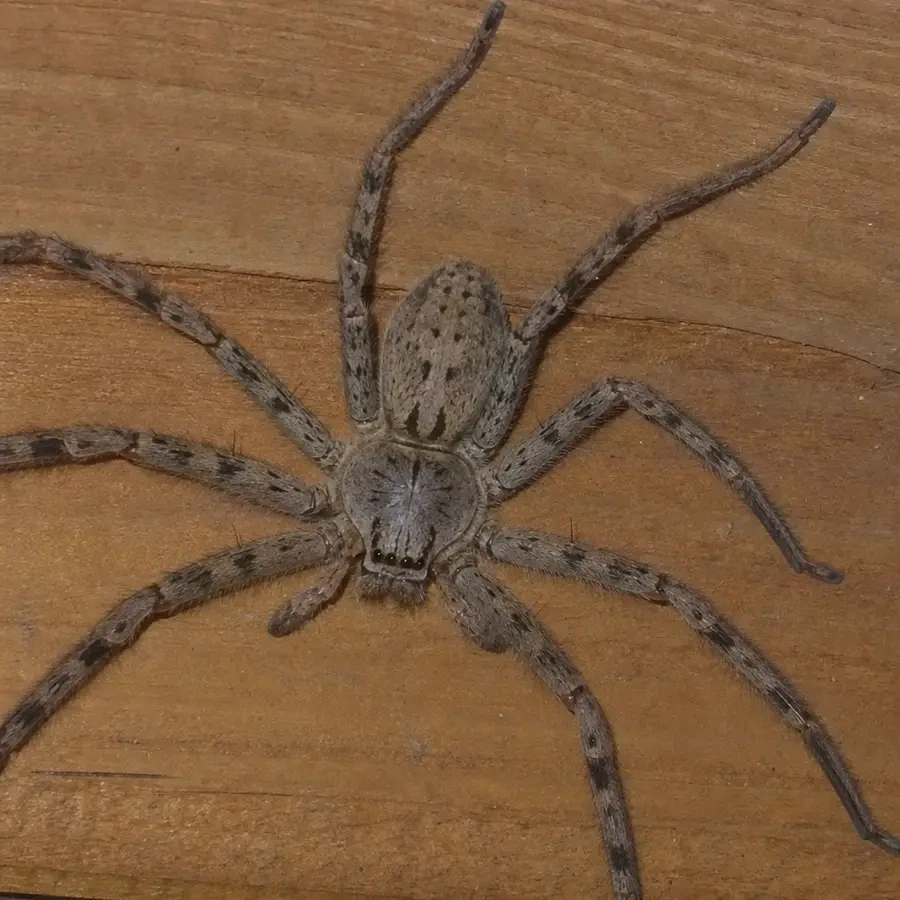
If you’re trying to identify a spider on your wall, its posture and movement are often the biggest clues. Huntsman spiders are known for their crab-like lateral movement and a flattened look, because their legs extend outward rather than sitting tucked under the body.
- They have joints that allow the legs to angle sideways, giving them a wide stance.
- This structure supports quick, agile movement—especially on walls and ceilings.
Because both can be large, brown, and hairy, huntsman vs wolf spider identification is a common point of confusion. Wolf spiders typically carry their legs under the body and have a distinctive eye pattern with large, forward-facing eyes. Huntsman spiders usually hold their legs splayed to the sides and have eight small eyes arranged in two rows.
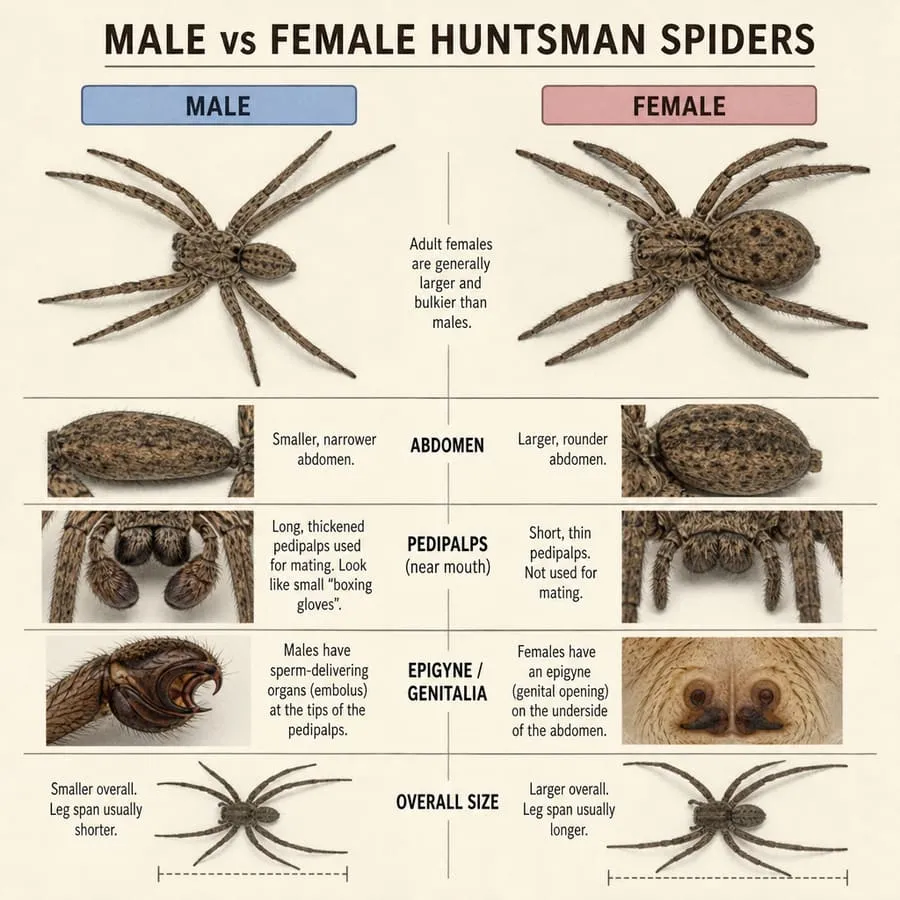
If you look closely, distinguishing between male and female huntsman spiders is also fairly straightforward. Males often have longer legs and swollen pedipalps (small appendages near the mouthparts that can look like tiny boxing gloves). Females tend to have shorter legs and a larger, more robust abdomen.
Incredible Agility
Part of what makes huntsman spiders so startling is their running speed and wall climbing ability. A huntsman can cover several feet in seconds. They can also grip smooth surfaces thanks to dense tufts of microscopic hairs on their feet, known as scopulae, which help them adhere to walls—and even glass.
Where Do Huntsman Spiders Live?
Understanding their typical habitat makes indoor encounters feel a lot less mysterious.
In the Wild
The natural huntsman spider habitat is often forested and wooded areas. Their flattened bodies make it easy for them to squeeze into tight spaces, so their preferred outdoor microhabitats under loose bark, inside narrow rock crevices, and beneath fallen logs provide excellent shelter.
Indoors
So, why do huntsman spiders enter houses? Usually, it comes down to three practical reasons:
- Weather fluctuations: Extreme heat, heavy rain, or sudden cold can push them indoors for cover.
- Following the food: Homes attract insects, and huntsman spiders follow prey.
- Mating season: In warmer months, roaming males may wander inside while searching for females.
The Big Question: Are They Dangerous?
When discussing huntsman spider danger to humans, the overall consensus is clear: they’re not considered highly dangerous.
The Venom Factor
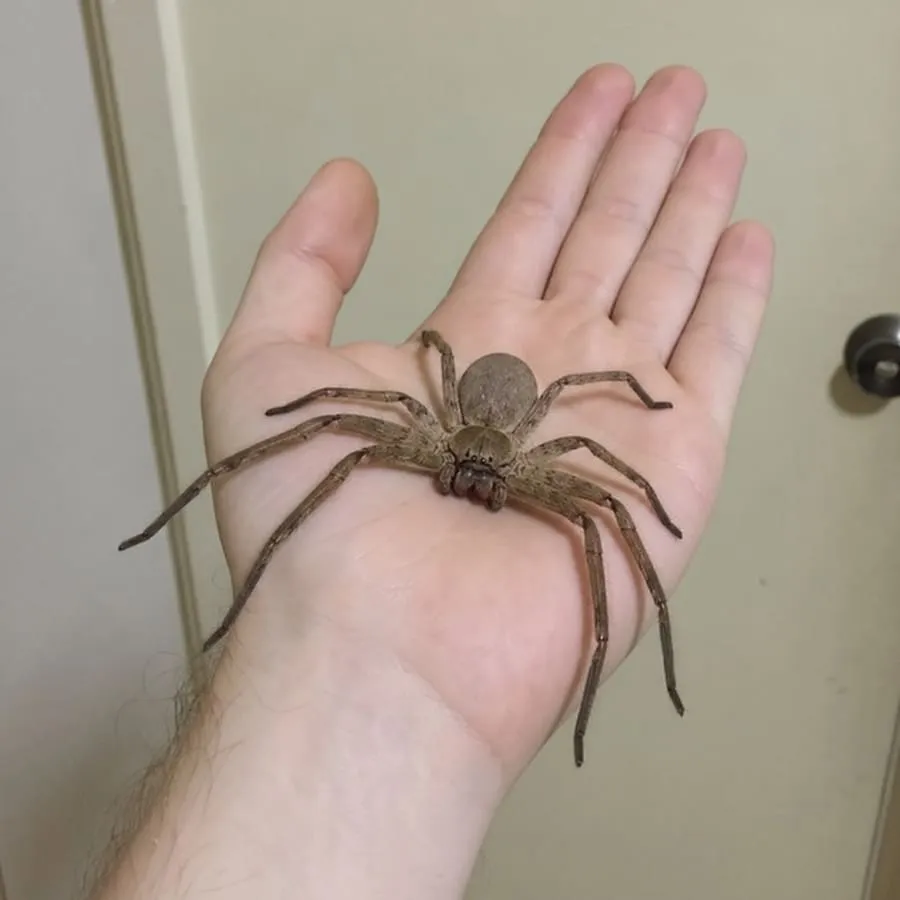
Huntsman spiders are part of the broad group of venomous spider species, because they use venom to subdue prey. The key point, though, is that their venom is adapted for insects—not for large mammals. For healthy humans (and most household pets), the huntsman spider danger level is generally very low and not considered medically significant.
Aggression and Bite Triggers
People often ask: are huntsman spiders aggressive to humans? Typically, no. Their first response is to flee and hide.
Bites are most likely when the spider feels trapped or is physically pressured. If it’s cornered, a huntsman may show classic threat displays and biting triggers—rearing up on the hind legs and exposing the fangs. In real-life situations, bites usually happen when a spider is stepped on, squeezed, mishandled, or otherwise forced to defend itself.
Bite Symptoms
If you are bitten, the symptoms of a huntsman spider bite are usually mild. Common effects include:
- Localized pain (often compared to a bee sting)
- Mild redness and swelling
- Itching
- In rare cases, minor nausea or a mild headache (often anxiety-related)
Actionable First Aid Tip: Wash the area with soap and water, apply an ice pack to reduce swelling, and monitor the site. Seek medical attention if you have signs of a serious allergic reaction or if symptoms worsen.
Fascinating Huntsman Behavior
Once you get past the initial shock factor, huntsman spiders are genuinely interesting. Here are a few huntsman spider facts that help explain why they’re so good at surviving around people.
Master Hunters
Unlike orb-weavers, huntsman spiders don’t rely on webs to catch food. Instead, they use stealth and speed, often following nocturnal hunting patterns—emerging at night to actively stalk and ambush prey.
Their prey selection and feeding frequency make them effective pest controllers. Many primarily eat cockroaches, crickets, and moths, and they may occasionally take small reptiles such as geckos. After a large meal, a big female may not need to feed again for days—or longer.
Love and Family
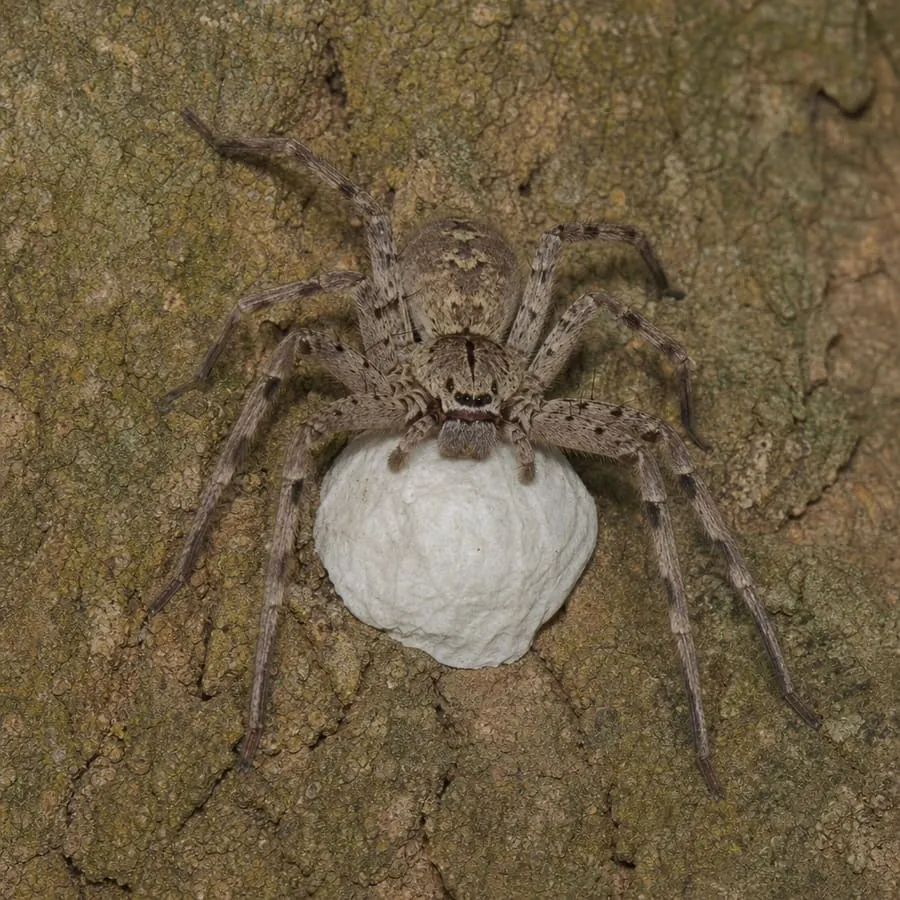
Their mating rituals and egg sac guarding behaviors are also notable. After mating, the female produces a papery egg sac that can contain up to 200 eggs.
Rather than abandoning it, the mother often guards the egg sac for weeks and may fast during that time. This is also when she’s most defensive—so if you see a huntsman staying in one spot near an egg sac, it’s best to give her space.
Social Spiders?
Most spiders are solitary, but there are exceptions. One of the most interesting examples is communal living in social huntsman species. The Australian species Delena cancerides (the flat huntsman) can form colonies where a mother cohabits with multiple generations of offspring under the same bark, sharing space with unusually low levels of conflict and cannibalism.
Debunking Common Myths
Because they’re large and fast, huntsman spiders attract plenty of folklore. Here are a few common huntsman spider myths—and what’s actually going on:
- Myth 1: They chase humans. Fact: They’re not chasing you. When startled, they often run toward the nearest shadow or hiding place, and that can make it feel personal.
- Myth 2: Their venom rots human flesh. Fact: Huntsman venom isn’t known for necrotic effects. If a bite becomes irritated, it’s more likely due to scratching or secondary infection than the venom itself.
- Myth 3: They lay eggs in human skin or hair. Fact: This is an urban legend. Huntsman spiders lay eggs in a silk egg sac, typically tucked into sheltered spots.
Coexisting Safely: Relocating a Huntsman
If you find a huntsman indoors, it’s usually there because it found shelter and food. If you’d rather not share your space, you can relocate it without harming it.
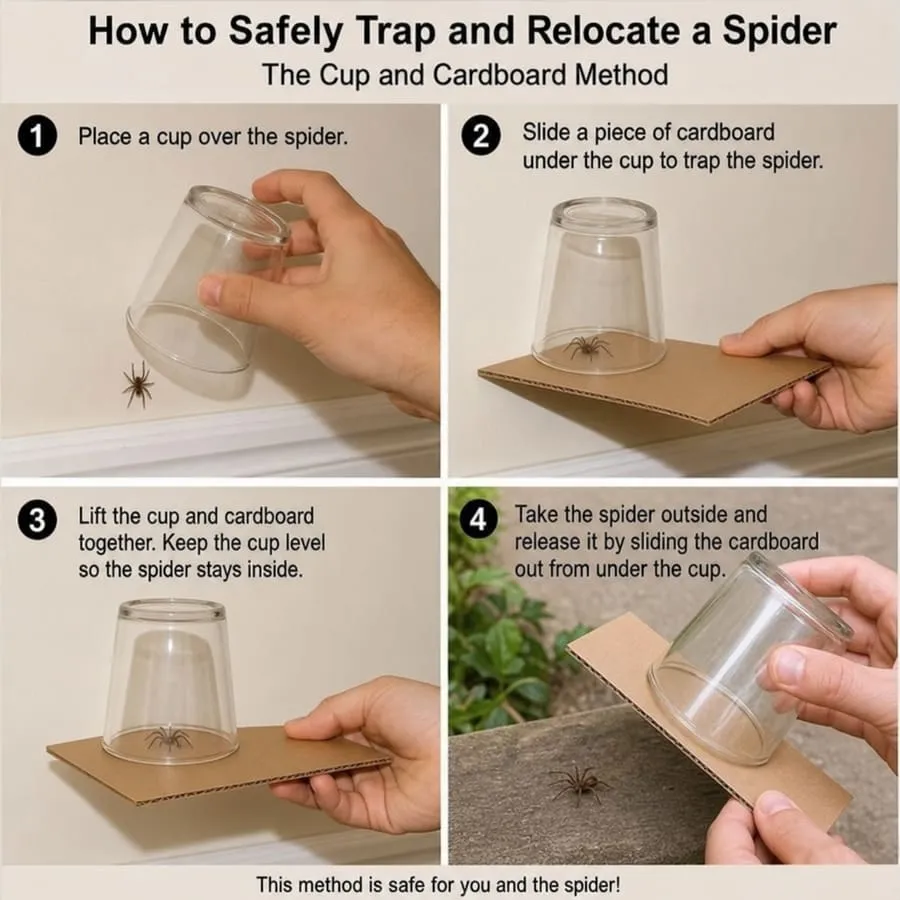
Here is how to safely relocate a huntsman spider:
- Stay Calm: Move slowly; fast movements can make it bolt.
- Gather Supplies: Use a large, clear container and a piece of stiff cardboard.
- The Trap: Place the container gently over the spider.
- The Slide: Slide the cardboard under the container opening, taking care not to pinch the legs.
- The Release: Carry it outside and release it near a tree or shrub.
Conclusion
A giant spider sprinting across the wall will probably always deliver a moment of shock. But once you understand true huntsman spider behavior, it’s easier to replace panic with perspective.
Huntsman spiders are fast, adaptable hunters that help reduce pest insects—and they pose almost zero threat to most people. If one shows up at home, you don’t have to reach for bug spray. In many cases, a calm relocation is all it takes to send your eight-legged pest controller back outside where it belongs.
Frequently Asked Questions
Question: Are huntsman spiders dangerous to humans or pets?
Short answer: Generally, no. Their venom is meant for small prey and isn’t considered medically significant for healthy humans. They’re also not typically aggressive; bites are uncommon and usually happen only when the spider is cornered, stepped on, squeezed, or mishandled (or when a female is guarding an egg sac).
Question: Why do huntsman spiders come into houses?
Short answer: Shelter, food, or mating season. Weather changes can push them inside, indoor insects attract them, and roaming males may wander indoors while searching for females.
Question: How can I safely relocate a huntsman spider?
Short answer: Use a container-and-cardboard method: cover the spider with a clear container, slide cardboard underneath, then carry it outside and release it near cover.
Question: What should I do if I’m bitten, and what symptoms should I expect?
Short answer: Most bites cause mild, localized pain, redness, swelling, and itching. Wash with soap and water, apply a cold pack, and monitor the area. Get medical help if you have signs of a severe allergic reaction or worsening symptoms.
Question: How do I tell a huntsman spider from a wolf spider?
Short answer: Huntsman spiders look flatter with legs splayed out to the sides and a crab-like gait. Wolf spiders typically hold their legs under the body and have a more obvious cluster of large, forward-facing eyes.
Need Professional Pest Control?
Our licensed technicians serve Seaford and surrounding southern suburbs with transparent pricing and eco-friendly treatments. Get your free quote in 30 seconds.